

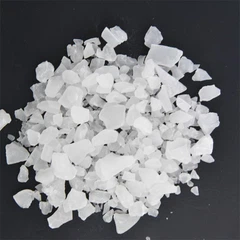

Aluminum Sulphate Flake
Company Introduction
Our company specialize in producing aluminium sulphate and now also is a well-known aluminum sulphate production factory in China with an annual output of industrial aluminum sulphate 150 thousand tons and of iron free grade 80 thousand. Established in 1989, specializing in aluminum sulphate production.
Why Choose Us
Our factory
Established in 1989, specializing in aluminum sulphate production. Our company specialize in producing aluminium sulphate and now also is a well-known aluminum sulphate production factory in China with an annual output of industrial aluminum sulphate 150 thousand tons and of iron free grade 80 thousand.
Our product
Aluminum Sulphate, Iron Free Aluminum Sulfate, Aluminum Sulphate For Water Treatment, Aluminum Sulfate Fertilizer, Electronic Grade Aluminum Sulfate.
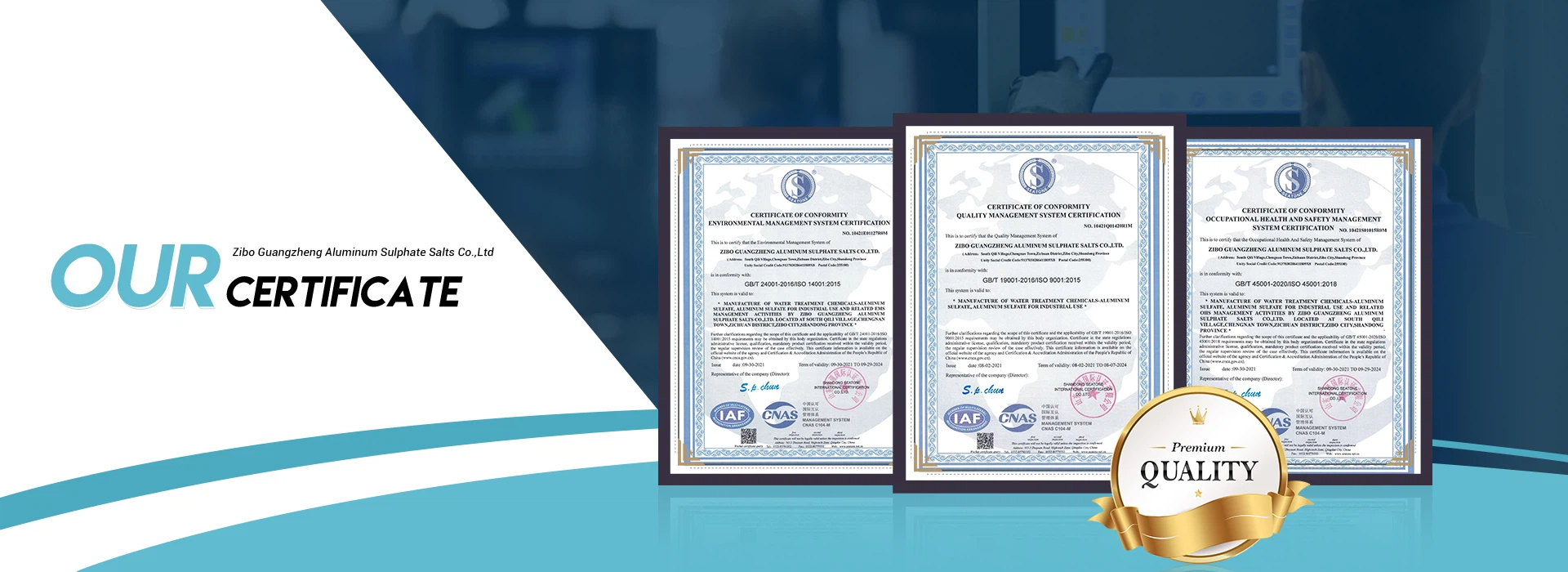
Our certificate
ISO 9001:2015; ISO 14001:2015; ISO45001:2018.
Production Equipment
Raymondmill,Reaction Kettles,Crystallization devices.
Related Product

Ferric aluminium sulfate, or low ferric aluminum sulfate, is an inorganic substance with chemical formula of Al2(SO4)3 and formula amount of 342.15, a kind of common chemical with crystalline appearance with a density of 1.181g/ (25). Made from bauxite, aluminum hydroxide and sulfuric acid, low ferric aluminium sulphate is little bit white grey and yellow in color for containing Fe2o3, low ferric aluminium sulfate with aluminum oxide 15.8% and Fe 0.5% mainly used in industrial waste water treatment industries.

According to the latest Chinese Chemical Standards HG/T2225-2018 II, we produce aluminum sulfate with its Al2O3 content 15.8% and Fe content 0.5%, which can be widely used in industrial wastewater treatment, This standard also specifies the classification, requirements, test methods, inspection rules, signs, labels, packaging, transportation, storage of 15.8% aluminum sulfate for industrial use.

The initial form of aluminum sulfate is liquid aluminum sulfate, but for the convenience of transportation, it is usually made into flakes, granules, and even large blocks, The characteristic of solid aluminum sulphate is that they are easier to transport and safer than liquid aluminum sulfate, as liquid aluminum sulfate is usually considered to contain a certain amount of acidity and has slight corrosiveness to some metal or plastic containers.

Industrial aluminum sulfate is a commonly used chemical substance, also known as aluminum sulphate. It is a salt compound formed by the reaction of sulfuric acid and aluminum salts. Industrial aluminium sulfate has various uses and is widely used in industries such as water treatment, papermaking, textiles, leather, printing and dyeing, pharmaceuticals, and building materials.

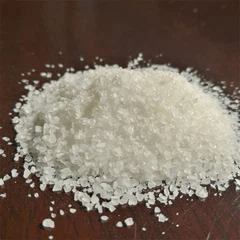
Granular aluminum sulfate is an important inorganic chemical product and are widely used in multiple industry fields. It is a granular solid substance made from bauxite through processes such as grinding, acidification, crystallization, etc. The production process of granular aluminum sulphate mainly includes steps such as bauxite beneficiation, grinding, acidification, crystallization, etc. Firstly, aluminite is extracted from bauxite through mineral processing technology, and then ground into a certain particle size.

CAS (Chemical Abstracts Service) Registry Number is a unique identifier that by entering the number you can search for the desired chemical name.

Aluminium Sulphate Octadecahydrate
Aluminum sulfate octahydrate is a chemical substance with the formula Al2 (SO4) 3 · 18H2O. Under normal temperature and pressure, Aluminium sulfate octahydrateis a white amorphous crystal or particle, soluble in water but insoluble in alcohol organic solvents. Aluminum sulphate octahydrate is stable in the air and begins to weather when the relative humidity is about 20%. It gradually heats up and melts, losing crystalline water at 250 ℃ and decomposing at higher temperatures.

Liquid aluminium sulphate also has good stability and solubility. It has a high solubility in water and can quickly dissolve and function. Meanwhile, liquid aluminum sulfate is relatively stable during storage and use, not easily decomposed or spoiled, and can maintain its effectiveness for a long time.

Among them, lump aluminium sulfate has a larger thickness and size compared to flake and granular shapes, which is determined by the traditional aluminum sulphate production process. The previous production crystallization process of aluminum sulfate was very backward in terms of crystallization method. Due to the lack of more efficient crystallization equipment, the use of disc crystallization method, which was usually crushed by manual or simple equipment, resulted in a very large crystallization thickness, especially, manual crushing caused uneven and large particle size blocks.
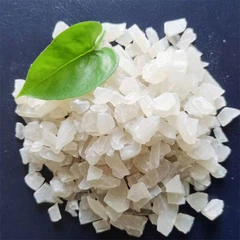
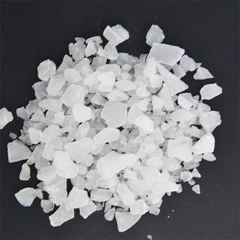
What Is Aluminum Sulphate Flake
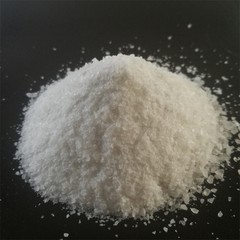
Classified by appearance, aluminum sulfate can generally be divided into flake aluminum sulfate, granule aluminium sulfate, lump aluminium sulfate and powder aluminum sulfate. The production process of aluminum sulfate is to first react sulfuric acid, aluminum ore, and aluminum hydroxide with water to produce aluminum sulfate solution, while for the convenience of transportation, we make liquid aluminum sulfate in solid form.
Advantages of Aluminum Sulphate Flake
Effective coagulation
Aluminum sulphate flake has a high coagulation potential, efficiently removing suspended particles and impurities from water and wastewater.
Cost-effective
Aluminum sulphate flake is economical for coagulation and clarification processes in water and wastewater treatment.
Versatility
Its ability to form liquid or solid solutions increases its versatility and adaptability to different industrial applications.
Environmental sustainability
Aluminum sulphate flake aids in treating effluents, reducing the environmental impact of processes and contributing to a more sustainable approach.
Do You Know About Aluminum Sulphate Flake
Classified by appearance, aluminum sulfate can generally be divided into flake aluminum sulfate, granule aluminium sulfate, lump aluminium sulfate and powder aluminum sulfate. The production process of aluminum sulfate is to first react sulfuric acid, aluminum ore, and aluminum hydroxide with water to produce aluminum sulfate solution, while for the convenience of transportation, we make liquid aluminum sulfate in solid form. Usually, we send aluminum sulfate solution through pipelines to crystallization equipment and let it undergo physical crystallization through two methods: Air Cooling and Water Cooling, in order to obtain large solid aluminum sulfate.
Of course, this is not over yet. To facilitate packaging, we transport these large solid aluminum sulfate solutions to a crusher through conveying equipment, and then crush them to obtain smaller and more suitable aluminum sulfate flakes. In fact, there is not much difference between aluminum sulfate flakes and aluminum sulfate granules, mainly based on the thickness of liquid aluminum sulfate dripping on the crystallization equipment. If the aluminum sulfate solution drips relatively thick on the crystallization steel strip, the final product can be called aluminum sulfate granules. Similarly, if the aluminum sulfate solution drips relatively thin on the steel strip, the final product is aluminum sulfate flakes, and they all have the same content. Due to the presence of crystalline water in aluminum sulfate, its texture is relatively brittle. Therefore, the sheet-like shape of aluminum sulfate flake is irregular crystalline, with a particle size generally ranging from 0-25mm.
Products Description
|
ITEM |
SPECIFICATION |
RESULT |
|
Aluminum sulfate flake |
Flake |
Conformed |
|
Average Size Of Flakes, max |
0-25mm |
Conformed |
|
Aluminum oxide Al2O3 %, min |
15.80 |
15.95 |
|
Iron (Fe) content %, max |
0.50 |
0.28 |
|
Water insoluble Matter %, max |
0.10 |
0.06 |
|
PH value 1% aqueous solution, min |
3.0 |
3.10 |
|
As %, max |
0.0005 |
0.00004 |
|
Heavy metals as Pb %, max |
0.002 |
NONE DETECTED |
|
Color |
Gray& buff |
Conformed |
Industrial aluminum sulphate flake is actually a commonly used solid chemical product in industrial preparation. In the fuel industry, aluminum sulphate flake serves as a precipitant in the production of chrome yellow and lake dyes, while also serving as a fixing and filling agent. It is not difficult to observe carefully that ferrous and its aqueous solution exposed to the air are more prone to yellowing.
Its molecular formula changes from divalent iron to trivalent iron, and the color also changes from blue or green to yellow or brown. This is because green alum is exposed and weathered in the air, and the ferrous ions in industrial aluminum sulphate flake are easily oxidized into iron sulfate by oxygen or other substances in the air after coming into contact with the air. The oxidized aluminum sulphate flake used for watering plants does not have any impact, but its effect is far inferior to before it spoils. Especially in humid and ventilated environments, the oxidation rate of industrial aluminum sulphate flake will be faster, making it more prone to yellowing.
Application of Aluminum Sulphate Flake
Water treatment
One of the most important uses of aluminum sulphate flake is in water treatment and purification. When added to water, it causes microscopic impurities to clump together into larger and larger particles. These clumps of impurities will then settle to the bottom of the container or at least get large enough to filter them out of the water. This makes the water safer to drink. On the same principle, aluminum sulphate flake is also sometimes used in swimming pools to decrease the cloudiness of the water.
Dyeing fabrics
Another one of the many uses of aluminum sulphate flake is in dyeing and printing on cloth. When dissolved in a large amount of water that has a neutral or slightly alkaline ph, the compound produces a gooey substance, aluminum hydroxide. The gooey substance helps dyes stick to the cloth fibers by making the dye water insoluble. The role of aluminum sulphate flake, then, is as a dye 'fixer,' which means that it combines with the molecular structure of the dye and the fabric so the dye doesn' t run out when the fabric gets wet.
Paper making
In the past, aluminum sulphate flake was used in making paper, although synthetic agents have mostly replaced it. The aluminum sulphate flake helped to size of the paper. In this process, aluminum sulphate flake was combined with rosin soap to change the absorbency of the paper. This changes the ink-absorbing properties of the paper. Using aluminum sulphate flake means that the paper was made under acidic conditions. Use of synthetic sizing agents means that acid-free paper can be produced. Acid-free paper does not break down as fast as paper sized with acid.
Handling and Storage of Aluminum Sulphate Flake
|
Handling and storage for Aluminium Sulfate |
|
|
Uses advised Against |
Do not use for products which come into direct contact with the skin |
|
Handling |
Avoid dust formation. Keep formation of airborne dusts to a minimum. Provide appropriate exhaust ventilation at places where dust is formed. Do not breathe dust from this material. In case of insufficient ventilation, wear suitable respiratory equipment. Do not get this material in contact with eyes. Avoid contact with skin and eyes. Avoid prolonged exposure. Wash thoroughly after handling. Practice good housekeeping. Emergency eye wash fountains and emergency showers should be available in the immediate vicinity. |
|
Storage |
Store in a cool, dry, well-ventilated place and out of direct sunlight. Store away from foodstuffs. Store away from incompatible materials described in Section 10. Store away from sources of heat and/or ignition. Store in corrosive resistant container with a resistant inner liner. Keep container standing upright. Keep containers closed when not in use - check regularly for spills. |
Production Process of Aluminum Sulphate Flake
Aluminium trihydrate is purified from bauxite. Commercial bauxite (30-75% Al2O3) deposits occur. Bauxite ore is dissolved in strong caustic soda to form sodium aluminate. The aluminium trihydrate is then precipitated by neutralisation (usually with carbon dioxide) or by autoprecipitation (the Bayer process). The other raw material, sulfuric acid, is manufactured for superphosphate production. Acid arrives by road tanker and is pumped into storage tanks.
Reacting the raw ingredients. The aluminium trihydrate is transported and stored in one tonne bags. Each bag is carried by hoist to the feed hopper, where it is opened and conveyed to the reaction tank. The reaction water, trihydrate and sulfuric acid batch is stirred for a period of time with water vapour exiting through the stack. Making the final product After the reaction period either liquid or solid alum is made. If liquid, the concentrated batch is run into the dilution tank filled with the dilution water where it cools over time. The liquid alum is then filtered and pumped to storage. There are overhead load out facilities at Morrinsville where a number of liquid chemicals are available in dispatch tanks for road tankers. If solid is made, the concentrated alum is run into the casting pans where it sets, aided by fan cooling. The pans are forklifted to storage racks and from there they are taken to the Crushing Plant and dropped into a hopper. The pieces are broken further by a large kibbler followed by a small kibbler and then screened. Oversize particles go to a bagging hopper and are sold as kibbled product. The screened alum is rotary crushed and further screened to either return to the rotary crusher or be bagged as ground product. Dust is continually collected through an extraction system and is sold as product. The Crushing Plant is flexible and the ratio of kibbled to ground aluminium sulfate is variable.
Our factory
Our company specialize in producing aluminium sulphate and now also is a well-known aluminum sulphate production factory in China with an annual output of industrial aluminum sulphate 150 thousand tons and of iron free grade 80 thousand. Established in 1989, specializing in aluminum sulphate production

Our certificate
FAQ
Hot Tags: aluminum sulphate flake, China aluminum sulphate flake manufacturers, suppliers, factory, technical grade aluminum sulphate, coagulant aluminum sulphate, aluminum sulphate in sewage treatment, aluminum sulphate importers, water treatment aluminum sulphate, regular aluminum sulphate
You Might Also Like


Send Inquiry