

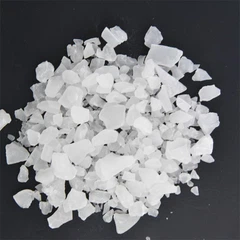
What are the differences between industrial aluminum sulphate and other flocculants?
Jan 16, 2026
Leave a message
In the field of water treatment and various industrial processes, flocculants play a crucial role in separating suspended particles from liquids. Among them, industrial aluminum sulphate is a widely used flocculant. As an industrial aluminum sulphate supplier, I have in - depth knowledge of its characteristics and differences compared to other flocculants. In this blog, I will explore these differences in detail.
1. Chemical Composition and Structure
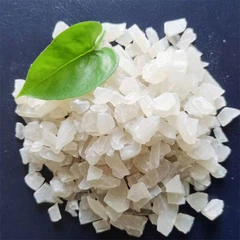
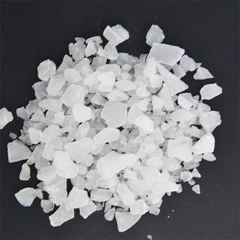
Industrial aluminum sulphate has a chemical formula of (Al_2(SO_4)_3). It is an inorganic salt composed of aluminum ions ((Al^{3 +})) and sulfate ions ((SO_4^{2-})). The structure is relatively simple, with aluminum ions in the center coordinated with sulfate ions.
In contrast, other flocculants can be divided into inorganic and organic types. Inorganic flocculants like polyaluminum chloride (PAC) have a more complex polymeric structure. PAC is a mixture of various polynuclear aluminum hydroxides with different degrees of polymerization. Organic flocculants, such as polyacrylamide (PAM), are long - chain polymers with repeating monomer units. The molecular weight of PAM can range from several hundred thousand to millions, and its structure can be linear, branched, or cross - linked.


The simple structure of industrial aluminum sulphate allows it to dissociate easily in water, releasing aluminum ions. These aluminum ions can react with water to form aluminum hydroxide flocs through hydrolysis reactions:
(Al^{3+}+3H_2O\rightleftharpoons Al(OH)_3 + 3H^{+})
The flocs can adsorb and entrap suspended particles in water, leading to their aggregation and precipitation.
2. Flocculation Mechanism
The flocculation mechanism of industrial aluminum sulphate mainly involves charge neutralization and adsorption - bridging. When industrial aluminum sulphate is added to water, the aluminum ions can neutralize the negative charges on the surface of suspended particles. This reduces the electrostatic repulsion between particles, allowing them to come closer and aggregate. At the same time, the aluminum hydroxide flocs formed during hydrolysis can act as bridges between particles, further promoting their aggregation.
For polyaluminum chloride, in addition to charge neutralization and adsorption - bridging, it also has a better ability to enmesh particles due to its polymeric structure. The polynuclear aluminum hydroxides in PAC can form larger and more stable flocs, which can settle more quickly in water.
Organic flocculants like polyacrylamide mainly rely on the adsorption - bridging mechanism. The long - chain polymer molecules of PAM can adsorb on the surface of multiple particles, forming bridges between them. This results in the formation of large and strong flocs. However, PAM has little effect on charge neutralization compared to inorganic flocculants.
3. Performance in Water Treatment
3.1 Turbidity Removal
Industrial aluminum sulphate is effective in removing turbidity from water. It can quickly form flocs that can capture and settle suspended solids. However, its performance may be affected by factors such as pH. The optimal pH range for industrial aluminum sulphate flocculation is usually between 5.5 and 7.5. Outside this range, the hydrolysis of aluminum ions may be inhibited, reducing the flocculation efficiency.
Polyaluminum chloride has a wider pH range for effective flocculation, typically from 5 to 9. It can achieve good turbidity removal even in more acidic or alkaline water conditions. Organic flocculants like polyacrylamide can also achieve high turbidity removal efficiency, especially in water with low turbidity. They can form large and tough flocs that are easy to separate from water.
3.2 Color Removal
Industrial aluminum sulphate can remove some color - causing substances in water through adsorption and co - precipitation. However, for some complex organic dyes and colored substances, its color removal ability may be limited.
Polyaluminum chloride generally has a better color removal performance than industrial aluminum sulphate. Its polymeric structure can more effectively adsorb and remove color - causing substances. Organic flocculants, especially cationic polyacrylamide, can have excellent color removal effects. They can interact with anionic color - causing substances through electrostatic attraction, leading to their precipitation.
3.3 Heavy Metal Removal
Industrial aluminum sulphate can remove some heavy metals in water through precipitation. For example, it can react with heavy metal ions such as lead ((Pb^{2+})) and copper ((Cu^{2+})) to form insoluble metal hydroxides or sulfates. However, its heavy metal removal efficiency may not be as high as some specialized heavy metal - removing agents.
Polyaluminum chloride can also remove heavy metals to a certain extent, but its performance is similar to that of industrial aluminum sulphate in this regard. Some organic flocculants can be modified to have specific chelating groups that can selectively bind to heavy metal ions, achieving higher heavy metal removal efficiency.
4. Cost and Availability
Industrial aluminum sulphate is relatively inexpensive compared to many other flocculants. It is widely available in the market because it can be produced from abundant raw materials such as bauxite and sulfuric acid. The production process of industrial aluminum sulphate is well - established and relatively simple, which contributes to its low cost.
Polyaluminum chloride is more expensive than industrial aluminum sulphate. The production of PAC requires more complex processes and higher - quality raw materials. Organic flocculants like polyacrylamide are generally the most expensive among these flocculants. Their high cost is mainly due to the high - cost monomers and complex polymerization processes involved in their production.
5. Environmental Impact
Industrial aluminum sulphate has a relatively low environmental impact. When used in water treatment, the residual aluminum ions in water are usually within acceptable limits. However, excessive use of industrial aluminum sulphate may lead to an increase in aluminum concentration in water, which may have potential health risks to humans and aquatic organisms.
Polyaluminum chloride also has a relatively low environmental impact. Similar to industrial aluminum sulphate, the main concern is the residual aluminum in water. Organic flocculants, especially non - biodegradable ones, may pose environmental problems if they are not properly degraded. Some organic flocculants may accumulate in the environment and have long - term impacts on ecosystems.
6. Application Scope
Industrial aluminum sulphate is widely used in various industries, including water treatment for drinking water, industrial wastewater treatment, and paper manufacturing. In drinking water treatment, it can effectively remove suspended solids and some impurities. In paper manufacturing, it is used as a sizing agent and a flocculant to improve the quality of paper. You can find more information about its application in water treatment at Aluminium Sulfate Water Treatment.
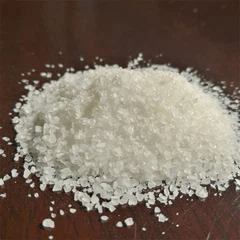
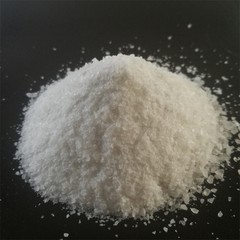
Polyaluminum chloride is mainly used in water treatment, especially in large - scale water treatment plants. Its high efficiency and wide pH range make it suitable for treating different types of water sources. Organic flocculants are often used in specialized applications, such as sludge dewatering in wastewater treatment plants. They can improve the dewatering efficiency and reduce the volume of sludge. You can check our Aluminum Sulphate Powder and Industrial Aluminum Sulphate products for more details.
Conclusion
As an industrial aluminum sulphate supplier, I understand that each flocculant has its own advantages and disadvantages. Industrial aluminum sulphate is a cost - effective and widely applicable flocculant, especially suitable for general water treatment and some industrial processes. However, in some specific applications where high - performance flocculation is required, other flocculants like polyaluminum chloride and polyacrylamide may be more appropriate.
If you are looking for a reliable flocculant for your water treatment or industrial process, I encourage you to consider industrial aluminum sulphate. Its good performance, low cost, and wide availability make it a great choice. If you have any questions or need to discuss your specific requirements, please feel free to contact me for further procurement negotiations.
References
- Letterman, R. D. (2019). Water Quality and Treatment: A Handbook of Community Water Supplies. McGraw - Hill Education.
- Gregory, J., & Baranyai, Z. (2006). Coagulation and Flocculation in Water and Wastewater Treatment. IWA Publishing.
- Bratby, J. (2006). Coagulation and Flocculation in Water and Wastewater Treatment. IWA Publishing.
Send Inquiry