

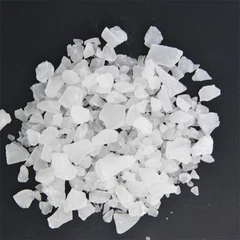
How does aluminium sulphate water affect the stability of emulsions?
Dec 25, 2025
Leave a message
In the realm of industrial and scientific applications, the stability of emulsions stands as a crucial factor that significantly impacts various processes. Emulsions, which are mixtures of two immiscible liquids, are widely used in diverse sectors such as food, cosmetics, and petroleum. One key element that can influence the stability of emulsions is aluminium sulphate water. As a leading supplier of Aluminium Sulphate Water, I am eager to delve into how our product affects the stability of emulsions.
Understanding Emulsions and Their Stability
Before we explore the role of aluminium sulphate water in emulsion stability, it is essential to understand what emulsions are and why their stability matters. An emulsion consists of droplets of one liquid dispersed in another liquid, typically with the help of an emulsifying agent. The two main types of emulsions are oil - in - water (O/W) and water - in - oil (W/O).
The stability of an emulsion refers to its ability to resist changes such as coalescence, creaming, and phase separation over time. A stable emulsion maintains its uniform appearance and properties, which is vital for product quality and performance. In the food industry, for example, stable emulsions ensure the smooth texture and long - shelf life of products like mayonnaise and salad dressings. In the cosmetics industry, they contribute to the proper spreadability and effectiveness of creams and lotions.
How Aluminium Sulphate Water Influences Emulsion Stability
1. Charge Neutralization
Aluminium sulphate, when dissolved in water, dissociates into aluminium ions ($Al^{3 +}$) and sulphate ions ($SO_4^{2-}$). In an emulsion system, the droplets of the dispersed phase often carry a charge on their surface. This charge creates a repulsive force between the droplets, which helps to prevent them from coming together and coalescing.
However, certain factors can cause a decrease in the charge stability of the droplets. Aluminium ions from aluminium sulphate water can act as counter - ions. They can neutralize the surface charge of the droplets, reducing the electrostatic repulsion between them. This can lead to a closer approach of the droplets and potentially affect the stability of the emulsion. In some cases, a controlled amount of charge neutralization can be beneficial. For example, in a system where the initial charge is too high, a small addition of aluminium sulphate water can bring the charge to an optimal level, enhancing the overall stability of the emulsion.
2. Coagulation and Flocculation
Aluminium sulphate is well - known for its coagulation and flocculation properties in water treatment. When added to an emulsion, it can cause the droplets to coagulate and form larger aggregates. Coagulation is the process where the surface charge of the droplets is reduced, allowing them to come closer together. Flocculation then occurs, where these small aggregates combine to form larger flocs.
In an emulsion, the formation of large flocs can have a negative impact on stability. The larger the aggregates, the more likely they are to sediment or cream, leading to phase separation. However, in some industrial processes, a certain degree of controlled coagulation and flocculation can be useful. For instance, in the separation of oil - in - water emulsions during wastewater treatment, aluminium sulphate water can be used to promote the aggregation of oil droplets for easier removal.
3. Changes in Interfacial Properties
The interfacial region between the two immiscible liquids in an emulsion plays a crucial role in its stability. Aluminium ions from aluminium sulphate water can interact with the emulsifying agent at the interface. This interaction can change the interfacial tension between the two phases.
If the interfacial tension is decreased, the droplets may become more deformable, increasing the likelihood of coalescence. On the other hand, if the interfacial tension is increased, the droplets may be more resistant to coalescence, but the overall stability of the emulsion may still be affected due to changes in the structure of the emulsifying film. Aluminium sulphate can also disrupt the protective layer formed by the emulsifying agent around the droplets, further compromising the stability of the emulsion.
Applications in Different Industries
1. Food Industry
In the food industry, emulsions are commonly used to create products with specific textures and sensory properties. For example, in the production of dairy - based emulsions like milk chocolate, the stability of the oil - in - water emulsion is crucial. While aluminium sulphate is not typically used directly in food production due to regulatory reasons, it can play a role in the treatment of water used in food processing.
If the water used in food processing contains impurities or has an improper ionic balance, it can affect the stability of the emulsions formed during production. By using Aluminum Sulfate for Water Treatment, the water quality can be improved, which indirectly helps in maintaining the stability of food emulsions.
2. Cosmetics Industry
Cosmetic products such as creams and lotions are often emulsions. The stability of these emulsions ensures that the products have a consistent texture and appearance over time. Aluminium sulphate water can be used in the treatment of water used in cosmetic manufacturing. By removing impurities and adjusting the ionic strength of the water, it can prevent the destabilization of emulsions during the production process. Additionally, in some cases, the controlled addition of aluminium salts can be used to modify the rheological properties of emulsions, enhancing their stability and performance.
3. Petroleum Industry
In the petroleum industry, emulsions can form during the extraction and transportation of crude oil. These emulsions can cause problems such as pipeline blockages and reduced efficiency in refining processes. Aluminium sulphate water can be used to break these emulsions. By promoting coagulation and flocculation of the oil droplets, it helps in separating the oil from the water phase. This application is closely related to Dyeing Wastewater Treatment Aluminum Sulphate, where similar principles of coagulation are applied to treat wastewater containing dyes and other impurities.
Optimizing Aluminium Sulphate Water for Emulsion Stability
As a supplier of aluminium sulphate water, we understand the importance of providing a product that can be effectively used to control emulsion stability. One of the key factors in this regard is the dosage of aluminium sulphate water. The optimal dosage depends on various factors such as the type of emulsion, the concentration of the dispersed phase, and the properties of the emulsifying agent.
Through extensive research and testing, we can offer customized solutions to our customers. We can assist in determining the appropriate concentration of aluminium sulphate water to achieve the desired effect on emulsion stability. Our team of experts can also provide guidance on the application method, taking into account the specific requirements of different industries.
Contact for Procurement
If you are in need of high - quality aluminium sulphate water for your emulsion - related applications, we are here to help. Our product is carefully formulated to ensure consistent quality and performance. Whether you are in the food, cosmetics, or petroleum industry, we have the expertise to meet your needs. Don't hesitate to contact us to discuss your requirements and explore how our aluminium sulphate water can enhance the stability of your emulsions.


References
- McClements, D. J. (2012). Food emulsions: principles, practice, and techniques. CRC press.
- Lissant, K. J. (Ed.). (1974). Emulsion technology. New York: Dekker.
- Gregory, J. (1993). Coagulation and flocculation. In Nalco water handbook (pp. 1 - 36). McGraw - Hill.
Send Inquiry