

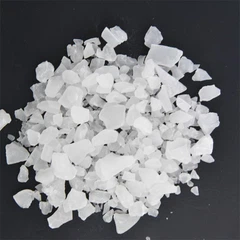
How does ferric aluminium sulphate affect the quality of paper?
Jun 03, 2025
Leave a message
Hey there! I'm a supplier of ferric aluminium sulphate, and today I wanna chat about how this nifty chemical affects the quality of paper.
First off, let's get a bit technical. Ferric aluminium sulphate, often used in the paper - making industry, has several key roles that can significantly impact the end - product.
1. Retention and Drainage
One of the most important aspects of paper - making is getting the right balance between the retention of fine particles and the drainage of water. In a paper - making machine, the pulp is a mixture of fibers, fillers, and water. Ferric aluminium sulphate helps in flocculating the fine particles in the pulp. When it's added to the pulp, it neutralizes the negative charges on the surface of the fine particles like fillers and short fibers.
As a result, these particles start to clump together. This clumping makes it easier for the particles to be retained on the paper - making wire during the formation process. Without proper retention, a lot of the fine particles would just wash away with the water, leading to a loss of valuable materials and a less uniform paper structure.
On the drainage side, the flocculation caused by ferric aluminium sulphate also speeds up the removal of water from the pulp. When the particles are clumped, there are larger channels for the water to flow through, reducing the time it takes for the pulp to dewater. This is crucial because faster drainage means higher production speeds on the paper - making machine. For instance, in a high - speed paper mill, even a small improvement in drainage time can lead to a significant increase in the daily production volume.
2. Paper Strength
The strength of paper is a big deal, whether it's for packaging paper that needs to hold heavy items or for writing paper that shouldn't tear easily. Ferric aluminium sulphate can contribute to paper strength in a couple of ways.
Firstly, by improving the retention of fine particles, it helps to fill in the gaps between the long fibers in the paper. This creates a more continuous and dense structure, which in turn enhances the internal bonding of the paper. Stronger internal bonding means that the paper can withstand more stress without breaking.
Secondly, the chemical reactions that occur when ferric aluminium sulphate is added to the pulp can lead to the formation of cross - links between the fibers. These cross - links act like bridges, holding the fibers together more tightly. As a result, the paper becomes more resistant to tensile forces, making it stronger overall.
3. Brightness and Whiteness
For many types of paper, especially those used for printing and writing, brightness and whiteness are key quality factors. Ferric aluminium sulphate can have a positive impact on these properties.


It helps in the fixation of sizing agents. Sizing agents are used to make the paper resistant to water and ink penetration. When the sizing agents are properly fixed on the paper surface, they can also enhance the paper's brightness and whiteness. This is because a well - sized paper has a smoother surface, which reflects light more uniformly, giving the paper a brighter appearance.
In addition, ferric aluminium sulphate can react with some of the impurities in the pulp, such as residual lignin. Lignin is a natural polymer in wood that can cause the paper to turn yellow over time. By reacting with lignin, ferric aluminium sulphate can help to remove or modify it, reducing the yellowing effect and keeping the paper looking white and fresh.
4. Surface Smoothness
A smooth paper surface is essential for good printing quality. When printing on rough paper, the ink may not spread evenly, leading to blurred or patchy prints. Ferric aluminium sulphate can improve the surface smoothness of paper.
As it helps with the retention and distribution of fine particles, these particles can act as a kind of filler on the paper surface. They fill in the small irregularities between the fibers, creating a smoother surface. Also, the improved drainage and dewatering process due to ferric aluminium sulphate result in a more compact paper structure, which further contributes to a smoother surface finish.
Our Product Range
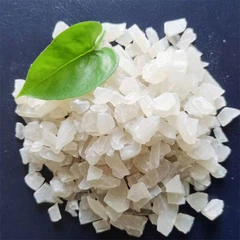
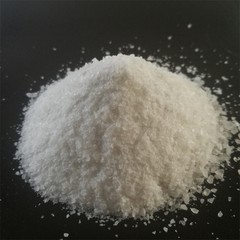
As a supplier, I offer different forms of related products. We have Aluminium Sulphate Octadecahydrate, which is a popular choice in many paper - making applications. It's easy to dissolve in water and can be quickly incorporated into the pulp.
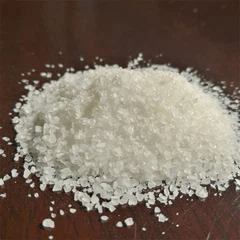
Then there's Granular Aluminum Sulfate. The granular form is convenient for storage and handling. It can be added directly to the pulp system, and its slow - release properties can provide a more stable effect during the paper - making process.
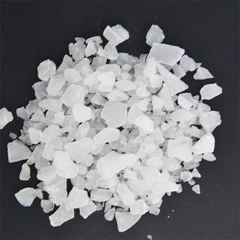
And we also have Aluminum Sulphate Lump. The lumps are suitable for larger - scale paper mills where a large amount of the chemical is needed at once. They can be broken down and used as required.
Conclusion
In conclusion, ferric aluminium sulphate plays a vital role in the paper - making process, affecting various aspects of paper quality from retention and drainage to strength, brightness, and surface smoothness. Choosing the right form of the product, like the ones I offer, can make a real difference in the final paper product.
If you're in the paper - making business and are looking for a reliable supplier of ferric aluminium sulphate, don't hesitate to get in touch for a procurement discussion. We can talk about your specific needs and find the best solution for your paper - making process.
References
- Gess, J. W. (2000). Aluminum Sulfate in the Pulp and Paper Industry. TAPPI Press.
- Hubbe, M. A., & Rojas, O. J. (2008). Colloidal and Surface Chemistry of Paper Coating and Surface Treatment. Springer.
Send Inquiry