

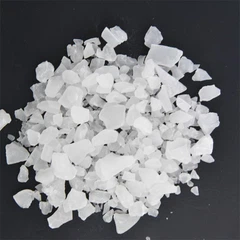
How does the addition of other substances in drinking water affect the behavior of aluminum sulfate?
Nov 20, 2025
Leave a message
As a supplier of aluminum sulfate for drinking water, I've witnessed firsthand the intricate relationship between the addition of other substances in drinking water and the behavior of aluminum sulfate. This topic is not only of scientific interest but also has significant implications for water treatment processes. In this blog, I'll delve into how various substances can affect the performance of aluminum sulfate in drinking water treatment.
The Role of Aluminum Sulfate in Drinking Water Treatment
Aluminum sulfate, commonly known as alum, is a widely used coagulant in drinking water treatment. Its primary function is to remove suspended particles, colloids, and organic matter from water. When added to water, aluminum sulfate hydrolyzes to form aluminum hydroxide flocs. These flocs attract and entrap the impurities, causing them to settle out of the water or be removed by filtration. This process is crucial for improving water clarity, reducing turbidity, and removing pathogens, making the water safe for consumption.
The use of aluminum sulfate in drinking water treatment has been well - established for many years. It is effective, relatively inexpensive, and easy to handle. For more information on the application of aluminum sulfate in portable water, you can visit Aluminum Sulphate for Portable Water.
Impact of pH on Aluminum Sulfate Behavior
One of the most critical factors that can affect the behavior of aluminum sulfate in drinking water is the pH of the water. Aluminum sulfate hydrolysis is highly pH - dependent. At low pH values (around 4 - 5), aluminum exists mainly as soluble aluminum ions. As the pH increases, aluminum hydroxide begins to form. The optimal pH range for the formation of aluminum hydroxide flocs is typically between 5.5 and 7.5.
If the pH is too low, the aluminum hydroxide flocs may not form effectively, and the coagulation process will be impaired. On the other hand, if the pH is too high, the aluminum hydroxide may redissolve, leading to the presence of soluble aluminum in the treated water, which can be a concern for human health. Therefore, when other substances in the water affect the pH, they can have a profound impact on the performance of aluminum sulfate. For example, the presence of acidic or alkaline substances, such as industrial pollutants or natural acids from decaying organic matter, can change the pH of the water and thus alter the behavior of aluminum sulfate.
Influence of Bicarbonate and Carbonate Ions
Bicarbonate and carbonate ions are commonly found in natural waters. They play an important role in buffering the pH of the water and can also react with aluminum ions. When aluminum sulfate is added to water containing bicarbonate and carbonate ions, a series of chemical reactions occur.
The hydrolysis of aluminum sulfate produces hydrogen ions, which can react with bicarbonate and carbonate ions to form carbon dioxide and water. This reaction helps to maintain the pH within a suitable range for floc formation. Additionally, the presence of bicarbonate and carbonate ions can enhance the formation of aluminum hydroxide flocs by providing a source of alkalinity. However, if the concentration of these ions is too high, it can lead to the formation of hard water, which may cause scaling in pipes and equipment. For more details on the use of aluminum sulfate in drinking water treatment, refer to Aluminum Sulphate for Drinking Water Treatment.
Effects of Organic Matter
Organic matter in drinking water can have both positive and negative effects on the behavior of aluminum sulfate. On one hand, some organic substances can act as coagulant aids, enhancing the flocculation process. They can adsorb onto the surface of aluminum hydroxide flocs, increasing their size and density, and improving the settling properties.
On the other hand, high concentrations of organic matter can interfere with the coagulation process. Organic matter can form complexes with aluminum ions, preventing the formation of aluminum hydroxide flocs. This can result in poor coagulation efficiency and increased residual aluminum in the treated water. In addition, some organic substances, such as humic and fulvic acids, can cause color problems in the water. Aluminum sulfate may not be very effective in removing these colored organic compounds, and additional treatment steps may be required.


Impact of Other Metal Ions
The presence of other metal ions in drinking water can also affect the behavior of aluminum sulfate. For example, iron ions can compete with aluminum ions for the available hydroxide ions during the hydrolysis process. If the concentration of iron ions is high, it can reduce the amount of aluminum hydroxide flocs formed, leading to a decrease in coagulation efficiency.
In some cases, the combination of different metal ions can have synergistic or antagonistic effects on the coagulation process. For instance, the presence of certain metal ions may enhance the adsorption of impurities onto the flocs, while others may interfere with the flocculation process. Understanding the interactions between aluminum sulfate and other metal ions is essential for optimizing the water treatment process.
Implications for Water Treatment Plants
For water treatment plants, the addition of other substances in drinking water presents both challenges and opportunities. Water treatment operators need to carefully monitor the quality of the raw water, including the pH, the concentration of various ions, and the amount of organic matter. Based on this information, they can adjust the dosage of aluminum sulfate and other chemicals to ensure effective coagulation and flocculation.
In some cases, pre - treatment steps may be necessary to remove or reduce the concentration of interfering substances. For example, activated carbon filtration can be used to remove organic matter, and ion exchange can be employed to adjust the concentration of metal ions. By understanding how different substances affect the behavior of aluminum sulfate, water treatment plants can improve the quality of the treated water and reduce the cost of treatment.
Sewage Treatment and Aluminum Sulfate
In addition to drinking water treatment, aluminum sulfate is also widely used in sewage treatment. In sewage treatment, the presence of a wide variety of substances, such as heavy metals, pathogens, and high levels of organic matter, can pose unique challenges to the use of aluminum sulfate.
In sewage treatment, aluminum sulfate can help to remove suspended solids, reduce the biological oxygen demand (BOD), and remove phosphorus. However, the high content of organic matter and other contaminants in sewage can make the coagulation process more complex. For more information on the application of aluminum sulfate in sewage treatment, visit Sewage Treatment Aluminum Sulphate.
Conclusion
The addition of other substances in drinking water has a significant impact on the behavior of aluminum sulfate. pH, bicarbonate and carbonate ions, organic matter, and other metal ions can all affect the hydrolysis, floc formation, and coagulation efficiency of aluminum sulfate. As a supplier of aluminum sulfate for drinking water, it is our responsibility to provide high - quality products and technical support to help water treatment plants overcome these challenges.
If you are involved in water treatment and are interested in learning more about our aluminum sulfate products or have any questions regarding the application of aluminum sulfate in your specific water treatment process, we encourage you to contact us for further discussion and potential procurement opportunities. Our team of experts is ready to assist you in finding the most suitable solutions for your water treatment needs.
References
- Letterman, R. D. (Ed.). (1999). Water Quality and Treatment: A Handbook of Community Water Supplies. McGraw - Hill.
- AWWA. (2017). Water Treatment Plant Design. American Water Works Association.
- Benjamin, M. M. (2013). Water Chemistry. McGraw - Hill.
Send Inquiry