

Can aluminium sulphate liquid be used as a thickening agent?
Aug 06, 2025
Leave a message
As a supplier of aluminium sulphate liquid, I've received numerous inquiries from customers about the diverse applications of our product. One question that frequently arises is whether aluminium sulphate liquid can be used as a thickening agent. In this blog post, I'll delve into this topic, exploring the scientific aspects and practical considerations to provide you with a comprehensive understanding.
Understanding Aluminium Sulphate Liquid
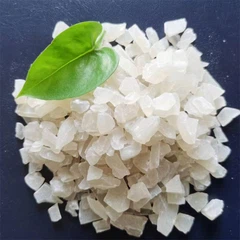
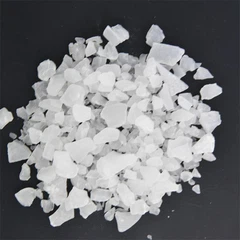
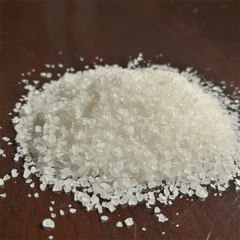
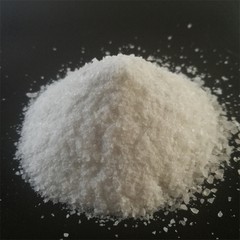
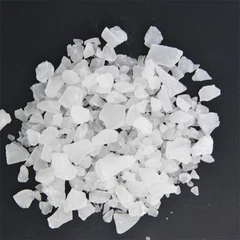
Aluminium sulphate, with the chemical formula Al₂(SO₄)₃, is a white crystalline solid that is highly soluble in water, resulting in a clear, colorless liquid when dissolved. It is commonly produced through the reaction of aluminium hydroxide with sulfuric acid. Our company offers high - quality aluminium sulphate liquid, along with Aluminum Sulphate Powder and Aluminum Sulphate Flake, catering to different customer needs.
The liquid form of aluminium sulphate has a wide range of applications across various industries. It is most well - known for its use in water treatment, where it acts as a coagulant to remove impurities and suspended particles from water. Additionally, it is used in the paper industry to size paper, in the textile industry for dyeing and printing, and in the construction industry as a waterproofing agent.
The Mechanism of Thickening Agents
Before we can determine whether aluminium sulphate liquid can serve as a thickening agent, it's essential to understand how thickening agents work. Thickening agents, also known as thickeners, are substances that increase the viscosity of a liquid or a solution. They achieve this through various mechanisms, such as forming a network structure within the liquid, increasing the intermolecular forces between the liquid molecules, or swelling and absorbing the liquid to expand in volume.
Common thickening agents include natural polymers like starch and cellulose derivatives, synthetic polymers such as polyacrylamide, and inorganic substances like bentonite. These agents are used in a variety of products, from food and cosmetics to paints and adhesives, to improve their texture, stability, and performance.
Can Aluminium Sulphate Liquid Act as a Thickening Agent?
In some specific scenarios, aluminium sulphate liquid can have an effect similar to that of a thickening agent, but its mechanism is quite different from traditional thickeners.
In Water - Based Systems
In water treatment, when aluminium sulphate is added to water, it hydrolyzes to form aluminium hydroxide flocs. These flocs can entangle suspended particles in the water, causing them to aggregate and settle. In a sense, this process can increase the apparent viscosity of the water - particle mixture, as the flocs make the water more resistant to flow. However, this is not a true thickening effect in the traditional sense. The main purpose of adding aluminium sulphate in water treatment is to clarify the water, not to increase its viscosity for the sake of texture or consistency.
In Chemical Reactions
In certain chemical reactions, aluminium sulphate can react with other substances to form gels or precipitates. For example, when it reacts with some alkaline substances, aluminium hydroxide gel may be formed. This gel can increase the viscosity of the reaction mixture, similar to the action of a thickening agent. However, this is a result of a chemical reaction, and the conditions need to be carefully controlled. If the reaction is not properly managed, the gel may not form uniformly, or it may even settle out of the solution over time.
Limitations
Despite these potential effects, aluminium sulphate liquid has significant limitations as a thickening agent. First, its thickening - like effect is highly dependent on the presence of other substances and specific reaction conditions. It cannot be used as a universal thickening agent in the same way as traditional thickeners. Second, aluminium sulphate is a chemical substance that may have certain environmental and health impacts. In applications where strict safety and environmental regulations apply, such as in food and cosmetics, its use as a thickening agent is severely restricted.
Applications Where Aluminium Sulphate's Thickening - like Effect Can Be Utilized
Although aluminium sulphate liquid is not a typical thickening agent, there are some industrial applications where its thickening - like effect can be put to good use.
Construction Industry
In the construction industry, Industrial Aluminum Sulphate can be used in waterproofing materials. When mixed with cement and other additives, the reaction of aluminium sulphate with the alkaline components in cement can form a gel - like substance. This gel can fill the pores in the concrete, increasing its density and reducing its permeability. In this case, the thickening - like effect helps to improve the waterproofing performance of the construction materials.
Mining Industry
In the mining industry, aluminium sulphate can be used in the process of ore flotation. When added to the ore slurry, it can cause the fine particles to aggregate, making it easier to separate the valuable minerals from the gangue. The increased viscosity of the slurry due to the aggregation of particles can improve the efficiency of the flotation process.
Conclusion
In conclusion, while aluminium sulphate liquid can have a thickening - like effect in some specific situations, it is not a traditional thickening agent. Its thickening - like behavior is mainly a by - product of its chemical reactions and interactions with other substances. However, in certain industrial applications such as construction and mining, its unique properties can be harnessed to achieve results similar to those of thickening agents.


If you are interested in exploring the potential uses of our aluminium sulphate liquid, whether for traditional applications like water treatment or for unique uses where its thickening - like effect may be beneficial, please feel free to contact us for more information and to discuss your specific requirements. We are committed to providing high - quality products and professional technical support to meet your needs.
References
- "Water Treatment Handbook" by Water Treatment Association
- "Chemical Engineering Principles" by McCabe, Smith, and Harriott
- "Industrial Applications of Aluminium Compounds" by various industry research reports.
Send Inquiry