

How does aluminium sulfate work in the oxidation process of water treatment?
Sep 08, 2025
Leave a message
Hey there! As a supplier of aluminium sulfate for water treatment, I often get asked about how this nifty chemical works in the oxidation process of water treatment. So, I thought I'd take a few minutes to break it down for you in a way that's easy to understand.
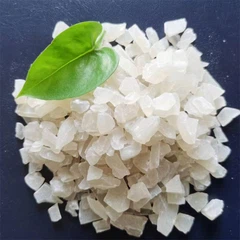
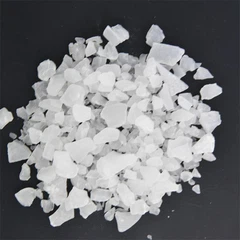
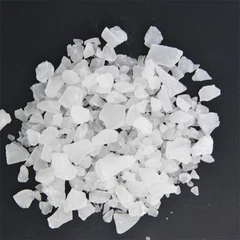
First off, let's talk a bit about what aluminium sulfate is. Aluminium sulfate, also known as alum, is a white crystalline solid that's soluble in water. It's been used in water treatment for ages because it's effective, relatively inexpensive, and readily available. We offer different forms of aluminium sulfate, like Iron-Free Aluminum Sulfate Powder For Sewage Treatment, Aluminium Sulphate Liquid, and Aluminium Sulphate Octadecahydrate, to suit different water treatment needs.
Now, onto the oxidation process in water treatment. Oxidation is a chemical reaction that involves the transfer of electrons. In water treatment, oxidation is used to remove various contaminants, such as organic matter, heavy metals, and odorous compounds. It can also help to disinfect the water by killing harmful microorganisms.
So, how does aluminium sulfate fit into this picture? Well, when aluminium sulfate is added to water, it undergoes a series of chemical reactions that ultimately lead to the formation of aluminium hydroxide, which is a gelatinous precipitate. This precipitate plays a crucial role in the oxidation process.
Let's start with the basics of the reaction. When aluminium sulfate (Al₂(SO₄)₃) is dissolved in water, it dissociates into aluminium ions (Al³⁺) and sulfate ions (SO₄²⁻). The aluminium ions then react with water molecules to form aluminium hydroxide (Al(OH)₃) and hydrogen ions (H⁺). The chemical equation for this reaction is:
Al₂(SO₄)₃ + 6H₂O ⇌ 2Al(OH)₃ + 3H₂SO₄
This reaction is an equilibrium reaction, which means that it can go in both directions. The formation of aluminium hydroxide is favored at a certain pH range, usually between 5.5 and 8.5. At this pH, the aluminium hydroxide precipitate forms and starts to do its magic.
One of the main ways that aluminium hydroxide helps in the oxidation process is by acting as a coagulant. Coagulation is the process of bringing together small particles in the water to form larger, more easily removable flocs. The aluminium hydroxide precipitate has a positive charge, which allows it to attract and neutralize the negatively charged particles in the water, such as clay, silt, and organic matter. As these particles come together, they form flocs that can settle out of the water or be filtered out.
In addition to coagulation, aluminium hydroxide can also enhance the oxidation of certain contaminants. For example, it can react with dissolved iron and manganese in the water to form insoluble oxides, which can then be removed by filtration. The aluminium hydroxide can also adsorb some organic compounds onto its surface, making them more susceptible to oxidation by other oxidizing agents, such as chlorine or ozone.
Another important aspect of the role of aluminium sulfate in the oxidation process is its effect on the pH of the water. As mentioned earlier, the formation of aluminium hydroxide is pH-dependent. If the pH of the water is too low or too high, the aluminium hydroxide may not form properly, or it may dissolve back into the water. Therefore, it's important to adjust the pH of the water to the optimal range before adding aluminium sulfate. This can usually be done by adding an acid or a base to the water, depending on its initial pH.
Once the aluminium hydroxide flocs have formed and the contaminants have been removed, the water can be further treated by other processes, such as filtration, disinfection, and pH adjustment. Filtration is used to remove the remaining flocs and any other suspended particles in the water. Disinfection is used to kill any remaining microorganisms in the water, and pH adjustment is used to ensure that the water has a suitable pH for its intended use.
Now, let's talk about some of the benefits of using aluminium sulfate in the oxidation process of water treatment. One of the main benefits is its effectiveness in removing a wide range of contaminants. Aluminium sulfate can be used to treat both surface water and groundwater, and it can remove contaminants such as turbidity, color, odor, iron, manganese, and organic matter. It's also relatively easy to use and can be added to the water at different stages of the treatment process.
Another benefit of using aluminium sulfate is its cost-effectiveness. Compared to some other water treatment chemicals, aluminium sulfate is relatively inexpensive, especially when purchased in bulk. This makes it a popular choice for water treatment plants of all sizes.


In addition to its effectiveness and cost-effectiveness, aluminium sulfate is also relatively safe to use. It's not highly toxic, and it doesn't produce any harmful by-products when used in the recommended dosages. However, it's still important to follow the proper safety procedures when handling and using aluminium sulfate, such as wearing protective clothing and gloves.
So, there you have it! That's how aluminium sulfate works in the oxidation process of water treatment. As a supplier of aluminium sulfate for water treatment, we're committed to providing high-quality products and excellent customer service. If you're interested in learning more about our aluminium sulfate products or have any questions about water treatment, please don't hesitate to contact us. We'd be happy to help you find the right solution for your water treatment needs.
References
- AWWA Water Treatment Plant Design, 5th Edition
- Water Quality and Treatment: A Handbook of Community Water Supplies, 6th Edition
Send Inquiry