

How does aluminum sulfate in drinking water interact with colloids?
Jul 18, 2025
Leave a message
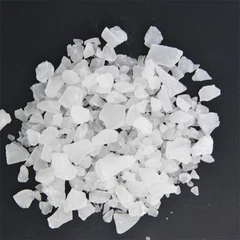
As a supplier of aluminum sulfate in drinking water, I've witnessed firsthand the importance of understanding how this compound interacts with colloids in water treatment processes. Aluminum sulfate, commonly known as alum, is a key player in the purification of drinking water, and its interaction with colloids is fundamental to its effectiveness.
The Basics of Colloids in Drinking Water
Colloids are tiny particles, typically in the size range of 1 nanometer to 1 micrometer, that are dispersed throughout a liquid medium. In drinking water, colloids can include a variety of substances such as clay, silt, organic matter, and microorganisms. These particles are so small that they do not settle out of the water on their own due to their Brownian motion and the electrical charges on their surfaces. The surface charges cause the colloids to repel each other, maintaining a stable suspension in the water.
The presence of colloids in drinking water is a significant concern for several reasons. Firstly, they can cause the water to appear turbid, which is aesthetically unappealing. Secondly, colloids can act as carriers for harmful substances such as heavy metals and pathogens, increasing the risk of water - borne diseases. Therefore, removing colloids is a crucial step in the water treatment process.
How Aluminum Sulfate Works
Aluminum sulfate, when added to water, undergoes a series of chemical reactions. In water, aluminum sulfate dissociates into aluminum ions ($Al^{3 +}$) and sulfate ions ($SO_{4}^{2 -}$). The aluminum ions then react with water molecules in a hydrolysis reaction.
The hydrolysis of aluminum ions can be represented by the following general equations:
[Al^{3+}+H_{2}O\rightleftharpoons Al(OH)^{2 +}+H^{+}]
[Al(OH)^{2+}+H_{2}O\rightleftharpoons Al(OH){2}^{+}+H^{+}]
[Al(OH){2}^{+}+H_{2}O\rightleftharpoons Al(OH)_{3}(s)+H^{+}]
As the hydrolysis proceeds, various aluminum hydroxide species are formed, including positively charged aluminum hydroxide complexes and insoluble aluminum hydroxide flocs.
Interaction with Colloids
The interaction between aluminum sulfate and colloids in drinking water mainly occurs through two mechanisms: charge neutralization and sweep flocculation.
Charge Neutralization
Most colloids in water carry a negative surface charge. The positively charged aluminum hydroxide complexes formed during the hydrolysis of aluminum sulfate can neutralize these negative charges on the colloid surfaces. When the surface charge of the colloids is reduced, the repulsive forces between the colloids are weakened. As a result, the colloids can come closer to each other and aggregate into larger particles. This process is known as coagulation.
For example, if we have a colloid with a negative surface charge due to the adsorption of anions from the water, the positively charged $Al(OH)^{2 +}$ or $Al(OH)_{2}^{+}$ ions can adsorb onto the colloid surface. This adsorption reduces the net negative charge of the colloid, allowing it to collide and stick to other colloids more easily.
Sweep Flocculation
In addition to charge neutralization, sweep flocculation also plays an important role in the removal of colloids. As the hydrolysis of aluminum sulfate continues, large amounts of insoluble aluminum hydroxide flocs ($Al(OH)_{3}$) are formed. These flocs can entrap or "sweep" the colloids as they settle through the water column.
The insoluble aluminum hydroxide flocs have a large surface area and a sticky nature. Colloids in the water become attached to the flocs, and as the flocs settle under the influence of gravity, the colloids are removed from the water. This process is particularly effective when the concentration of colloids is relatively high or when the charge neutralization alone is not sufficient to achieve complete coagulation.
Factors Affecting the Interaction
Several factors can influence the interaction between aluminum sulfate and colloids in drinking water.


pH
The pH of the water is one of the most critical factors. The hydrolysis of aluminum sulfate and the formation of different aluminum hydroxide species are highly pH - dependent. At low pH values, the dominant species are the positively charged aluminum ions and complexes such as $Al^{3 +}$, $Al(OH)^{2 +}$, and $Al(OH)_{2}^{+}$. These species are effective for charge neutralization.
As the pH increases, more of the insoluble $Al(OH){3}$ flocs are formed. The optimal pH range for the use of aluminum sulfate in water treatment is typically between 5.5 and 7.5. Outside this range, the effectiveness of aluminum sulfate in removing colloids may be significantly reduced. For example, at very high pH values, the aluminum hydroxide may dissolve as negatively charged aluminate ions ($Al(OH){4}^{-}$), reducing its ability to interact with negatively charged colloids.
Dosage
The amount of aluminum sulfate added to the water also affects the interaction with colloids. If the dosage is too low, there may not be enough positively charged species to neutralize the negative charges on the colloids, and the coagulation process will be incomplete. On the other hand, if the dosage is too high, it can lead to an increase in the turbidity of the water due to the formation of excess aluminum hydroxide particles that do not settle properly.
Temperature
Temperature can have an impact on the rate of hydrolysis of aluminum sulfate and the movement of colloids. Higher temperatures generally increase the rate of chemical reactions, including the hydrolysis of aluminum sulfate. This can lead to faster formation of aluminum hydroxide species and more rapid coagulation.
However, temperature also affects the viscosity of water. At lower temperatures, the viscosity of water increases, which can slow down the movement of colloids and the settling of flocs. As a result, the overall efficiency of the water treatment process may be reduced.
Applications and Benefits
The use of aluminum sulfate in removing colloids from drinking water has numerous applications and benefits.
In municipal water treatment plants, aluminum sulfate is widely used as a coagulant to clarify water. By removing colloids, the water becomes clearer, reducing the turbidity and improving the aesthetic quality. This also makes subsequent treatment processes such as filtration and disinfection more effective.
Aluminum sulfate is also used in industrial water treatment. For example, in the Dyeing Wastewater Treatment Aluminum Sulphate process, it can help remove colloidal dyes and other impurities from the wastewater. In sewage treatment, as described in Sewage Treatment Aluminum Sulphate, aluminum sulfate can assist in the removal of colloidal organic matter and suspended solids.
One of the main advantages of using aluminum sulfate is its cost - effectiveness. It is relatively inexpensive compared to some other coagulants, making it a popular choice for large - scale water treatment operations. Additionally, aluminum sulfate is readily available and easy to handle.
Contact for Purchase and Collaboration
If you are involved in the water treatment industry and are looking for a reliable supplier of aluminum sulfate for drinking water, we are here to assist you. Our high - quality aluminum sulfate products are carefully manufactured to ensure optimal performance in removing colloids from water. Whether you are operating a small - scale water treatment facility or a large municipal water plant, we can provide the right amount of aluminum sulfate to meet your specific needs.
To learn more about our Aluminum Sulfate in Drinking Water products and to start a purchase negotiation, please feel free to reach out to us. We are committed to providing excellent customer service and technical support to help you achieve the best results in your water treatment processes.
References
- Letterman, R. D. (Ed.). (2013). Water Quality and Treatment: A Handbook of Community Water Supplies. McGraw - Hill Education.
- Gregory, J., & Jia, X. (2000). Coagulation chemistry. In Particle Removal Processes in Water and Wastewater Treatment (pp. 1 - 36). IWA Publishing.
- Amirtharajah, A., & O'Melia, C. R. (1990). Coagulation and flocculation. In Water Quality and Treatment: A Handbook of Community Water Supplies (pp. 3 - 1 to 3 - 40). McGraw - Hill.
Send Inquiry