

How does aluminum sulphate affect the zeta potential of particles in water?
May 15, 2025
Leave a message
As a long - standing supplier of aluminum sulphate, I've witnessed firsthand the wide - ranging applications of this remarkable chemical compound in water treatment. One of the most crucial aspects of its performance in water treatment is its influence on the zeta potential of particles in water. In this blog, I'll delve into how aluminum sulphate affects the zeta potential and why it matters for water treatment processes.

Understanding Zeta Potential
Before we explore the impact of aluminum sulphate, it's essential to understand what zeta potential is. Zeta potential is a measure of the electrical charge on the surface of particles suspended in a liquid, such as water. Particles in water usually carry a negative charge on their surface. This negative charge causes the particles to repel each other, preventing them from aggregating and settling out of the water. A high negative zeta potential means the particles are stable in suspension, and it's difficult to separate them from the water. On the other hand, when the zeta potential approaches zero, the repulsive forces between particles are reduced, allowing them to come closer together and form larger aggregates, which can then be more easily removed from the water.
How Aluminum Sulphate Affects Zeta Potential
Aluminum sulphate, also known as alum, is a common coagulant used in water treatment. When added to water, it undergoes a series of chemical reactions. First, aluminum sulphate dissociates in water to release aluminum ions $\left(Al^{3 +}\right)$. These aluminum ions can react with water molecules to form various hydrolysis products, such as $\mathrm{Al(OH)_2^+}$, $\mathrm{Al(OH)_2^+}$, and $\mathrm{Al(OH)_3}$.
The positively charged aluminum ions and their hydrolysis products can interact with the negatively charged particles in water. The positive charges on these species can neutralize the negative charges on the particle surfaces, reducing the zeta potential. As the zeta potential decreases, the repulsive forces between the particles are weakened. This allows the particles to collide more frequently and form larger flocs through a process called coagulation.
For example, in a water treatment plant dealing with turbid water, when a proper amount of aluminum sulphate is added, the aluminum ions start to neutralize the negative charges on the suspended particles like clay and silt. As the zeta potential is reduced, these small particles begin to stick together. Eventually, they form larger flocs that can settle to the bottom of the water tank or be removed by filtration.
Different Forms of Aluminum Sulphate and Their Impact
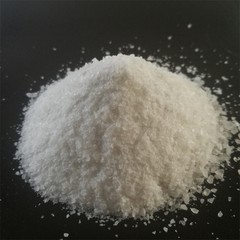
We offer several forms of aluminum sulphate, each with its own characteristics and advantages in affecting the zeta potential of particles in water.
-
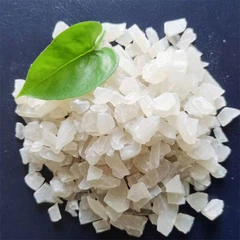
Granular Aluminum Sulfate: Granular aluminum sulphate Granular Aluminum Sulfate has a relatively large particle size. It dissolves more slowly compared to other forms, which can be an advantage in some water treatment applications. The slow dissolution allows for a more gradual release of aluminum ions into the water. This can result in a more controlled reduction of the zeta potential of particles. In large - scale water treatment facilities, where a continuous and stable coagulation process is required, granular aluminum sulphate can be an ideal choice. It provides a long - lasting source of aluminum ions, ensuring that the zeta potential of particles is steadily reduced over time.
-
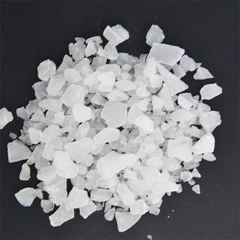
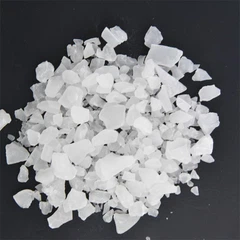
Aluminum Sulphate Flake: Aluminum sulphate flakes Aluminum Sulphate Flake dissolve more quickly than granular form. When added to water, the flakes rapidly release aluminum ions, leading to a relatively fast reduction of the zeta potential. This makes them suitable for applications where a quick coagulation response is needed, such as in emergency water treatment situations or in small - scale water treatment systems. The fast - acting nature of aluminum sulphate flakes can quickly neutralize the negative charges on particles and initiate the coagulation process.
-
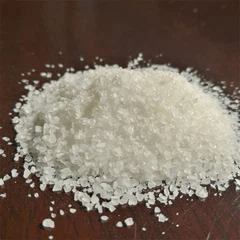
Aluminium Sulphate Octadecahydrate: Aluminium sulphate octadecahydrate Aluminium Sulphate Octadecahydrate is a hydrated form of aluminum sulphate. It contains water molecules in its crystal structure. This form is highly soluble in water, and when it dissolves, it releases a high concentration of aluminum ions. The high concentration of aluminum ions can have a significant impact on the zeta potential of particles in water. It can rapidly neutralize the negative charges on the particle surfaces, leading to a rapid decrease in the zeta potential and efficient coagulation.
Factors Affecting the Impact of Aluminum Sulphate on Zeta Potential
The effectiveness of aluminum sulphate in reducing the zeta potential of particles in water is influenced by several factors.
-
Dosage: The amount of aluminum sulphate added to the water is crucial. If the dosage is too low, there may not be enough aluminum ions to neutralize the negative charges on the particles, and the zeta potential will not be reduced significantly. On the other hand, if the dosage is too high, it can lead to over - coagulation, where the particles become too positively charged, and the zeta potential may increase again, causing the particles to re - disperse. Therefore, determining the optimal dosage is essential for efficient water treatment.
-
pH of the Water: The pH of the water plays a vital role in the hydrolysis of aluminum sulphate and its interaction with particles. Different hydrolysis products of aluminum sulphate are dominant at different pH values. For example, at low pH values, $\mathrm{Al^{3+}}$ ions are more prevalent, while at higher pH values, $\mathrm{Al(OH)_3}$ becomes the main hydrolysis product. The optimal pH range for aluminum sulphate to effectively reduce the zeta potential is usually between 5.5 and 7.5. Outside this range, the coagulation efficiency may decrease.
-
Temperature: Temperature can also affect the reaction rate of aluminum sulphate with particles in water. Higher temperatures generally increase the reaction rate, which means that the zeta potential of particles can be reduced more quickly. However, extremely high temperatures may also cause the hydrolysis products of aluminum sulphate to precipitate prematurely, reducing their effectiveness in coagulation.
Importance of Controlling Zeta Potential in Water Treatment
Controlling the zeta potential of particles in water is of utmost importance in water treatment. When the zeta potential is properly adjusted using aluminum sulphate, it enables the efficient removal of suspended particles, colloids, and some dissolved substances from water. This leads to clearer, cleaner water.

In drinking water treatment, reducing the zeta potential helps to remove turbidity - causing particles, as well as pathogens that may be attached to these particles. In industrial water treatment, it can prevent the build - up of scale and fouling in pipes and equipment, improving the efficiency of industrial processes. Additionally, in wastewater treatment, controlling the zeta potential is essential for the removal of pollutants and the proper operation of treatment systems.
Conclusion
As a supplier of aluminum sulphate, I've seen how this chemical can be a game - changer in water treatment by effectively influencing the zeta potential of particles in water. Whether it's the slow - dissolving granular form, the fast - acting flake form, or the highly soluble octadecahydrate form, each type of aluminum sulphate has its unique advantages in different water treatment scenarios.
If you're involved in water treatment and are looking for a reliable aluminum sulphate supplier, we're here to help. Our high - quality aluminum sulphate products can provide you with the performance you need to achieve optimal zeta potential control and efficient water treatment. Feel free to reach out to us for more information or to discuss your specific requirements. We're ready to work with you to find the best solution for your water treatment needs.
References
- Letterman, R. D. (2007). Water Quality and Treatment: A Handbook of Community Water Supplies. McGraw - Hill.
- Amirtharajah, A., & O'Melia, C. R. (1990). Coagulation and Flocculation. Water Quality and Treatment: A Handbook of Community Water Supplies.
- Gregory, J. (2006). Coagulation and Flocculation in Water and Wastewater Treatment. IWA Publishing.
Send Inquiry