
How does non iron aluminum sulphate interact with other chemicals in water treatment?
Oct 07, 2025
Leave a message
Non iron aluminum sulphate, a key chemical in water treatment, plays a crucial role in purifying water by interacting with various other chemicals. As a leading supplier of Non Iron Aluminum Sulphate, I am excited to delve into the intricate ways it interacts with other substances during the water treatment process.
Interaction with Coagulants and Flocculants
In water treatment, coagulation and flocculation are essential steps to remove suspended particles, colloids, and organic matter. Non iron aluminum sulphate acts as a coagulant, neutralizing the negative charges on these particles, causing them to clump together. When combined with other coagulants like polyaluminum chloride (PAC), a synergistic effect can be achieved. PAC has a high positive charge density, which can quickly neutralize the negative charges on particles. Non iron aluminum sulphate, on the other hand, forms larger flocs that are easier to settle. The combination of these two coagulants can improve the overall efficiency of the coagulation - flocculation process, leading to better removal of turbidity and contaminants.
Flocculants, such as polyacrylamide (PAM), are often used after coagulation to further enhance the formation of large, settleable flocs. Non iron aluminum sulphate can interact with PAM in a way that promotes the growth of flocs. The positively charged aluminum ions from non iron aluminum sulphate can attract the negatively charged functional groups on PAM molecules. This interaction helps to bridge the small flocs formed by non iron aluminum sulphate, creating larger and more stable flocs that can be easily removed by sedimentation or filtration.
Reaction with pH Adjusting Chemicals
The pH of water has a significant impact on the performance of non iron aluminum sulphate in water treatment. Non iron aluminum sulphate hydrolyzes in water to form aluminum hydroxide, which is the active coagulating species. The hydrolysis reaction is highly dependent on the pH of the water. At low pH values (around 4 - 5), the hydrolysis of non iron aluminum sulphate is incomplete, and the aluminum exists mainly as positively charged ions. As the pH increases to the range of 5 - 7, aluminum hydroxide precipitates, which is effective in removing suspended particles.
To optimize the performance of non iron aluminum sulphate, pH adjusting chemicals such as lime (calcium hydroxide) or sulfuric acid may be used. Lime is often added to increase the pH of acidic water. When lime is added to water containing non iron aluminum sulphate, it reacts with the hydrogen ions released during the hydrolysis of non iron aluminum sulphate, shifting the hydrolysis equilibrium towards the formation of aluminum hydroxide. This results in better coagulation and removal of contaminants. On the other hand, sulfuric acid can be used to lower the pH of alkaline water to the optimal range for non iron aluminum sulphate coagulation.
Interaction with Disinfectants
Disinfection is an important step in water treatment to kill harmful microorganisms. Chlorine is one of the most commonly used disinfectants. Non iron aluminum sulphate can interact with chlorine in water. During the coagulation - flocculation process, non iron aluminum sulphate can remove organic matter and other contaminants that may react with chlorine. By reducing the amount of chlorine - reactive substances in water, non iron aluminum sulphate can improve the efficiency of chlorine disinfection.
However, it is important to note that the presence of non iron aluminum sulphate may also affect the stability of chlorine in water. The aluminum hydroxide flocs formed by non iron aluminum sulphate can adsorb chlorine, which may lead to a decrease in the free chlorine concentration in the water. Therefore, the dosage of chlorine needs to be carefully adjusted when using non iron aluminum sulphate in water treatment to ensure effective disinfection.
Impact on Water Hardness and Scale - Forming Chemicals
Non iron aluminum sulphate can have an impact on the hardness of water. Water hardness is mainly caused by the presence of calcium and magnesium ions. When non iron aluminum sulphate is added to water, the aluminum ions can react with carbonate and bicarbonate ions in the water. This reaction can lead to the precipitation of calcium carbonate and magnesium carbonate, which are the main components of scale.
In some cases, non iron aluminum sulphate can be used in combination with water softening chemicals to reduce the hardness of water. For example, when used with sodium carbonate (soda ash), the aluminum ions from non iron aluminum sulphate can react with the carbonate ions provided by soda ash to form aluminum carbonate, which can precipitate along with calcium and magnesium carbonates. This combined treatment can not only remove turbidity and contaminants but also reduce the water hardness, preventing scale formation in pipes and equipment.
Interaction with Adsorbents
Adsorbents such as activated carbon are often used in water treatment to remove organic pollutants, taste, and odor. Non iron aluminum sulphate can interact with activated carbon in the water treatment process. The flocs formed by non iron aluminum sulphate can carry some of the fine activated carbon particles during sedimentation. This can help to remove the activated carbon from the water more easily after the adsorption process.
Moreover, non iron aluminum sulphate can also enhance the adsorption capacity of activated carbon. The positively charged aluminum ions can modify the surface properties of activated carbon, increasing its affinity for negatively charged contaminants. This interaction can improve the overall performance of the combined treatment system, leading to better removal of a wide range of contaminants from water.
Product Variations and Their Interaction Characteristics
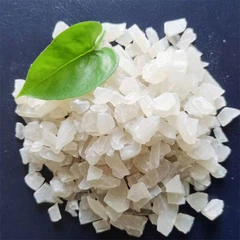
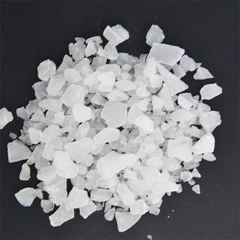
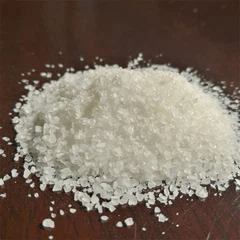
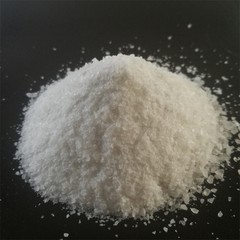
As a supplier, we offer different forms of non iron aluminum sulphate, such as Iron Free Aluminum Sulphate Powder and Non Ferric 17% Aluminum Sulphate Flakes. The powder form of non iron aluminum sulphate has a larger surface area, which allows for faster dissolution and reaction in water. This can result in a quicker start of the coagulation process compared to the flake form.


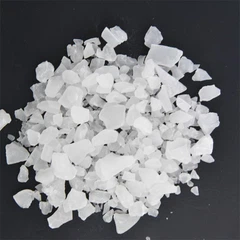
The flake form of non iron aluminum sulphate, on the other hand, is more convenient for storage and handling. It dissolves more slowly than the powder form, which can be an advantage in some water treatment systems where a more gradual release of aluminum ions is required. The interaction of these different forms with other chemicals in water treatment may vary slightly. For example, the faster - dissolving powder may react more quickly with pH adjusting chemicals, while the slower - dissolving flakes may provide a more sustained release of aluminum ions for long - term coagulation.
Conclusion
Non iron aluminum sulphate is a versatile and effective chemical in water treatment, interacting with a wide range of other chemicals to achieve efficient water purification. Its interactions with coagulants, flocculants, pH adjusting chemicals, disinfectants, water hardness reducing chemicals, and adsorbents all contribute to the overall performance of the water treatment process.
If you are involved in water treatment and are looking for a reliable source of high - quality non iron aluminum sulphate, we are here to help. Our products are carefully formulated to ensure optimal performance in various water treatment applications. Whether you need Non Iron Aluminum Sulphate, Iron Free Aluminum Sulphate Powder, or Non Ferric 17% Aluminum Sulphate Flakes, we can provide you with the right solution. Contact us to discuss your specific requirements and start a procurement negotiation today.
References
- Letterman, R. D. (Ed.). (2013). Water Quality and Treatment: A Handbook of Community Water Supplies. McGraw - Hill Education.
- Amirtharajah, A., & O’Melia, C. R. (1990). Coagulation and flocculation. In Water quality and treatment: A handbook of community water supplies.
- Gregory, J., & Barany, S. (2006). Coagulation and flocculation in water and wastewater treatment. IWA Publishing.
Send Inquiry