

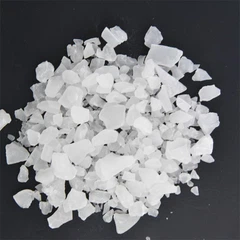
How to analyze the composition of electronic grade aluminum sulfate?
Sep 10, 2025
Leave a message
Hey there! As a supplier of electronic grade aluminum sulfate, I've been getting a lot of questions lately about how to analyze its composition. It's a crucial aspect, especially when you're dealing with high - end applications like electronics. So, I thought I'd share some insights on this topic.
First off, let's understand why analyzing the composition of electronic grade aluminum sulfate is so important. In the electronics industry, even the slightest impurity can have a huge impact on the performance of electronic components. For example, if there are trace amounts of heavy metals in the aluminum sulfate, it could lead to corrosion or interference in electronic circuits. That's why we need to be super precise when it comes to analyzing its composition.
One of the most common methods for analyzing the composition of electronic grade aluminum sulfate is Inductively Coupled Plasma - Mass Spectrometry (ICP - MS). This technique is really powerful. It can detect a wide range of elements at very low concentrations. You see, in ICP - MS, the sample is first vaporized and ionized in a high - temperature plasma. Then, these ions are separated based on their mass - to - charge ratio. By analyzing the intensity of the signals corresponding to different ions, we can determine the concentration of various elements in the aluminum sulfate sample.
Let's say we want to check for the presence of elements like iron, copper, or nickel in our electronic grade aluminum sulfate. ICP - MS can quickly and accurately tell us if these elements are present and in what amounts. This is crucial because these metals can act as contaminants in electronic applications. For instance, iron can cause discoloration and reduce the conductivity of the materials where aluminum sulfate is used.
Another important method is X - ray Fluorescence (XRF) analysis. XRF is a non - destructive technique, which means we don't have to destroy the sample to analyze it. In XRF, the sample is bombarded with X - rays. When the X - rays interact with the atoms in the sample, they cause the atoms to emit secondary X - rays, known as fluorescent X - rays. The energy and intensity of these fluorescent X - rays are characteristic of the elements present in the sample.
XRF is great for getting a quick overview of the major elements in the electronic grade aluminum sulfate. It can detect elements from sodium to uranium. However, it's not as sensitive as ICP - MS for detecting trace elements. But it's still a valuable tool, especially when you want to do a preliminary analysis or a quality control check on a large number of samples.
Now, let's talk about wet chemical analysis. This is an old - school but still very effective method. In wet chemical analysis, we use chemical reactions to determine the composition of the sample. For example, to determine the aluminum content in electronic grade aluminum sulfate, we can use a titration method. We add a known amount of a reagent that reacts specifically with aluminum ions. By measuring the volume of the reagent used, we can calculate the amount of aluminum in the sample.
Wet chemical analysis can also be used to determine the sulfate content. We can precipitate the sulfate ions as barium sulfate and then weigh the precipitate. This gives us an accurate measurement of the sulfate content in the sample. However, wet chemical analysis can be time - consuming and requires a lot of skill and precision.
When it comes to analyzing the purity of electronic grade aluminum sulfate, we also need to consider the crystal structure. X - ray Diffraction (XRD) is a great technique for this. XRD can tell us about the arrangement of atoms in the crystal lattice of aluminum sulfate. A pure and well - formed crystal structure is often an indicator of high - quality electronic grade aluminum sulfate.
In the electronics industry, the demand for high - purity electronic grade aluminum sulfate is on the rise. For applications like batteries, the quality of aluminum sulfate can significantly affect the performance of the battery. That's where Battery Grade Aluminium Sulfate comes in. It needs to have a very specific composition to ensure optimal battery performance.
As a supplier, I always make sure that our electronic grade aluminum sulfate meets the highest standards. We use a combination of these analytical methods to ensure the quality and purity of our products. Whether it's for use in semiconductors, printed circuit boards, or batteries, we know that the composition of our aluminum sulfate is critical.
If you're in the market for electronic grade aluminum sulfate, you need to work with a supplier who understands the importance of composition analysis. We're committed to providing you with the best - quality products. And if you have any questions about the composition of our electronic grade aluminum sulfate or want to discuss your specific requirements, don't hesitate to reach out. We're here to help you make the right choice for your electronic applications.
So, if you're looking for a reliable supplier of electronic grade aluminum sulfate, consider us. We've got the expertise and the technology to ensure that our products meet your needs. Whether you're a small - scale electronics manufacturer or a large - scale industrial user, we can provide you with the right quantity and quality of electronic grade aluminum sulfate.

In conclusion, analyzing the composition of electronic grade aluminum sulfate is a multi - step process that involves various techniques. Each method has its own advantages and limitations, and we use them in combination to get a comprehensive understanding of the sample. As a supplier, we take pride in delivering high - quality products that meet the strict requirements of the electronics industry. If you're interested in purchasing our electronic grade aluminum sulfate, or if you want to learn more about our analysis methods, just contact us. We're eager to start a conversation with you and help you find the best solution for your business.
References:
- "Modern Analytical Chemistry" by David Harvey
- "Handbook of X - ray Fluorescence Spectrometry" by Ronald Jenkins
- "Inductively Coupled Plasma Mass Spectrometry: Principles and Applications" by Nicholas E. Jarvis, Andrew L. Gray, and Richard S. Houk
Send Inquiry