

How does aluminium sulphate 17 affect the conductivity of solutions?
Sep 10, 2025
Leave a message
Hey everyone! I'm a supplier of aluminium sulphate 17, and today I want to chat about how this nifty chemical affects the conductivity of solutions. It might sound a bit technical at first, but trust me, it's pretty fascinating stuff.
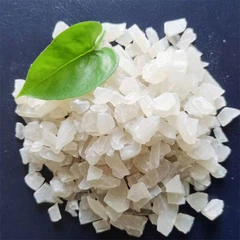
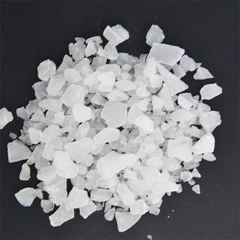
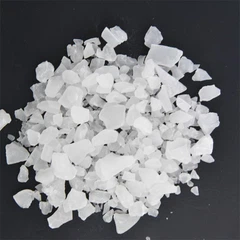
First off, let's quickly talk about what aluminium sulphate 17 is. Aluminium sulphate 17, also known as aluminum sulfate hydrate with a specific water - content ratio, is a commonly used chemical compound. It's got a bunch of applications, from water treatment to paper manufacturing. As a supplier, I've seen it being used in all sorts of industries, and its ability to impact solution conductivity is one of the key aspects that makes it so useful.
Now, let's dig into the science of conductivity. Conductivity in solutions is all about how well a solution can conduct an electric current. This mainly depends on the presence of ions in the solution. Ions are charged particles, and when an electric field is applied, these ions can move and carry the electric charge, allowing the current to flow.
When we dissolve aluminium sulphate 17 in water, it dissociates into its constituent ions. Aluminium sulphate has the chemical formula Al₂(SO₄)₃·17H₂O. In an aqueous solution, it breaks down into aluminium ions (Al³⁺) and sulfate ions (SO₄²⁻). For every mole of aluminium sulphate that dissolves, we get 2 moles of aluminium ions and 3 moles of sulfate ions.
These ions are the key players in increasing the conductivity of the solution. The more ions there are in the solution, the higher its conductivity will be. Aluminium ions, with their +3 charge, and sulfate ions, with their - 2 charge, are highly charged particles. Compared to some other common salts that might dissociate into singly - charged ions (like sodium chloride, which gives Na⁺ and Cl⁻), aluminium sulphate can have a more significant impact on conductivity because of the higher charge on its ions.
Let's think about this in terms of real - world scenarios. In water treatment, for example, the conductivity of water is an important parameter. By adding aluminium sulphate 17 to water, we can not only cause the coagulation of impurities but also change the water's conductivity. This change in conductivity can be monitored to ensure that the right amount of aluminium sulphate has been added. If the conductivity is too low, it might mean that not enough aluminium sulphate has been dissolved, and the coagulation process won't work as effectively. On the other hand, if the conductivity is too high, it could indicate an over - dosage, which can be wasteful and might have other negative effects on the water quality.
Another factor that affects how aluminium sulphate 17 impacts solution conductivity is the concentration of the solution. As we increase the concentration of aluminium sulphate in the solution, there are more ions available to carry the electric charge, so the conductivity increases. However, this relationship isn't always linear. At very high concentrations, the ions can start to interact with each other more strongly. These interactions can slow down the movement of the ions, and as a result, the increase in conductivity might not be as significant as we'd expect based on the simple addition of more ions.
Temperature also plays a role. Generally, as the temperature of the solution increases, the conductivity of the solution with aluminium sulphate also increases. This is because at higher temperatures, the ions have more kinetic energy. They can move more freely through the solution, which means they can carry the electric charge more efficiently.
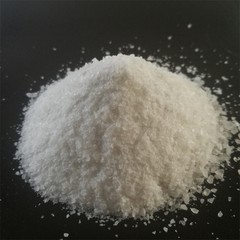
Now, I'd like to mention some of the products we offer as an aluminium sulphate 17 supplier. We have Iron Free Aluminum Sulphate Powder. This product is great for applications where you don't want any iron impurities. Iron can sometimes cause discoloration or other unwanted reactions in certain processes, so having an iron - free option is really valuable.
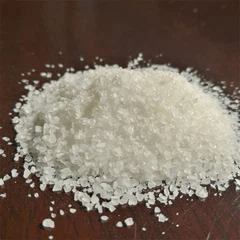
We also have Reagent Grade Aluminum Sulphate. This is a high - quality product that meets strict purity standards. It's ideal for laboratory experiments and other applications where you need a very pure form of aluminium sulphate.


And then there's Non Iron Aluminum Sulphate, which, as the name suggests, is free of iron. This can be crucial in industries like food and beverage processing, where any trace of iron could affect the taste or quality of the final product.
If you're in an industry that uses aluminium sulphate and you're interested in how it affects solution conductivity for your specific application, or if you're just looking for a reliable supplier of high - quality aluminium sulphate 17, feel free to reach out. We're here to help you find the right product for your needs and answer any questions you might have about the properties and uses of aluminium sulphate. Whether you're in water treatment, paper manufacturing, or any other field that benefits from this amazing chemical, we've got you covered.
References
- Atkins, P., & de Paula, J. (2006). Physical Chemistry. Oxford University Press.
- Chang, R. (2010). Chemistry. McGraw - Hill Education.
Send Inquiry