

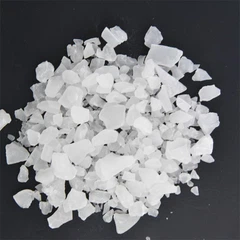
How to test the quality of aluminium sulphate water?
Sep 19, 2025
Leave a message
Hey there! I'm an aluminium sulphate water supplier, and I know how crucial it is to ensure the quality of the aluminium sulphate water we're providing. In this blog, I'll share with you some practical ways to test the quality of aluminium sulphate water.
First off, let's understand why testing the quality is so important. Aluminium sulphate is widely used in water treatment processes. Whether it's for Aluminum Sulphate for Portable Water, Sewage Treatment Aluminum Sulphate, or Textile Waste Water Treatment Aluminum Sulphate, the quality of the aluminium sulphate water directly affects the efficiency of the treatment. If the quality is poor, it might not effectively remove impurities, leading to sub - standard treated water.
Physical Tests
One of the simplest ways to start testing is through physical tests. We can visually inspect the aluminium sulphate water. A high - quality aluminium sulphate water should be clear and free of visible particles. If you see any sediment or cloudiness, it could be a sign of impurities or improper dissolution.


Another physical property to check is the density. You can use a hydrometer to measure the density of the aluminium sulphate water. The density can give you an idea about the concentration of the solution. Usually, a standard density range exists for different grades of aluminium sulphate water. If the density is too low, it might mean the solution is too diluted, and if it's too high, there could be an issue with over - concentration or the presence of other heavy substances.
Chemical Tests
Chemical tests are more in - depth and can provide detailed information about the quality of aluminium sulphate water.
pH Testing
The pH level of aluminium sulphate water is crucial. You can use a pH meter or pH test strips. Aluminium sulphate is acidic, and the pH of a well - prepared solution typically ranges between 2.5 and 4.5. If the pH is outside this range, it can affect the coagulation and flocculation processes in water treatment. For example, if the pH is too high, the aluminium ions might precipitate out prematurely, reducing the effectiveness of the treatment.
Aluminium Content Analysis
Determining the actual aluminium content in the water is essential. There are several methods to do this. One common method is the titration method. You use a standard solution, like EDTA (ethylenediaminetetraacetic acid), to react with the aluminium ions in the water. By measuring the volume of the standard solution used, you can calculate the amount of aluminium in the water.
Another advanced technique is atomic absorption spectroscopy (AAS). This method is more accurate and can detect very low levels of aluminium. It works by measuring the absorption of light by the aluminium atoms in the sample. AAS can give you a precise value of the aluminium concentration, which is important for ensuring that the water meets the required specifications.
Impurity Testing
Impurities in aluminium sulphate water can come from various sources, such as raw materials or the manufacturing process. Common impurities include heavy metals like iron, copper, and lead. You can use inductively coupled plasma - mass spectrometry (ICP - MS) to detect these impurities. This method can detect trace amounts of different elements in the water. If the levels of heavy metals exceed the allowable limits, it can be a serious problem, especially when the water is used for portable water treatment.
Microbiological Tests
Although aluminium sulphate is mainly used for chemical treatment, microbiological testing is also necessary. Microorganisms in the water can interfere with the treatment process and pose a health risk, especially in portable water applications. You can take a sample of the aluminium sulphate water and use a culture - based method. Plate the sample on a suitable growth medium and incubate it for a certain period. Then, count the number of colonies that grow. If the colony count is high, it indicates the presence of a large number of microorganisms, which might require additional treatment steps.
Testing Frequency
As a supplier, I recommend regular testing. For small - scale applications, you can test the aluminium sulphate water every batch. For large - scale operations, you can set up a sampling schedule. For example, test samples at different stages of production, storage, and transportation. This way, you can catch any quality issues early and take corrective actions.
Corrective Actions
If the test results show that the quality of the aluminium sulphate water is not up to par, there are several corrective actions you can take.
If the pH is off, you can adjust it by adding an acid or a base. For example, if the pH is too high, you can add a small amount of sulfuric acid to lower it.
If there are impurities, you might need to filter the water or use a purification process. For heavy metal impurities, you can use ion - exchange resins to remove them.
If the concentration is incorrect, you can either add more aluminium sulphate to increase the concentration or add more water to dilute it.
Why Choose Our Aluminium Sulphate Water
As a supplier, we're committed to providing high - quality aluminium sulphate water. We conduct rigorous testing at every stage of production. Our products are suitable for a wide range of applications, including portable water treatment, sewage treatment, and textile waste water treatment. We understand the importance of quality, and we ensure that our aluminium sulphate water meets all the industry standards.
If you're in the market for aluminium sulphate water, we'd love to talk to you. Whether you're a small - scale water treatment plant or a large industrial facility, we can offer you the right product at a competitive price. Contact us to discuss your specific needs, and let's work together to achieve the best water treatment results.
References
- "Water Treatment Handbook" by some well - known water treatment experts.
- Journal articles on aluminium sulphate water treatment from "Journal of Environmental Science and Technology".
- Technical documents from relevant water treatment associations.
Send Inquiry