

How to test the quality of battery grade aluminium sulfate?
May 19, 2025
Leave a message
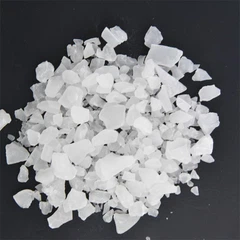
As a supplier of Battery Grade Aluminium Sulfate, I understand the critical importance of ensuring the high - quality of our product. In the battery industry, the performance and longevity of batteries rely heavily on the purity and stability of the materials used, and battery grade aluminium sulfate is no exception. In this blog, I will share some effective methods to test the quality of battery grade aluminium sulfate.
1. Chemical Composition Analysis
1.1 Determination of Aluminium Content
The aluminium content in battery grade aluminium sulfate is a key parameter. We can use complexometric titration to measure it accurately. First, a sample of the aluminium sulfate is dissolved in an appropriate acid solution to form aluminium ions. Then, a standard solution of a complexing agent, such as EDTA (ethylenediaminetetraacetic acid), is added. The EDTA reacts with the aluminium ions to form a stable complex. By using an appropriate indicator, we can determine the end - point of the titration and calculate the aluminium content based on the volume of the EDTA solution used.
The reaction equation is as follows:
[Al^{3 +}+Y^{4 -}\rightleftharpoons AlY^{-}]
where (Y^{4 -}) represents the EDTA anion.
1.2 Detection of Impurities
Impurities in battery grade aluminium sulfate can have a significant impact on battery performance. Common impurities include heavy metals such as iron, copper, and lead, as well as anions like chloride and sulfate.
- Heavy Metals: Atomic absorption spectroscopy (AAS) or inductively coupled plasma - mass spectrometry (ICP - MS) can be used to detect and quantify heavy metal impurities. These techniques are highly sensitive and can accurately measure trace amounts of heavy metals in the sample. For example, in AAS, the sample is atomized, and the absorption of light at specific wavelengths by the metal atoms is measured to determine their concentration.
- Anions: Ion chromatography is a suitable method for analyzing anions. The sample is passed through an ion - exchange column, and the anions are separated based on their affinity for the column packing. A conductivity detector is then used to detect and quantify the anions.
2. Physical Property Testing
2.1 Particle Size Analysis
The particle size of battery grade aluminium sulfate can affect its solubility and reactivity. Laser diffraction particle size analyzers are commonly used for this purpose. A sample of the aluminium sulfate is dispersed in a liquid medium, and a laser beam is passed through the dispersion. The scattering of the laser light by the particles is measured, and the particle size distribution is calculated based on the scattering pattern.

2.2 Moisture Content Determination
Moisture in the aluminium sulfate can lead to caking and affect its storage stability. The Karl Fischer titration method is a precise way to measure the moisture content. In this method, the sample is dissolved in a suitable solvent, and a Karl Fischer reagent is added. The reagent reacts with the water in the sample, and the amount of reagent consumed is proportional to the moisture content.
3. Solubility Testing
Battery grade aluminium sulfate should have good solubility in the electrolyte used in batteries. To test the solubility, a known amount of the sample is added to a specific volume of the electrolyte solution at a certain temperature. The mixture is stirred for a specific period, and then the undissolved residue is filtered and weighed. The solubility can be calculated based on the amount of dissolved sample.
4. Thermal Stability Testing
Thermal stability is crucial for battery grade aluminium sulfate, as batteries can generate heat during operation. Differential scanning calorimetry (DSC) and thermogravimetric analysis (TGA) are two commonly used techniques for thermal stability testing.
- Differential Scanning Calorimetry (DSC): DSC measures the heat flow associated with physical and chemical changes in the sample as a function of temperature. It can detect phase transitions, decomposition reactions, and other thermal events. For battery grade aluminium sulfate, DSC can help identify the temperature range at which the material starts to decompose or undergo other thermal changes.
- Thermogravimetric Analysis (TGA): TGA measures the change in the mass of the sample as a function of temperature. By heating the sample at a controlled rate, we can observe the weight loss due to processes such as evaporation of moisture, decomposition of the compound, or release of volatile substances. This information can be used to evaluate the thermal stability of the aluminium sulfate.
5. Electrochemical Performance Testing
Since battery grade aluminium sulfate is used in batteries, its electrochemical performance is of utmost importance. We can conduct tests such as cyclic voltammetry and charge - discharge cycling to evaluate its performance in a battery system.
- Cyclic Voltammetry: Cyclic voltammetry is used to study the electrochemical reactions that occur at the electrode surface. A working electrode, a counter - electrode, and a reference electrode are placed in an electrolyte solution containing the aluminium sulfate. A potential is applied to the working electrode, and the current is measured as the potential is swept back and forth. The resulting cyclic voltammogram can provide information about the redox reactions involving the aluminium sulfate and its electrochemical reversibility.
- Charge - Discharge Cycling: In this test, a battery is assembled using the battery grade aluminium sulfate as one of the components. The battery is then subjected to multiple charge - discharge cycles, and its capacity, efficiency, and cycle life are measured. This test can directly evaluate the performance of the aluminium sulfate in a real - world battery application.
As a reliable supplier of Battery Grade Aluminium Sulfate, we conduct these comprehensive quality tests on every batch of our products to ensure that they meet the strict requirements of the battery industry. Our commitment to quality has earned us a good reputation among our customers.
If you are in the market for high - quality battery grade aluminium sulfate, we invite you to contact us for further discussions and procurement negotiations. We are confident that our product can meet your needs and contribute to the success of your battery products.
References
- Skoog, D. A., West, D. M., Holler, F. J., & Crouch, S. R. (2013). Fundamentals of Analytical Chemistry. Cengage Learning.
- Danielsson, L. G., & Johansson, L. G. (1982). Analytical Chemistry in Industry. Wiley - VCH.
- Bard, A. J., & Faulkner, L. R. (2001). Electrochemical Methods: Fundamentals and Applications. Wiley.
Send Inquiry