

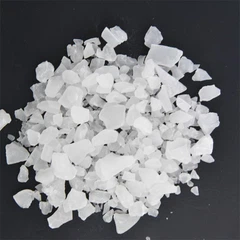
Is 16% aluminum sulphate a catalyst?
Oct 20, 2025
Leave a message
Hey there! As a supplier of 16% aluminum sulphate, I've been getting a lot of questions lately about whether 16% aluminum sulphate can act as a catalyst. So, I thought I'd sit down and write this blog to share my thoughts and some scientific insights on the matter.
First off, let's quickly understand what a catalyst is. A catalyst is a substance that speeds up a chemical reaction without being consumed in the process. It does this by providing an alternative reaction pathway with a lower activation energy. Now, the big question is, does 16% aluminum sulphate fit this bill?


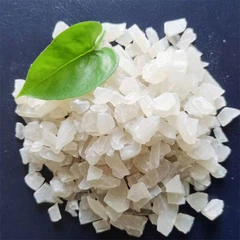
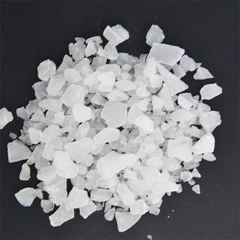
16% aluminum sulphate is a commonly used chemical in various industries, especially in water treatment and paper manufacturing. In water treatment, it helps in coagulation and flocculation processes, which are essential for removing suspended particles from water. But does this mean it's acting as a catalyst?
In the coagulation and flocculation process, aluminum sulphate reacts with water to form aluminum hydroxide, which then adsorbs and binds to the suspended particles. This process is more of a chemical reaction where the aluminum sulphate is actually consumed, unlike a catalyst that remains unchanged. So, in this context, 16% aluminum sulphate is not acting as a catalyst.
However, there are some scenarios where aluminum sulphate might exhibit catalytic properties. For example, in certain organic synthesis reactions, aluminum sulphate can act as a Lewis acid catalyst. A Lewis acid is a substance that can accept a pair of electrons. Aluminum in aluminum sulphate has an empty orbital that can accept electrons from other molecules, facilitating chemical reactions.
Let's take a look at some research in this area. Studies have shown that aluminum sulphate can catalyze the esterification reaction between carboxylic acids and alcohols. In this reaction, aluminum sulphate helps in the formation of an intermediate complex, which lowers the activation energy and speeds up the reaction. But it's important to note that these reactions usually require specific conditions and concentrations, and not all reactions involving 16% aluminum sulphate will have catalytic effects.
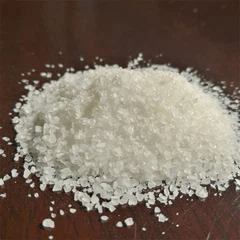
Now, let's talk about the products we offer. We supply high - quality 16% aluminum sulphate, but we also have other related products. If you're interested in a different form of aluminum sulphate, we have Iron Free Aluminum Sulphate Powder. This product is great for applications where you need a pure form of aluminum sulphate without the presence of iron.
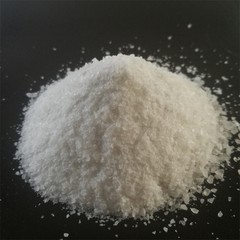
Another option is our 17% Aluminum Sulphate Powder. The higher concentration might be more suitable for some industrial processes that require a stronger coagulating or catalytic effect. And if you're looking for a non - ferric version, we have Aluminium Sulphate Non Ferric, which is ideal for applications where iron contamination is a concern.
So, to sum it up, 16% aluminum sulphate doesn't always act as a catalyst. It depends on the specific reaction and conditions. In most common applications like water treatment, it's mainly involved in chemical reactions where it gets consumed. But in some specialized organic synthesis reactions, it can show catalytic properties.
If you're in the market for aluminum sulphate products, whether you're looking for a catalyst for a specific reaction or for other industrial applications, we're here to help. We can provide you with the right product and offer technical support to ensure you get the best results. If you're interested in learning more or starting a procurement discussion, feel free to reach out. We're always happy to talk about how our products can meet your needs.
References:
- "Catalytic Activity of Aluminum Sulphate in Organic Synthesis" - Journal of Chemical Reactions
- "Water Treatment with Aluminum Sulphate: Principles and Applications" - Water Science and Technology Journal
Send Inquiry