

What are the physical properties of granular aluminum sulfate?
Oct 20, 2025
Leave a message
Hey there! As a supplier of granular aluminum sulfate, I've got a ton of knowledge about this stuff, and I'm super stoked to share the physical properties of granular aluminum sulfate with you.
Let's start with the basics. Granular aluminum sulfate, often known as alum, is a widely used chemical compound. It's got a bunch of applications, from water treatment to paper manufacturing, and even in the food industry. So, what makes it so special? Well, it all boils down to its physical properties.
Appearance and Color
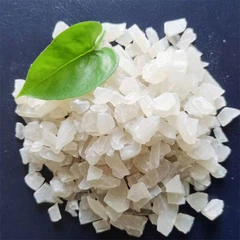
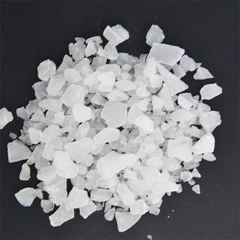
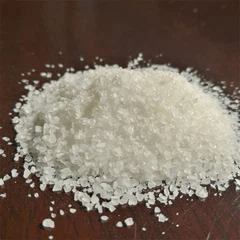
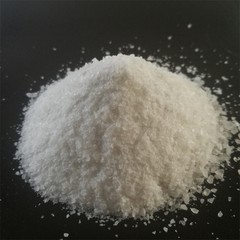
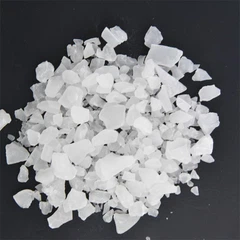
First off, let's talk about how it looks. Granular aluminum sulfate usually comes in a white or off - white color. It's in a granular form, which means it's made up of small, solid particles. These granules are pretty uniform in size, and they have a kind of crystalline structure. The white color is a good sign of its purity. If you see some discoloration, it might indicate the presence of impurities.
Odor
One of the great things about granular aluminum sulfate is that it's odorless. That's a huge plus, especially when you're using it in applications where strong smells can be a problem. Whether you're using it in a water treatment plant or in a paper mill, you don't have to worry about any unpleasant odors wafting around.
Solubility
Solubility is a key property when it comes to aluminum sulfate. It's highly soluble in water. When you add the granules to water, they dissolve relatively quickly, forming a clear solution. This solubility is crucial for its use in water treatment. In water treatment plants, it's used to remove impurities and suspended particles. When it dissolves, it forms positively charged aluminum ions, which can neutralize the negatively charged particles in the water, causing them to clump together and settle out.
You can check out Aluminium Sulphate Octadecahydrate for more information on related products.
Density
The density of granular aluminum sulfate is another important physical property. It has a relatively high density, which means that the granules are heavy for their size. This can be an advantage in some applications. For example, in water treatment, the high - density granules can sink to the bottom of the water tank more quickly, helping to speed up the sedimentation process. The exact density can vary depending on factors like the manufacturing process and the purity of the product.
Hygroscopicity
Granular aluminum sulfate is hygroscopic, which means it can absorb moisture from the air. This is something to keep in mind when storing it. If it's exposed to a humid environment for too long, it can start to clump together. To prevent this, it's best to store it in a dry place, preferably in sealed containers. If you do notice some clumping, you can usually break up the clumps by gently shaking or stirring the granules.
Particle Size
The particle size of granular aluminum sulfate can have a big impact on its performance. Smaller particles generally dissolve faster than larger ones. In applications where quick dissolution is required, like in some water treatment processes, a finer - grained product might be preferred. On the other hand, larger particles can be more suitable for applications where a slower release of the chemical is needed.
Melting and Boiling Points
Granular aluminum sulfate doesn't have a well - defined melting point. When heated, it starts to decompose before it melts. At around 86.5°C (187.7°F), it begins to lose its water of crystallization. As the temperature rises further, it decomposes into aluminum oxide, sulfur dioxide, and sulfur trioxide. This decomposition property is important to consider when handling and storing the product, as high temperatures can cause it to break down and lose its effectiveness.
pH
When granular aluminum sulfate is dissolved in water, it forms an acidic solution. The pH of the solution depends on the concentration of the aluminum sulfate. Generally, a 1% solution of aluminum sulfate in water has a pH of around 3. This acidity is useful in many applications. For example, in the paper industry, it's used to adjust the pH of the paper pulp, which can improve the strength and quality of the paper.
If you're interested in a specific type of aluminum sulfate, you can take a look at 15.8% Aluminum Sulphate.
Chemical Stability
Under normal conditions, granular aluminum sulfate is relatively stable. However, it can react with strong bases and reducing agents. When it comes into contact with a strong base, it can form insoluble aluminum hydroxide. This reaction is often used in water treatment to remove heavy metals from the water. The aluminum hydroxide can adsorb the heavy metal ions and then be removed from the water.
Bulk Density
Bulk density is the mass of the granules per unit volume. It's an important property when it comes to packaging and transportation. A higher bulk density means that you can fit more product in a given volume, which can reduce transportation costs. The bulk density of granular aluminum sulfate can vary depending on the particle size and shape.
Flowability
The flowability of granular aluminum sulfate is also important. Good flowability means that the granules can easily flow through hoppers, pipes, and other equipment without clogging. This is crucial for efficient handling and dosing in industrial applications. Factors like particle size, shape, and moisture content can affect the flowability of the granules.


Particle Shape
The shape of the granules can vary, but they are usually irregularly shaped. This irregular shape can affect the packing density and the flowability of the product. In some cases, more spherical - shaped granules can have better flow properties compared to irregularly shaped ones.
If you want to know more about the classification of aluminum sulfate, check out HS CODE28332200 ALUMINUM SULPHATE.
Conclusion
So, there you have it - a rundown of the physical properties of granular aluminum sulfate. These properties make it a versatile and useful chemical compound in a wide range of industries. Whether you're in the water treatment business, the paper industry, or any other field that uses aluminum sulfate, understanding these properties can help you make the most of this product.
If you're interested in purchasing granular aluminum sulfate or have any questions about its applications, feel free to reach out for a procurement discussion. We're here to help you find the best solution for your needs.
References
- "Handbook of Chemical Properties"
- "Industrial Chemistry of Aluminum Compounds"
Send Inquiry