

What are the chemical properties of the compound having CAS 10043-01-3?
Jun 18, 2025
Leave a message
The compound with CAS 10043-01-3 is aluminum sulfate, a well - known and widely used chemical in various industries. As a supplier of this compound, I am delighted to share detailed information about its chemical properties, which will not only help you understand its nature but also guide you on its potential applications.
Basic Chemical Information
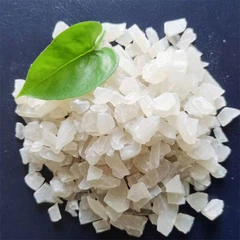
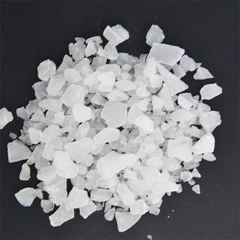
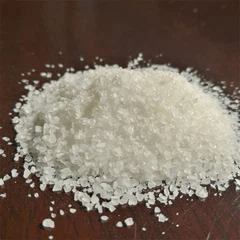
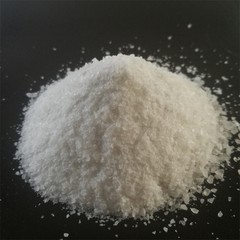
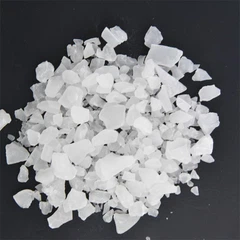
Aluminum sulfate has the chemical formula (Al_2(SO_4)_3). It exists in different hydrated forms, with the most common being the octadecahydrate, (Al_2(SO_4)_3\cdot18H_2O). This hydrated form appears as colorless to white crystals or crystalline powder.
Solubility
One of the key chemical properties of aluminum sulfate is its solubility in water. It is highly soluble in water, and when it dissolves, it dissociates into aluminum ions ((Al^{3 +})) and sulfate ions ((SO_4^{2-})). The solubility of aluminum sulfate increases with rising temperature. For example, at 0°C, approximately 31.2 g of (Al_2(SO_4)_3\cdot18H_2O) can dissolve in 100 mL of water, while at 100°C, the solubility increases to about 89 g per 100 mL of water. This high solubility in water makes it a valuable compound in many aqueous - based processes, such as water treatment.
Acidic Nature
In aqueous solutions, aluminum sulfate hydrolyzes. The aluminum ions react with water molecules to form aluminum hydroxide complexes and release hydrogen ions ((H^{+})). The overall reaction can be represented as follows:
(Al^{3+}+3H_2O\rightleftharpoons Al(OH)_3 + 3H^{+})


This hydrolysis reaction makes the solution acidic. The pH of a 1% solution of aluminum sulfate is typically around 3 - 3.5. The acidic nature of aluminum sulfate solutions is utilized in various applications, including soil acidification in agriculture and as a coagulant in water treatment where the acidic environment can aid in the precipitation of impurities.
Reactivity with Bases
Aluminum sulfate reacts with bases to form aluminum hydroxide precipitates. When an alkaline solution, such as sodium hydroxide ((NaOH)), is added to an aluminum sulfate solution, the following reaction occurs:
(Al_2(SO_4)_3+6NaOH = 2Al(OH)_3\downarrow+3Na_2SO_4)
If excess base is added, the aluminum hydroxide precipitate will dissolve to form a soluble aluminate ion:
(Al(OH)_3+NaOH = Na[Al(OH)_4])
This property is important in some industrial processes where the control of aluminum precipitation and dissolution is crucial.
Decomposition
When heated, aluminum sulfate decomposes. At relatively high temperatures, the hydrated form first loses its water of crystallization. For (Al_2(SO_4)_3\cdot18H_2O), the water is gradually lost upon heating. Further heating leads to the decomposition of the anhydrous aluminum sulfate into aluminum oxide ((Al_2O_3)) and sulfur trioxide ((SO_3)):
(Al_2(SO_4)_3\xrightarrow{\text{high temperature}}Al_2O_3 + 3SO_3\uparrow)
This decomposition reaction is used in some specialized industrial processes, such as the production of certain types of ceramics where the formation of aluminum oxide is desired.
Oxidation - Reduction Properties
Aluminum sulfate itself is not a strong oxidizing or reducing agent under normal conditions. However, the aluminum ions in the compound can participate in some redox reactions under specific circumstances. For example, in the presence of strong reducing agents, the (Al^{3+}) ions can potentially be reduced to elemental aluminum, although this requires very specific reaction conditions and strong reducing agents.
Applications Based on Chemical Properties
Water Treatment
As mentioned earlier, the solubility and acidic nature of aluminum sulfate make it an excellent coagulant in water treatment. The positively charged aluminum ions can neutralize the negative charges on suspended particles in water, causing them to aggregate and settle out. The acidic environment created by hydrolysis can also help in the precipitation of certain impurities. We offer Aluminum Sulphate Lump and Aluminum Sulphate Flake which are widely used in water treatment plants.
Paper Manufacturing
In the paper industry, aluminum sulfate is used as a sizing agent. The acidic nature of its solutions helps in the interaction between the paper fibers and the sizing agents, improving the paper's resistance to water and ink penetration. Our Aluminum Sulphate Flake is a popular choice among paper manufacturers due to its consistent quality.
Textile Industry
Aluminum sulfate is used as a mordant in the textile industry. It helps in fixing dyes to the fabric by forming a complex with the dye molecules, improving the color fastness of the dyed fabrics.
Quality Assurance and Supply
As a supplier of aluminum sulfate with CAS 10043 - 01 - 3, we are committed to providing high - quality products. Our manufacturing processes are strictly controlled to ensure that the chemical properties of our aluminum sulfate meet the industry standards. We have a team of experienced chemists and quality control personnel who conduct regular tests on the products. Whether you need aluminum sulfate in lump or flake form, we can meet your requirements.
Conclusion
The chemical properties of aluminum sulfate (CAS 10043 - 01 - 3) are diverse and play a crucial role in its wide range of applications. From water treatment to paper manufacturing and textile processing, this compound is an essential part of many industrial processes. If you are interested in purchasing aluminum sulfate for your specific needs, we invite you to contact us for further discussions on procurement and to explore how our products can meet your requirements.
References
- "Handbook of Chemistry and Physics". CRC Press.
- "Industrial Inorganic Chemistry" by Ulrich Diedrichsen, Peter Weisweiler.
- Journal articles on aluminum sulfate applications in water treatment, paper manufacturing, and textile industries.
Send Inquiry