

What are the electrical conductivity properties of aluminium sulphate water solutions?
Sep 18, 2025
Leave a message
Hey there! As a supplier of Aluminium Sulphate Water, I've been getting a lot of questions about the electrical conductivity properties of aluminium sulphate water solutions. So, I thought I'd dive into this topic and share some insights with you all.
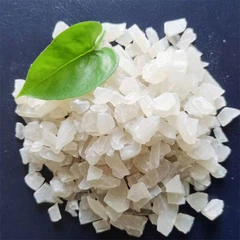
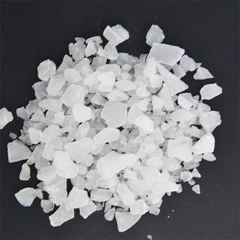
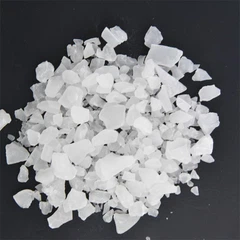
First off, let's understand what aluminium sulphate is. Aluminium sulphate, with the chemical formula Al₂(SO₄)₃, is a white crystalline solid that is highly soluble in water. When it dissolves in water, it dissociates into aluminium ions (Al³⁺) and sulphate ions (SO₄²⁻). These ions are what give the solution its electrical conductivity.
The electrical conductivity of a solution is a measure of its ability to conduct an electric current. It depends on several factors, including the concentration of ions in the solution, the mobility of the ions, and the temperature of the solution.
Concentration of Ions
The concentration of aluminium sulphate in the water solution plays a crucial role in determining its electrical conductivity. As the concentration of aluminium sulphate increases, the number of ions in the solution also increases. More ions mean more charge carriers, which leads to higher electrical conductivity.


For example, a dilute solution of aluminium sulphate will have fewer ions and, therefore, lower electrical conductivity compared to a concentrated solution. This is because in a dilute solution, there are fewer ions available to carry the electric current.
However, it's important to note that the relationship between concentration and conductivity is not always linear. At very high concentrations, the ions may start to interact with each other, which can reduce their mobility and, in turn, lower the conductivity.
Mobility of Ions
The mobility of ions in the solution is another important factor. The mobility of an ion depends on its size, charge, and the viscosity of the solution.
In the case of aluminium sulphate solutions, the aluminium ions (Al³⁺) are relatively small and highly charged. This gives them a relatively high mobility compared to the larger and less charged sulphate ions (SO₄²⁻). As a result, the aluminium ions contribute more to the electrical conductivity of the solution.
The viscosity of the solution also affects the mobility of the ions. A more viscous solution will slow down the movement of the ions, reducing their mobility and, consequently, the electrical conductivity. Temperature can also influence viscosity, with higher temperatures generally reducing viscosity and increasing ion mobility.
Temperature
Temperature has a significant impact on the electrical conductivity of aluminium sulphate water solutions. As the temperature increases, the kinetic energy of the ions also increases. This causes the ions to move more rapidly, increasing their mobility and, therefore, the electrical conductivity of the solution.
In general, the electrical conductivity of a solution increases linearly with temperature over a certain range. However, at very high temperatures, other factors such as chemical reactions or changes in the structure of the solution may come into play, which can affect the conductivity in a more complex way.
Applications of Aluminium Sulphate Water Solutions Based on Electrical Conductivity
The electrical conductivity properties of aluminium sulphate water solutions have several practical applications. One of the most common applications is in water treatment.
Aluminium sulphate is widely used as a coagulant in water treatment processes. When added to water, it forms flocs that can trap suspended particles and impurities, making them easier to remove. The electrical conductivity of the solution can affect the coagulation process. For example, a higher conductivity solution may lead to more efficient coagulation, as the ions can interact more effectively with the particles.
You can learn more about the use of aluminium sulphate in water treatment, specifically for textile waste water treatment, by visiting Textile Waste Water Treatment Aluminum Sulphate.
Another application is in the production of portable water. Aluminium sulphate can be used to remove turbidity and other contaminants from water sources, making the water safe for drinking. The electrical conductivity of the solution can be monitored to ensure the effectiveness of the treatment process. Check out Aluminum Sulphate for Portable Water for more details.
Our Aluminium Sulphate Water Products
As a supplier of Aluminium Sulphate Water, we offer high - quality aluminium sulphate solutions with consistent electrical conductivity properties. Our products are carefully formulated to meet the specific needs of different applications, whether it's water treatment or other industrial processes.
We understand the importance of the electrical conductivity of our solutions, and we take great care to ensure that our products have the right balance of concentration, ion mobility, and temperature stability. Our team of experts is always available to provide technical support and advice on the best use of our products.
Conclusion
In conclusion, the electrical conductivity of aluminium sulphate water solutions is influenced by several factors, including the concentration of ions, the mobility of ions, and temperature. Understanding these factors is crucial for optimizing the performance of aluminium sulphate in various applications, especially in water treatment.
If you're in the market for high - quality aluminium sulphate water solutions, we'd love to hear from you. Whether you have questions about the electrical conductivity properties or need help with your specific application, our team is ready to assist you. Contact us to start a discussion about your requirements and let's work together to find the best solution for you.
References
- Atkins, P. W., & de Paula, J. (2014). Physical Chemistry. Oxford University Press.
- Haynes, W. M. (Ed.). (2016). CRC Handbook of Chemistry and Physics. CRC Press.
Send Inquiry