

What is the impact of aluminium sulfate on the phosphate removal in water treatment?
Oct 30, 2025
Leave a message
Hey there! As a supplier of aluminium sulfate for water treatment, I've seen firsthand the ins and outs of how this chemical works in the process of removing phosphate from water. So, let's dive right in and talk about the impact of aluminium sulfate on phosphate removal in water treatment.
How Aluminium Sulfate Works for Phosphate Removal
Phosphate in water can be a real problem. It can cause excessive growth of algae and other aquatic plants, leading to issues like eutrophication in lakes, rivers, and other water bodies. This over - growth can deplete oxygen levels in the water, harming fish and other aquatic life. That's where aluminium sulfate comes in.
When aluminium sulfate is added to water, it dissociates into aluminium ions ($Al^{3 + }$) and sulfate ions ($SO_{4}^{2 - }$). The aluminium ions react with the phosphate ions ($PO_{4}^{3 - }$) present in the water to form insoluble aluminium phosphate ($AlPO_{4}$) precipitates. This chemical reaction is pretty straightforward:
$Al_{2}(SO_{4}){3}+2PO{4}^{3 - }\rightarrow 2AlPO_{4}\downarrow+3SO_{4}^{2 - }$
Once these precipitates are formed, they can be easily removed from the water through processes like sedimentation or filtration. This effectively reduces the phosphate concentration in the water, helping to prevent the negative effects of excessive phosphate.
Advantages of Using Aluminium Sulfate for Phosphate Removal
One of the biggest advantages of using aluminium sulfate is its high efficiency. It can rapidly react with phosphate ions, even at relatively low concentrations. This means that a small amount of aluminium sulfate can go a long way in removing phosphate from water.
Another plus is its cost - effectiveness. Aluminium sulfate is relatively inexpensive compared to some other chemicals used for phosphate removal. This makes it a popular choice for water treatment plants, especially those on a budget.
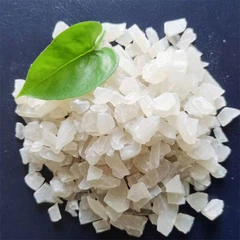
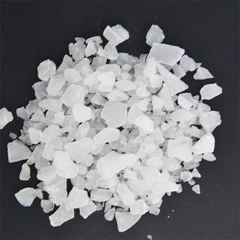
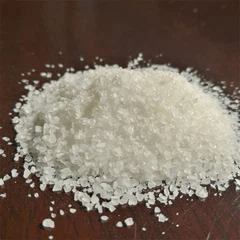
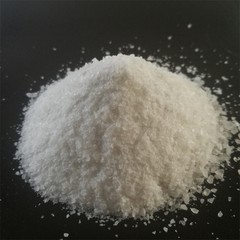
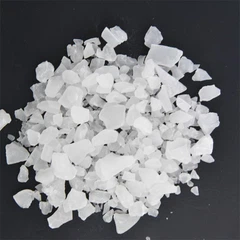
It's also easy to handle and store. Aluminium sulfate comes in different forms, such as 15.8% Aluminum Sulphate, Industrial Aluminum Sulphate, and Aluminum Sulphate Lump. These forms are stable under normal storage conditions and can be easily transported and added to the water treatment process.
Factors Affecting the Impact of Aluminium Sulfate on Phosphate Removal
However, the effectiveness of aluminium sulfate in removing phosphate isn't always guaranteed. There are several factors that can influence its performance.
pH Level: The pH of the water plays a crucial role. Aluminium sulfate works best in a slightly acidic to neutral pH range, typically between 5.5 and 7.5. If the pH is too high or too low, the chemical reaction between aluminium ions and phosphate ions may be inhibited. For example, at high pH values, aluminium hydroxide ($Al(OH)_{3}$) may form instead of aluminium phosphate, reducing the efficiency of phosphate removal.
Temperature: Temperature can also have an impact. Generally, higher temperatures can speed up the chemical reaction between aluminium sulfate and phosphate. In colder water, the reaction may be slower, and it might take longer to achieve the desired phosphate removal efficiency.
Concentration of Phosphate and Aluminium Sulfate: The relative concentrations of phosphate and aluminium sulfate in the water are important. If there is too much phosphate and not enough aluminium sulfate, the reaction may not go to completion, and some phosphate will remain in the water. On the other hand, adding too much aluminium sulfate can lead to increased costs and may also cause other issues, such as an increase in the turbidity of the water due to the formation of excess aluminium hydroxide precipitates.
Case Studies
Let's take a look at some real - world examples to see how aluminium sulfate has been used for phosphate removal.
In a small water treatment plant in a rural area, they were facing high phosphate levels in their source water. They decided to use Industrial Aluminum Sulphate to address the issue. After carefully adjusting the dosage based on the phosphate concentration and pH of the water, they were able to reduce the phosphate levels from 2 mg/L to less than 0.1 mg/L. This significant reduction not only improved the water quality but also helped to protect the local aquatic ecosystem.
In another case, a large municipal water treatment plant was dealing with seasonal fluctuations in phosphate levels. They used 15.8% Aluminum Sulphate and adjusted the dosage according to the changing phosphate concentrations. By closely monitoring the process and making necessary adjustments, they were able to maintain consistent phosphate removal efficiency throughout the year.


Potential Drawbacks and Solutions
While aluminium sulfate is a great option for phosphate removal, it does have some potential drawbacks. One of the main concerns is the presence of residual aluminium in the treated water. High levels of aluminium in drinking water can be a health risk, as it has been linked to neurological disorders such as Alzheimer's disease.
To address this issue, water treatment plants can use additional treatment steps, such as activated carbon filtration or ion exchange, to remove the residual aluminium. They can also carefully control the dosage of aluminium sulfate to minimize the amount of residual aluminium in the treated water.
Another drawback is that the formation of aluminium phosphate precipitates can generate sludge, which needs to be properly disposed of. This can add to the operational costs of the water treatment plant. However, there are ways to manage the sludge, such as using it as a soil conditioner in some cases.
Conclusion
In conclusion, aluminium sulfate has a significant impact on phosphate removal in water treatment. It's an efficient, cost - effective, and easy - to - use chemical that can help to reduce phosphate levels in water and prevent the negative effects of eutrophication. However, its performance can be affected by factors like pH, temperature, and the relative concentrations of phosphate and aluminium sulfate.
If you're in the water treatment industry and looking for a reliable solution for phosphate removal, aluminium sulfate could be the answer. We offer a range of high - quality aluminium sulfate products, including 15.8% Aluminum Sulphate, Industrial Aluminum Sulphate, and Aluminum Sulphate Lump. If you're interested in learning more or discussing your specific needs, feel free to reach out and start a conversation about procurement. We're here to help you find the best solution for your water treatment requirements.
References
- Letterman, R. D. (2007). Water Quality and Treatment: A Handbook of Community Water Supplies. McGraw - Hill.
- AWWA (American Water Works Association). (2017). Water Treatment Unit Processes: Physical and Chemical. McGraw - Hill.
- USEPA (United States Environmental Protection Agency). (2016). Drinking Water Standards and Health Advisories.
Send Inquiry