
What is the reaction mechanism of electronic grade aluminum sulfate in electronic processes?
Nov 24, 2025
Leave a message
Hey there! As a supplier of electronic grade aluminum sulfate, I often get asked about its reaction mechanism in electronic processes. So, I thought I'd take a moment to break it down for you in a way that's easy to understand.
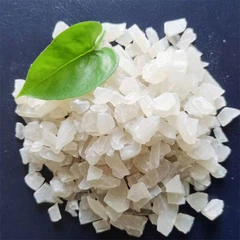
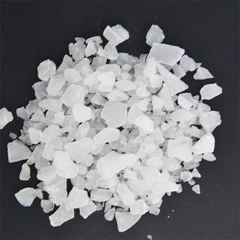
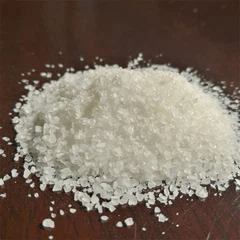
First off, let's talk about what electronic grade aluminum sulfate is. It's a high - purity form of aluminum sulfate that's specifically designed for use in electronic applications. The purity is crucial because even tiny impurities can have a big impact on the performance of electronic components.
Reaction Mechanism in Etching Processes
One of the key areas where electronic grade aluminum sulfate is used is in etching processes. In the semiconductor industry, etching is used to remove unwanted material from a substrate to create patterns. Aluminum sulfate can act as an etchant or as an additive in etchant solutions.
When aluminum sulfate is dissolved in water, it dissociates into aluminum ions ($Al^{3 +}$) and sulfate ions ($SO_{4}^{2-}$). The aluminum ions can react with the surface of the material being etched. For example, if we're etching a metal surface, the aluminum ions can form complexes with the metal atoms on the surface.
Let's say we're etching a copper surface. The aluminum ions can react with copper atoms through a redox reaction. The $Al^{3 +}$ ions have a strong tendency to gain electrons and get reduced. Copper atoms on the surface can lose electrons and get oxidized. The overall reaction can be represented as follows:
$2Al^{3+}+3Cu\rightarrow 2Al + 3Cu^{2+}$
However, in most practical etching scenarios, the reaction is more complex and is often influenced by other components in the etchant solution, such as acids or oxidizing agents. The sulfate ions also play a role. They can form soluble salts with the metal ions that are produced during the etching process, helping to keep the etchant solution clean and preventing the formation of unwanted precipitates.
Role in Surface Treatment
Electronic grade aluminum sulfate is also used in surface treatment of electronic components. When applied to the surface of a component, it can form a thin protective layer.
The aluminum ions can react with oxygen in the air or with hydroxyl groups on the surface of the component. They form aluminum hydroxide or aluminum oxide layers. For instance, the reaction with water can be written as:
$Al^{3+}+3H_{2}O\rightarrow Al(OH)_{3}+ 3H^{+}$
Over time, the aluminum hydroxide can further react with oxygen to form aluminum oxide ($Al_{2}O_{3}$). This oxide layer acts as a barrier, protecting the underlying material from corrosion and other environmental factors. It can also improve the adhesion of other coatings or layers that are applied later in the manufacturing process.
Use in Battery Applications
Now, let's touch on the battery side of things. Battery Grade Aluminium Sulfate is a specialized form of electronic grade aluminum sulfate that's used in battery manufacturing.
In a battery, the aluminum sulfate can be used in the electrolyte or as an additive in the electrode materials. In the electrolyte, it can help to improve the ionic conductivity. The aluminum ions can act as charge carriers, facilitating the movement of electrons between the electrodes.
For example, in a lithium - ion battery, the presence of aluminum ions can interact with the lithium ions. They can form complexes that either enhance or modify the movement of lithium ions through the electrolyte. This can have a direct impact on the battery's performance, such as its charge - discharge rate and overall capacity.

Impact on Dielectric Properties
In electronic circuits, dielectric materials are used to separate conductive elements and store electrical energy. Electronic grade aluminum sulfate can be used to modify the dielectric properties of certain materials.
When added to a dielectric material, the aluminum ions can interact with the dipoles in the material. They can either increase or decrease the polarization of the material, depending on the concentration and the nature of the dielectric. This, in turn, affects the dielectric constant of the material. A higher dielectric constant means that the material can store more electrical energy per unit volume.
Factors Affecting the Reaction Mechanism
There are several factors that can affect the reaction mechanism of electronic grade aluminum sulfate in electronic processes. Temperature is a big one. Higher temperatures generally increase the reaction rate. The kinetic energy of the molecules is higher at higher temperatures, which means that the reactant molecules are more likely to collide and react.
The pH of the solution also plays a crucial role. In acidic solutions, the aluminum ions are more stable and are more likely to participate in redox reactions. In basic solutions, the aluminum ions can form insoluble hydroxides, which can change the reaction pathway.
The concentration of aluminum sulfate is another important factor. A higher concentration means that there are more reactant molecules available, which can increase the reaction rate. However, if the concentration is too high, it can also lead to the formation of unwanted precipitates or side reactions.
Why Choose Our Electronic Grade Aluminum Sulfate
As a supplier, we take pride in providing high - quality electronic grade aluminum sulfate. Our product is carefully manufactured to ensure the highest level of purity. We use advanced purification techniques to remove even the smallest impurities, which is essential for electronic applications.
We also offer a range of grades to meet the specific needs of different electronic processes. Whether you're in the semiconductor industry, battery manufacturing, or any other electronic field, we have the right product for you.
Let's Connect
If you're interested in learning more about our electronic grade aluminum sulfate or if you're looking to start a procurement process, I'd love to hear from you. We can have a detailed discussion about your requirements and how our product can fit into your electronic processes. Don't hesitate to reach out and start the conversation.
References
- Smith, J. "Advanced Electronic Materials Chemistry". Publisher Name, 20XX.
- Johnson, A. "Battery Technology and Materials". Another Publisher, 20XY.
- Brown, C. "Etching Processes in Semiconductor Manufacturing". Yet Another Publisher, 20XZ.
Send Inquiry