

Does aluminum sulphate powder react with acids?
Jun 02, 2025
Leave a message
As a trusted supplier of aluminum sulphate powder, I've often been asked about its chemical reactivity, particularly its interaction with acids. In this blog, I'll delve into the scientific aspects of whether aluminum sulphate powder reacts with acids, providing you with a comprehensive understanding of this topic.
Understanding Aluminum Sulphate Powder
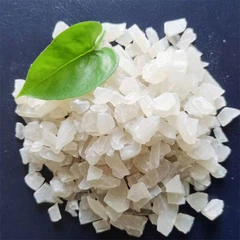
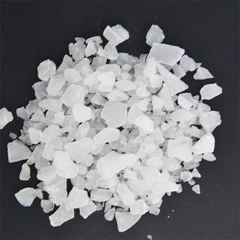
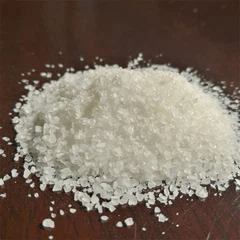
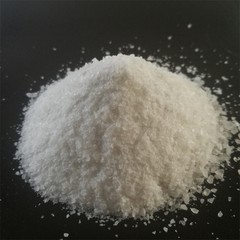
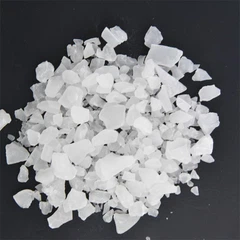
Before we explore its reaction with acids, let's first understand what aluminum sulphate powder is. Aluminum sulphate, with the chemical formula Al₂(SO₄)₃, is a white crystalline solid that is highly soluble in water. It has a wide range of applications, including water treatment, paper manufacturing, and as a mordant in the textile industry.
One of the key features of aluminum sulphate powder is its ability to form hydrates. When dissolved in water, it can exist in various hydrated forms, such as Al₂(SO₄)₃·18H₂O. This property affects its reactivity and solubility in different chemical environments.
General Principles of Chemical Reactions
To understand whether aluminum sulphate powder reacts with acids, we need to review some basic principles of chemical reactions. Acids are substances that can donate protons (H⁺ ions) in a chemical reaction, while bases are substances that can accept protons. The reactivity between an acid and a salt like aluminum sulphate depends on the nature of the acid and the stability of the resulting products.
In general, a reaction between an acid and a salt can occur if the acid can displace another anion from the salt to form a new compound. This type of reaction is known as a double - displacement reaction. For example, if an acid reacts with a metal salt, it may form a new metal salt and a new acid.
Reaction of Aluminum Sulphate Powder with Different Acids
Strong Acids
When aluminum sulphate powder comes into contact with strong acids such as hydrochloric acid (HCl) or sulfuric acid (H₂SO₄), the reaction depends on the specific conditions.
With hydrochloric acid, the following reaction could potentially occur:
Al₂(SO₄)₃ + 6HCl → 2AlCl₃+ 3H₂SO₄
However, this reaction is not very favorable under normal conditions because both aluminum chloride (AlCl₃) and sulfuric acid are strong electrolytes and exist in a dissociated state in solution. The reaction may be driven by factors such as the concentration of the reactants and the removal of one of the products from the reaction mixture.
When reacting with sulfuric acid, since aluminum sulphate already contains sulfate ions, there is no significant chemical reaction in the traditional sense. The addition of sulfuric acid to an aluminum sulphate solution mainly changes the acidity and ionic strength of the solution.
Weak Acids
Weak acids, such as acetic acid (CH₃COOH), have a lower tendency to donate protons compared to strong acids. In most cases, aluminum sulphate powder does not react with weak acids under normal conditions. The acetate ions from acetic acid are not strong enough to displace the sulfate ions from aluminum sulphate.
However, in the presence of other factors such as high temperature or catalysts, a slow reaction may occur. For example, in a high - temperature environment, the acetic acid may decompose and react with the aluminum ions in a complex way, but this is a very specific and less common scenario.
Factors Affecting the Reaction
Several factors can influence whether and how aluminum sulphate powder reacts with acids:
- Concentration: Higher concentrations of acids can increase the likelihood of a reaction. In a more concentrated acid solution, there are more protons available to participate in chemical reactions.
- Temperature: Increasing the temperature generally speeds up chemical reactions. At higher temperatures, the kinetic energy of the molecules increases, making it easier for them to overcome the activation energy barrier for a reaction to occur.
- pH: The pH of the solution affects the ionization state of the acid and the aluminum sulphate. In a strongly acidic environment, the solubility and reactivity of aluminum sulphate may change.
Applications and Implications
The reactivity of aluminum sulphate powder with acids has important implications in various industries.
In water treatment, the addition of acids to adjust the pH of the water may interact with the aluminum sulphate used as a coagulant. Understanding the reaction between them is crucial for optimizing the coagulation process and ensuring the efficiency of water treatment.


In the paper manufacturing industry, acids are often used in the pulping and bleaching processes. The presence of aluminum sulphate in the paper - making system may interact with these acids, affecting the quality and properties of the paper.
Related Products
As a supplier, we also offer Aluminium Sulphate Liquid, which has different properties and applications compared to the powder form. The liquid form is often more convenient for certain industrial applications where rapid dissolution and easy dosing are required.
Another related product is Ferric Aluminium Sulphate, which combines the properties of iron and aluminum salts. It is widely used in water treatment for enhanced coagulation and removal of impurities.
Our aluminum sulphate powder has the CAS 10043 - 01 - 3, which is a unique identifier for this chemical compound, ensuring its quality and compliance with international standards.
Contact for Purchase and Discussion
If you are interested in our aluminum sulphate powder or have any questions about its reactivity with acids, please feel free to contact us. We have a team of experts who can provide you with detailed technical information and guidance on the best use of our products in your specific applications. Whether you are in the water treatment, paper manufacturing, or other industries, we are committed to meeting your needs and providing high - quality products.
References
- Atkins, P. W., & de Paula, J. (2006). Physical Chemistry. Oxford University Press.
- Chang, R. (2010). Chemistry. McGraw - Hill.
- Housecroft, C. E., & Sharpe, A. G. (2012). Inorganic Chemistry. Pearson.
Send Inquiry