

How does aluminium sulphate liquid improve the performance of adhesives?
Oct 28, 2025
Leave a message
As a dedicated supplier of aluminium sulphate liquid, I've witnessed firsthand the transformative impact it can have on adhesive performance. In this blog, I'll delve into the science behind how aluminium sulphate liquid enhances adhesives, explore its various applications, and share insights from real - world experiences.
The Science of Aluminium Sulphate Liquid in Adhesives
Aluminium sulphate liquid, with the chemical formula Al₂(SO₄)₃, is a versatile compound that interacts with adhesives in several ways. At a molecular level, its aluminium ions can form cross - links with the polymer chains present in adhesives. Polymers are the backbone of most adhesives, and these cross - links increase the overall strength and stability of the adhesive matrix.
When aluminium sulphate liquid is added to an adhesive formulation, it acts as a coagulant and flocculant. In water - based adhesives, for example, it can help to precipitate and aggregate fine particles, which leads to an improvement in the adhesive's viscosity and consistency. This is crucial because a well - controlled viscosity ensures that the adhesive spreads evenly and adheres properly to the surfaces being bonded.
Moreover, the presence of aluminium sulphate liquid can enhance the adhesive's resistance to moisture. Water can often weaken adhesives by breaking down the bonds between the adhesive and the substrate. Aluminium sulphate reacts with water molecules in a way that forms a protective layer around the adhesive, reducing the penetration of water and thus maintaining the adhesive's integrity even in humid environments.
Applications in Different Adhesive Types
Wood Adhesives
In the woodworking industry, adhesives play a vital role in joining wooden components. Aluminium sulphate liquid can significantly improve the performance of wood adhesives. It helps to prevent delamination, which is a common problem when wooden joints are exposed to moisture or stress. By strengthening the bond between the wood fibers and the adhesive, it increases the overall durability of the wooden products. For instance, in the production of plywood, adding aluminium sulphate liquid to the adhesive can enhance the shear strength of the layers, making the plywood more resistant to bending and breaking.
Paper and Cardboard Adhesives
In the paper and packaging industry, adhesives are used to bond paper and cardboard together. Aluminium sulphate liquid can improve the adhesion of these materials by increasing the surface tension of the adhesive. This allows the adhesive to wet the paper fibers more effectively, resulting in a stronger bond. Additionally, it can reduce the drying time of the adhesive, which is beneficial for high - speed production lines. For example, in the manufacturing of cardboard boxes, faster drying times mean increased production efficiency and reduced costs.
Construction Adhesives
Construction adhesives are used to bond various building materials such as bricks, tiles, and concrete. Aluminium sulphate liquid can enhance the performance of these adhesives by improving their setting time and strength. It can react with the alkaline components in the construction materials, creating a more stable chemical environment for the adhesive to cure. This results in a stronger and more long - lasting bond, which is essential for the structural integrity of buildings. For example, when bonding tiles to a wall, an adhesive with aluminium sulphate liquid can ensure that the tiles stay in place for a long time, even under the influence of vibrations or temperature changes.


Real - World Examples and Case Studies
One of our clients, a furniture manufacturer, was facing issues with the delamination of their wooden furniture joints. The adhesives they were using were not providing sufficient strength, especially in areas with high humidity. After incorporating our aluminium sulphate liquid into their adhesive formulation, they noticed a significant improvement. The joints became more resistant to moisture, and the overall durability of the furniture increased. This led to a reduction in product returns and an improvement in customer satisfaction.
Another example is a paper packaging company. They were struggling with slow production speeds due to the long drying time of their adhesives. By adding our aluminium sulphate liquid to their adhesive, they were able to reduce the drying time by up to 30%. This allowed them to increase their production output and meet the growing market demand more efficiently.
Comparing with Related Products
While there are other products in the market that claim to improve adhesive performance, aluminium sulphate liquid has several advantages. For example, Ferric Aluminium Sulphate is another compound that can be used in adhesives, but it may have a different chemical reactivity. Aluminium sulphate liquid is more cost - effective and has a wider range of applications.
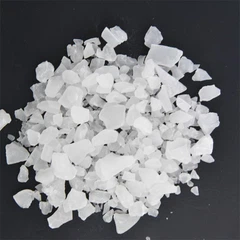
Granular Aluminum Sulfate is also an option, but the liquid form of aluminium sulphate is easier to incorporate into adhesive formulations. It can be mixed more uniformly with the other components of the adhesive, ensuring consistent performance.
The CAS 10043 - 01 - 3 refers to the chemical identification number of aluminium sulphate. This indicates its purity and quality, which are crucial factors in determining its effectiveness in improving adhesive performance.
Contact for Purchase and Collaboration
If you're looking to enhance the performance of your adhesives, I invite you to get in touch with us. Our team of experts can provide you with detailed information about our aluminium sulphate liquid, including its specifications, application methods, and pricing. We can also offer customized solutions based on your specific adhesive requirements. Whether you're a small - scale manufacturer or a large - scale industrial enterprise, we have the capacity to meet your needs. Don't hesitate to reach out and start a discussion about how our aluminium sulphate liquid can take your adhesive products to the next level.
References
- "Handbook of Adhesive Technology", Second Edition, edited by Andrew Pizzi and K. L. Mittal.
- "Wood Adhesives: Chemistry and Technology", Volume 1, by Richard E. Markwardt.
- "Adhesives in Packaging", by John A. Moleski.
Send Inquiry