

How does aluminium sulphate liquid react with bases?
Jun 12, 2025
Leave a message
As a reliable supplier of aluminium sulphate liquid, I've witnessed firsthand the widespread applications and chemical reactions of this versatile compound. Aluminium sulphate liquid, with its chemical formula Al₂(SO₄)₃, is a crucial industrial chemical used in various sectors such as water treatment, paper manufacturing, and the textile industry. One of the most significant aspects of its chemistry is its reaction with bases, which we'll explore in detail in this blog.
Chemical Composition and Properties of Aluminium Sulphate Liquid
Aluminium sulphate liquid is an aqueous solution of aluminium sulphate, a salt formed by the reaction of aluminium hydroxide with sulphuric acid. The reaction can be represented by the following chemical equation:
2Al(OH)₃ + 3H₂SO₄ → Al₂(SO₄)₃ + 6H₂O
This reaction results in the formation of aluminium sulphate and water. The resulting liquid has a characteristic acidic nature due to the presence of residual sulphuric acid and the hydrolysis of aluminium ions in water. The acidic nature of aluminium sulphate liquid makes it reactive towards bases, leading to a series of chemical reactions.


General Reaction Mechanism with Bases
When aluminium sulphate liquid reacts with a base, a neutralization reaction occurs. The hydrogen ions (H⁺) from the acidic solution of aluminium sulphate react with the hydroxide ions (OH⁻) from the base to form water. Simultaneously, the aluminium ions (Al³⁺) in the solution react with the hydroxide ions to form aluminium hydroxide (Al(OH)₃), a white precipitate.
The general reaction between aluminium sulphate and a base (represented as MOH, where M is a metal) can be written as follows:
Al₂(SO₄)₃ + 6MOH → 2Al(OH)₃↓ + 3M₂SO₄
In this reaction, the aluminium sulphate reacts with the base to produce aluminium hydroxide and a metal sulphate. The aluminium hydroxide precipitates out of the solution, which can be separated by filtration.
Reaction with Different Bases
Reaction with Sodium Hydroxide (NaOH)
Sodium hydroxide is a strong base commonly used in industrial processes. When aluminium sulphate liquid reacts with sodium hydroxide, the following reaction occurs:
Al₂(SO₄)₃ + 6NaOH → 2Al(OH)₃↓ + 3Na₂SO₄
Initially, a white precipitate of aluminium hydroxide is formed. However, if excess sodium hydroxide is added, the aluminium hydroxide reacts further with the base to form a soluble complex ion, the aluminate ion (Al(OH)₄⁻). The reaction can be represented as:
Al(OH)₃ + NaOH → Na[Al(OH)₄]
This reaction is an example of amphoteric behavior of aluminium hydroxide, which can react with both acids and bases.
Reaction with Calcium Hydroxide (Ca(OH)₂)
Calcium hydroxide, also known as slaked lime, is another base commonly used in water treatment. When aluminium sulphate liquid reacts with calcium hydroxide, the following reaction occurs:
Al₂(SO₄)₃ + 3Ca(OH)₂ → 2Al(OH)₃↓ + 3CaSO₄
The reaction produces aluminium hydroxide precipitate and calcium sulphate (gypsum). This reaction is important in water treatment processes, where the aluminium hydroxide precipitate helps in the coagulation and flocculation of suspended particles in water.
Industrial Applications of the Reaction
The reaction between aluminium sulphate liquid and bases has several industrial applications, mainly in water treatment and paper manufacturing.
Water Treatment
In water treatment, aluminium sulphate is used as a coagulant. When aluminium sulphate liquid is added to water containing suspended particles, it hydrolyzes to form aluminium hydroxide. The aluminium hydroxide precipitate adsorbs the suspended particles, causing them to aggregate and settle out of the water. Bases such as calcium hydroxide or sodium hydroxide are often added to adjust the pH of the water and to enhance the coagulation process. The reaction between aluminium sulphate and the base helps in the formation of a more stable and effective coagulant.
Paper Manufacturing
In the paper manufacturing industry, aluminium sulphate is used as a sizing agent. It reacts with rosin size, a natural resin, to form an insoluble aluminium resinate. Bases are used to adjust the pH of the paper pulp, which affects the reaction between aluminium sulphate and rosin size. The reaction between aluminium sulphate and bases helps in controlling the sizing process and improving the quality of the paper.
Our Offerings as an Aluminium Sulphate Liquid Supplier
As a leading supplier of aluminium sulphate liquid, we offer high-quality products that meet the strictest industry standards. Our aluminium sulphate liquid is produced using advanced manufacturing processes, ensuring its purity and consistency. We also provide customized solutions to meet the specific needs of our customers.
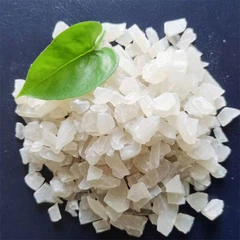
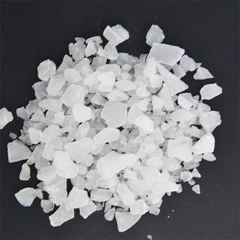
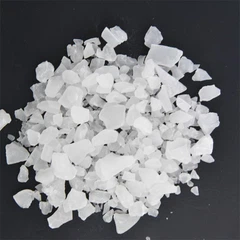
If you are looking for a reliable source of aluminium sulphate liquid, look no further. We offer Industrial Aluminum Sulphate, which is suitable for a wide range of industrial applications. Our product with CAS 10043-01-3 is of the highest quality and is available in various grades. We also supply Aluminum Sulphate Lump, which is ideal for applications where a solid form of aluminium sulphate is required.
We are committed to providing excellent customer service and technical support. Our team of experts is always available to answer your questions and to help you choose the right product for your needs. Whether you are a small-scale business or a large industrial enterprise, we have the products and services to meet your requirements.
Contact Us for Procurement
If you are interested in purchasing our aluminium sulphate liquid or have any questions about our products, please do not hesitate to contact us. We are eager to discuss your specific needs and to provide you with a competitive quote. Our team will work closely with you to ensure a smooth procurement process and to meet your delivery requirements.
References
- Atkins, P. W., & de Paula, J. (2014). Physical Chemistry. Oxford University Press.
- Chang, R. (2010). Chemistry. McGraw-Hill.
- Snoeyink, V. L., & Jenkins, D. (1980). Water Chemistry. Wiley-Interscience.
Send Inquiry