

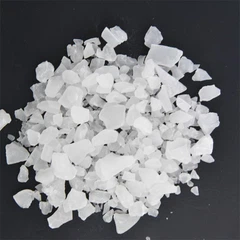
How to analyze the composition of ferric aluminium sulphate?
Jun 12, 2025
Leave a message
As a supplier of ferric aluminium sulphate, understanding the composition of this compound is crucial for both product quality control and customer satisfaction. Ferric aluminium sulphate is a complex chemical compound commonly used in water treatment, paper manufacturing, and other industrial applications. In this blog post, I will share some effective methods for analyzing the composition of ferric aluminium sulphate.
Understanding the Basics of Ferric Aluminium Sulphate
Ferric aluminium sulphate is a double salt that contains iron (III), aluminium, and sulphate ions. Its general formula can be represented as Fe₂(SO₄)₃·xAl₂(SO₄)₃·yH₂O, where x and y represent the number of moles of aluminium sulphate and water of crystallization, respectively. The exact composition of ferric aluminium sulphate can vary depending on the manufacturing process and the intended application.
Analytical Methods for Ferric Aluminium Sulphate
1. Gravimetric Analysis
Gravimetric analysis is a classical method for determining the composition of chemical compounds. In the case of ferric aluminium sulphate, gravimetric analysis can be used to determine the amount of sulphate ions present in the sample. The basic principle of gravimetric analysis involves precipitating the sulphate ions as barium sulphate (BaSO₄) and then weighing the precipitate.
To perform gravimetric analysis, a known amount of ferric aluminium sulphate sample is dissolved in water. A solution of barium chloride (BaCl₂) is then added to the sample solution, which causes the sulphate ions to precipitate as BaSO₄. The precipitate is filtered, washed, and dried to constant weight. The mass of the BaSO₄ precipitate is then used to calculate the amount of sulphate ions in the original sample.
2. Atomic Absorption Spectroscopy (AAS)
Atomic absorption spectroscopy is a powerful analytical technique used to determine the concentration of metal ions in a sample. In the case of ferric aluminium sulphate, AAS can be used to determine the concentration of iron (III) and aluminium ions.
The basic principle of AAS involves vaporizing the sample in a flame or graphite furnace and then measuring the absorption of light by the metal ions at specific wavelengths. Each metal ion has a characteristic absorption wavelength, which allows for the selective determination of different metal ions in a sample.


To perform AAS analysis, a known amount of ferric aluminium sulphate sample is dissolved in a suitable solvent. The sample solution is then aspirated into the flame or graphite furnace of the AAS instrument. The instrument measures the absorption of light by the iron (III) and aluminium ions at their respective absorption wavelengths, and the concentration of these metal ions in the sample is calculated based on a calibration curve.
3. Inductively Coupled Plasma - Optical Emission Spectroscopy (ICP - OES)
Inductively coupled plasma - optical emission spectroscopy is another advanced analytical technique used to determine the concentration of multiple metal ions in a sample simultaneously. ICP - OES offers several advantages over AAS, including higher sensitivity, wider dynamic range, and the ability to analyze multiple elements in a single measurement.
The basic principle of ICP - OES involves introducing the sample into a high - temperature plasma, where the sample is atomized and ionized. The excited ions emit light at characteristic wavelengths, which are then detected and measured by the instrument. The intensity of the emitted light is proportional to the concentration of the metal ions in the sample.
To perform ICP - OES analysis, a known amount of ferric aluminium sulphate sample is dissolved in a suitable acid solution. The sample solution is then introduced into the ICP - OES instrument, and the concentrations of iron (III), aluminium, and other metal ions (if present) are determined simultaneously.
Importance of Composition Analysis for Our Business
As a supplier of ferric aluminium sulphate, accurate composition analysis is essential for several reasons. Firstly, it helps us ensure the quality and consistency of our products. By regularly analyzing the composition of our ferric aluminium sulphate, we can detect any variations in the product and take corrective actions to maintain the desired quality standards.
Secondly, composition analysis provides valuable information to our customers. Different applications of ferric aluminium sulphate require specific compositions of iron (III), aluminium, and sulphate ions. By providing accurate composition data, we can help our customers choose the right product for their specific needs.
For example, in water treatment applications, the ratio of iron (III) to aluminium in ferric aluminium sulphate can affect its coagulation and flocculation performance. By analyzing the composition of our products, we can recommend the most suitable ferric aluminium sulphate product for different water treatment scenarios.
Our Product Range
We offer a wide range of ferric aluminium sulphate products to meet the diverse needs of our customers. In addition to our standard ferric aluminium sulphate products, we also provide Aluminum Sulphate Powder, Aluminium Sulphate Liquid, and 15.8% Aluminum Sulphate. These products are carefully formulated and tested to ensure high quality and performance.
Contact Us for Procurement
If you are interested in purchasing ferric aluminium sulphate or any of our other related products, we encourage you to contact us for procurement. Our team of experts is ready to assist you in choosing the right product for your specific application and providing you with detailed product information and technical support. We are committed to providing high - quality products and excellent customer service. Please feel free to reach out to us to start a productive discussion about your procurement needs.
References
- Skoog, D. A., West, D. M., Holler, F. J., & Crouch, S. R. (2014). Fundamentals of Analytical Chemistry. Brooks/Cole.
- Harris, D. C. (2016). Quantitative Chemical Analysis. W. H. Freeman and Company.
- Ebdon, L., Evans, E. H., & Ward, S. A. (2001). Practical Spectroscopy. Wiley.
Send Inquiry