

How does reagent grade aluminum sulphate interact with surfactants?
Jan 07, 2026
Leave a message
Hey there! I'm a supplier of reagent grade aluminum sulphate, and today I want to dig into how this nifty chemical interacts with surfactants. It's a topic that's not only interesting from a scientific standpoint but also has some real - world applications that could matter a lot to you.
What's Reagent Grade Aluminum Sulphate Anyway?
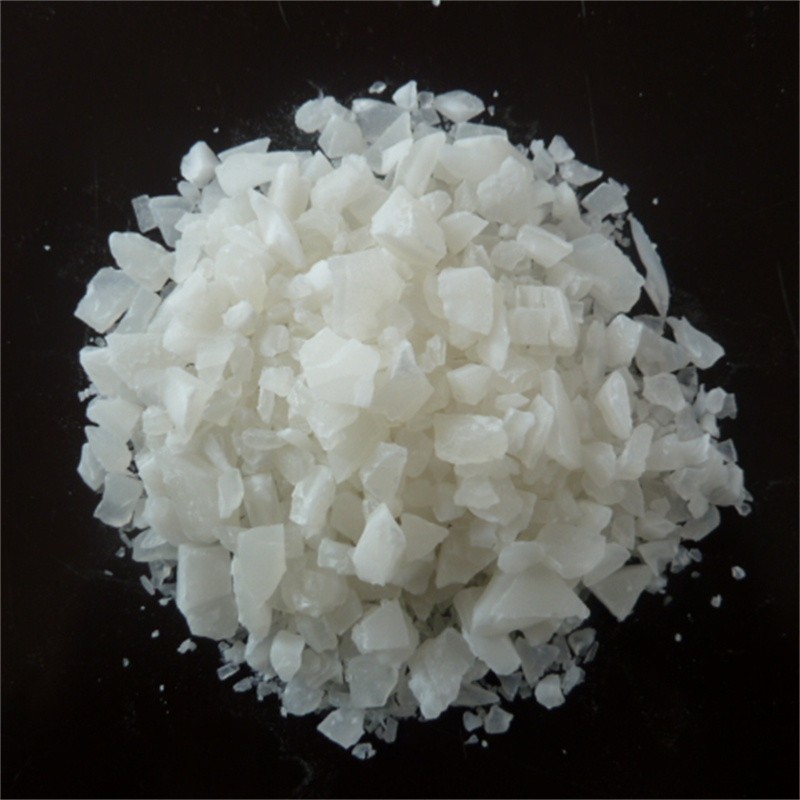
Before we jump into the interaction part, let's quickly talk about reagent grade aluminum sulphate. Reagent grade means it's a high - quality form of aluminum sulphate, usually much purer than other commercial grades. This purity is why it's often used in laboratories for all sorts of experiments and also in industries where precision matters.
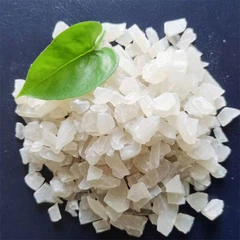
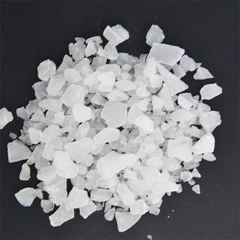
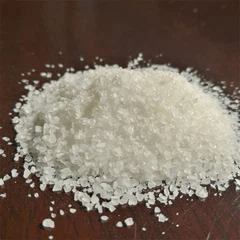
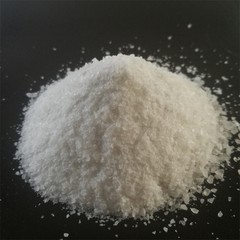
We offer different types of our product. There's the Iron Free Aluminum Sulphate Powder, which is super convenient as it can dissolve quickly in water. Then there's the 16% Aluminum Sulphate, which has a specific concentration perfect for some particular applications. And let's not forget the Iron Free Aluminum Sulphate Granules, which are great for handling and storage.
Surfactants: The Basics
Surfactants are substances that can reduce the surface tension between two liquids or between a liquid and a solid. They have a unique structure with a hydrophilic (water - loving) head and a hydrophobic (water - hating) tail. You'll find them everywhere, from your shampoo to industrial cleaning products. They're pretty amazing because they can make oil and water mix, which is something we might not think is possible at first glance.
The Interaction Process
Chemical Reactions
When reagent grade aluminum sulphate meets surfactants, a few things can happen chemically. Aluminum sulphate in water dissociates into aluminum ions ((Al^{3+})) and sulphate ions ((SO_4^{2 -})). These aluminum ions can interact with the charged groups on the surfactants.
For anionic surfactants, which have a negative charge on their hydrophilic head, the positively charged aluminum ions can form complexes. This complex formation can change the solubility and the surface - active properties of the surfactant. In some cases, it can even cause the surfactant to precipitate out of the solution.
On the other hand, for cationic surfactants (positively charged on the hydrophilic head), there's usually a repulsive force between the aluminum ions and the surfactant's head group. But there can still be some weaker interactions, like through van der Waals forces or hydrogen bonding.
Physical Changes
The interaction also leads to physical changes. One of the most noticeable is in the micelle formation. Micelles are tiny clusters that surfactants form in solution, with the hydrophobic tails in the middle and the hydrophilic heads on the outside. When aluminum sulphate is added, it can disrupt or enhance micelle formation.

If the interaction is strong, it might break up existing micelles. This can affect the emulsifying properties of the surfactant. For example, in an oil - in - water emulsion, the surfactant keeps the oil droplets dispersed in the water. If the micelles are disrupted, the oil droplets might start to coalesce, and the emulsion could break.
However, in some cases, the aluminum ions can actually help form larger and more stable micelles. This can be useful in applications where you need a more concentrated and stable surfactant system, like in some industrial cleaning processes.
Real - World Applications
Water Treatment
In water treatment, both reagent grade aluminum sulphate and surfactants play important roles. Aluminum sulphate is commonly used as a coagulant to remove suspended particles from water. Surfactants can be added to help in the emulsification of oils and other organic contaminants.
When they interact, the coagulation process can be enhanced. The complex formed between the aluminum ions and the surfactant can attract and bind to the contaminants more effectively. This leads to better clarification of the water, removing more impurities and making the water cleaner.
Detergent Industry
In detergents, the interaction can improve the cleaning power. The surfactant is the main cleaning agent, and by adding a bit of reagent grade aluminum sulphate, the surfactant's ability to lift and remove dirt can be boosted. The changes in micelle formation can help the detergent penetrate deeper into fabrics or other surfaces, making the cleaning process more efficient.
Factors Affecting the Interaction
Concentration
The concentration of both the reagent grade aluminum sulphate and the surfactant matters a great deal. If the concentration of aluminum sulphate is too high, it can cause excessive precipitation of the surfactant, which is not always desirable. On the other hand, if the concentration is too low, the interaction might not be strong enough to have a significant effect.
pH
The pH of the solution also plays a role. Aluminum ions can exist in different forms depending on the pH. At low pH, they are more likely to be in the form of (Al^{3+}), which has a stronger interaction with surfactants. As the pH increases, aluminum hydroxide complexes start to form, and this can change the nature of the interaction with surfactants.
Why Our Reagent Grade Aluminum Sulphate?
As a supplier, we take pride in the quality of our reagent grade aluminum sulphate. Our products are made with strict quality control measures to ensure high purity. This purity is crucial when it comes to interacting with surfactants because impurities can interfere with the chemical and physical processes we've discussed.
Whether you need the powder, granules, or the 16% concentration, we've got you covered. Our products are reliable, and we can supply them in the quantities you need, whether it's for a small - scale laboratory experiment or a large - scale industrial application.
Let's Talk Business
If you're interested in using reagent grade aluminum sulphate in your surfactant - related applications, I'd love to have a chat with you. We can discuss your specific needs, the best product for your situation, and work out a great deal. Don't hesitate to reach out to us for more information and to start a procurement discussion.
References
- Adamson, A. W., & Gast, A. P. (1997). Physical Chemistry of Surfaces. Wiley.
- Stumm, W., & Morgan, J. J. (1996). Aquatic Chemistry: Chemical Equilibria and Rates in Natural Waters. Wiley - Interscience.
Send Inquiry