

How to determine the aluminum content in reagent grade aluminum sulphate?
Jan 21, 2026
Leave a message
Hey there! As a supplier of reagent grade aluminum sulphate, I often get asked about how to determine the aluminum content in our product. Today, I'm gonna break it down for you in a simple and easy-to-understand way.
First off, why is it important to know the aluminum content? Well, in the reagent grade industry, accurate analysis is key. Different applications of our reagent grade aluminum sulphate require specific aluminum concentrations. Whether it's for water treatment, paper manufacturing, or chemical synthesis, having the right amount of aluminum can make or break the process.
Methods for Determining Aluminum Content
1. Complexometric Titration
This is one of the most common methods in the lab. The basic idea behind complexometric titration is to use a chelating agent that binds specifically to aluminum ions. One of the most commonly used chelating agents is ethylenediaminetetraacetic acid (EDTA).
Here's how it works:
- First, we prepare a sample solution by dissolving a known amount of our reagent grade aluminum sulphate in water. The solution should be clear and free of any particles.
- Then, we add a buffer solution to adjust the pH. Aluminum forms a stable complex with EDTA at a specific pH range, usually around 4 - 6.
- Next, we add a small amount of an indicator. In the case of aluminum - EDTA titration, xylenol orange is a popular choice. Before the titration, the indicator binds to the aluminum ions in the solution, giving it a certain color.
- We then slowly add the EDTA solution from a burette. As the EDTA binds to the aluminum ions, the color of the solution changes at the endpoint. The volume of the EDTA solution used is proportional to the amount of aluminum in the sample.
- Using the stoichiometry of the reaction between aluminum and EDTA (1:1 ratio), we can calculate the aluminum content in the original sample.
The advantage of complexometric titration is that it's relatively simple and can provide accurate results if done correctly. However, it requires careful control of the pH and the presence of other metal ions can interfere with the titration.
2. Atomic Absorption Spectroscopy (AAS)
AAS is a more advanced and precise method for determining the aluminum content. This technique is based on the principle that atoms of different elements absorb light at specific wavelengths.
- First, we prepare a series of standard solutions with known aluminum concentrations. These standards are used to create a calibration curve.
- We then inject our sample solution into an atomizer, usually a flame or a graphite furnace. The heat from the atomizer converts the aluminum in the solution into free atoms.
- A light source emits light at the wavelength specific to aluminum. The atoms in the sample absorb a portion of this light, and the amount of absorption is measured by a detector.
- By comparing the absorption of our sample to the calibration curve, we can determine the aluminum concentration in the sample.
AAS is highly sensitive and can detect very low levels of aluminum. It's also less affected by interference from other elements compared to complexometric titration. However, it requires expensive equipment and trained personnel to operate.
3. Inductively Coupled Plasma - Optical Emission Spectroscopy (ICP - OES)
ICP - OES is another powerful analytical technique for determining the aluminum content. Similar to AAS, it can analyze multiple elements simultaneously.
- In this method, we first prepare the sample by dissolving it in an appropriate solvent.
- The sample is then introduced into a high - temperature plasma (around 6000 - 10000 K) created by an inductively coupled plasma torch. The high temperature in the plasma atomizes and excites the aluminum atoms.
- As the excited atoms return to their ground state, they emit light at specific wavelengths. The emitted light is then separated by a spectrometer and detected.
- By measuring the intensity of the emitted light at the aluminum - specific wavelength, we can determine the aluminum concentration in the sample.
ICP - OES offers high precision and accuracy, and it can analyze a wide range of elements in a single run. But like AAS, it requires expensive equipment and a clean laboratory environment.
Quality Control in Our Production
As a supplier of reagent grade aluminum sulphate, we take quality control very seriously. We use a combination of these methods to ensure the aluminum content in our products meets the required specifications.
Before shipping out any batch of our reagent grade aluminum sulphate, we conduct multiple tests. We start with initial checks using complexometric titration as it's a quick and cost - effective way to get an approximate aluminum content. Then, we use either AAS or ICP - OES for more accurate and detailed analysis.
Our quality control team also keeps a close eye on other factors that can affect the aluminum content and the quality of the product. These include the purity of the raw materials, the reaction conditions during production, and the storage conditions after production.

Why Choose Our Reagent Grade Aluminum Sulphate
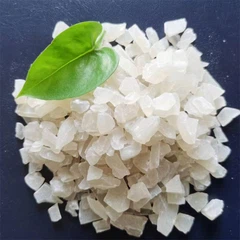
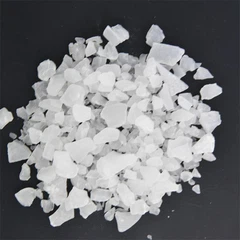
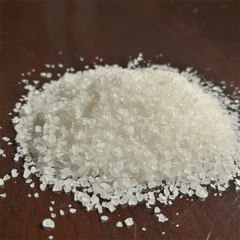
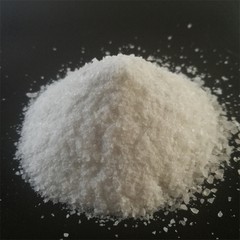
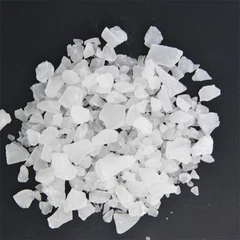
We offer high - quality reagent grade aluminum sulphate in different forms, such as flakes and powder. Our products are known for their consistent aluminum content and high purity.
We have state - of the - art production facilities and a team of experienced chemists and technicians who are dedicated to ensuring the quality of our products. Whether you need a small amount for a research project or a large quantity for industrial use, we can meet your needs.
Contact Us for More Information
If you're interested in purchasing our reagent grade aluminum sulphate or have any questions about the aluminum content determination, don't hesitate to contact us. We're here to provide you with all the information you need and help you find the right product for your specific application.
In conclusion, determining the aluminum content in reagent grade aluminum sulphate is crucial for ensuring its quality and suitability for different applications. There are several methods available, each with its own advantages and disadvantages. As a reliable supplier, we use advanced techniques and strict quality control measures to ensure the accuracy of the aluminum content in our products.
References
- Harris, D. C. (2016). Quantitative Chemical Analysis. W. H. Freeman and Company.
- Skoog, D. A., West, D. M., & Holler, F. J. (1996). Fundamentals of Analytical Chemistry. Saunders College Publishing.
- Fassel, V. A., & Kniseley, R. N. (1974). Inductively coupled plasmas as radiation sources for optical emission spectrometry. Analytical Chemistry, 46(5), 1157A - 1170A.
Send Inquiry