


How to ensure the uniformity of electronic grade aluminum sulfate in electronic products?
Jul 09, 2025
Leave a message
As a reliable supplier of electronic grade aluminum sulfate, ensuring the uniformity of this crucial chemical in electronic products is both a challenge and a commitment. In this blog post, I'll share insights into the methods and considerations for achieving this uniformity, drawing from our experience in the industry.
Understanding the Importance of Uniformity in Electronic Grade Aluminum Sulfate
In electronic products, the performance and reliability are of utmost importance. Electronic grade aluminum sulfate plays various roles, such as in battery applications, circuit board manufacturing, and semiconductor processing. Uniformity in its composition, particle size, and distribution is essential for several reasons.
First, in battery applications, Battery Grade Aluminium Sulfate needs to have consistent properties to ensure stable electrochemical reactions. Any variation in the composition or particle characteristics can lead to uneven charge and discharge processes, reducing the battery's lifespan and performance.
Second, in circuit board manufacturing, uniformity ensures proper etching and plating processes. Non - uniform aluminum sulfate may cause inconsistent etching rates, resulting in defective circuit patterns and reduced electrical conductivity.
Factors Affecting the Uniformity of Electronic Grade Aluminum Sulfate
Raw Material Quality
The quality of raw materials is the foundation for producing uniform electronic grade aluminum sulfate. Impurities in the raw materials can lead to variations in the final product. For example, if the aluminum source contains trace elements such as iron, copper, or silicon, these impurities can affect the chemical reactivity and physical properties of the aluminum sulfate. Therefore, we carefully select high - purity raw materials and conduct strict quality control before starting the production process.
Production Process Control
The production process of electronic grade aluminum sulfate involves multiple steps, including chemical reactions, purification, and crystallization. Each step must be precisely controlled to ensure uniformity.
Chemical Reaction Conditions: The reaction temperature, pressure, and reaction time are critical parameters. For instance, in the reaction between aluminum hydroxide and sulfuric acid to produce aluminum sulfate, an improper reaction temperature can lead to incomplete reactions or the formation of by - products. We use advanced reaction vessels equipped with precise temperature and pressure control systems to maintain stable reaction conditions.
Purification Methods: Purification is crucial for removing impurities and ensuring the uniformity of the product. We employ multiple purification techniques, such as filtration, ion exchange, and precipitation. Filtration can remove large - sized particles, while ion exchange can selectively remove specific ions. Precipitation is used to separate impurities based on their solubility differences. By combining these methods, we can effectively reduce the impurity content and improve the uniformity of the product.
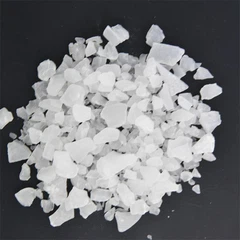
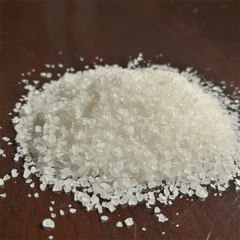
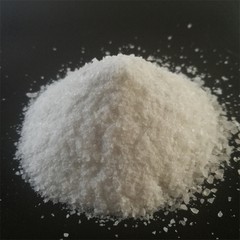
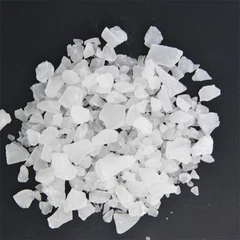
Crystallization Process: The crystallization process determines the particle size and shape of the aluminum sulfate. Slow and controlled crystallization usually results in more uniform particles. We use crystallization tanks with precise temperature and agitation control to ensure a slow and stable crystallization process. This helps to produce aluminum sulfate crystals with consistent particle sizes and shapes.

Quality Control during Production
Continuous quality control during the production process is essential for ensuring uniformity. We conduct regular sampling and analysis at different production stages.
Chemical Analysis: We use advanced analytical techniques, such as inductively coupled plasma mass spectrometry (ICP - MS) and X - ray fluorescence (XRF), to analyze the chemical composition of the product. These techniques can accurately detect the content of various elements and ensure that the product meets the specified purity requirements.
Particle Size Analysis: Laser diffraction particle size analyzers are used to measure the particle size distribution of the aluminum sulfate. By monitoring the particle size during the production process, we can adjust the production parameters in a timely manner to maintain a consistent particle size distribution.
Testing and Verification of Product Uniformity
After the production process, we conduct comprehensive testing to verify the uniformity of the electronic grade aluminum sulfate.
Batch - to - Batch Consistency Testing
We compare the properties of different batches of products to ensure batch - to - batch consistency. This includes testing the chemical composition, particle size distribution, and physical properties such as solubility and density. If any significant differences are found between batches, we trace back the production process to identify the root cause and make necessary adjustments.
In - Product Performance Testing
We also conduct in - product performance testing by using the aluminum sulfate in actual electronic product manufacturing processes. For example, in battery applications, we test the performance of batteries made with our aluminum sulfate, including battery capacity, charge - discharge efficiency, and cycle life. By evaluating the product performance in real - world applications, we can ensure that the aluminum sulfate meets the requirements of electronic products.
Storage and Transportation Considerations
Proper storage and transportation are also important for maintaining the uniformity of electronic grade aluminum sulfate.
Storage Conditions: The product should be stored in a dry, cool, and well - ventilated place. Exposure to moisture can cause the aluminum sulfate to absorb water and form hydrates, which may affect its uniformity and chemical properties. We use sealed containers and storage facilities with humidity control to prevent moisture absorption.
Transportation: During transportation, the product should be protected from physical damage and contamination. We use appropriate packaging materials, such as plastic bags or drums, to ensure the integrity of the product. Additionally, we follow strict transportation regulations to prevent any adverse effects on the product during transit.
Conclusion
Ensuring the uniformity of electronic grade aluminum sulfate in electronic products is a complex but necessary task. By carefully controlling the raw material quality, production process, and conducting comprehensive quality control, we can provide high - quality and uniform electronic grade aluminum sulfate products.
If you are in the electronic product manufacturing industry and are looking for a reliable supplier of electronic grade aluminum sulfate, we are here to serve you. Our commitment to quality and uniformity makes us a trusted partner for your electronic product needs. Contact us for more information and to discuss your procurement requirements.
References
- ASTM International. "Standard Specification for Aluminum Sulfate." ASTM D8-02(2018)e1.
- Ullmann's Encyclopedia of Industrial Chemistry. "Aluminum Compounds - Aluminum Sulfate." Wiley - VCH Verlag GmbH & Co. KGaA, Weinheim.
- Journal of Chemical Engineering and Materials Science. "Studies on the Production and Quality Control of Electronic Grade Aluminum Sulfate." Vol. XX, Issue XX, 20XX.
Send Inquiry