

Is aluminium sulphate non ferric magnetic?
Oct 03, 2025
Leave a message
Is Aluminium Sulphate Non Ferric Magnetic?
As a trusted supplier of aluminium sulphate non ferric, I often encounter various queries from customers regarding the properties and applications of our product. One question that has recently come up more frequently is whether aluminium sulphate non ferric is magnetic. In this blog post, I will delve into the scientific aspects of this question and provide a comprehensive answer.
Understanding Aluminium Sulphate Non Ferric
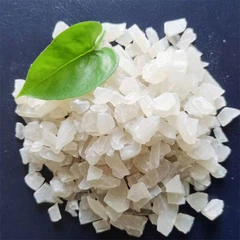
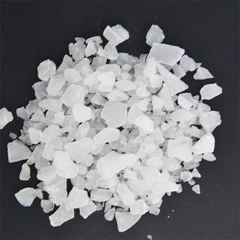
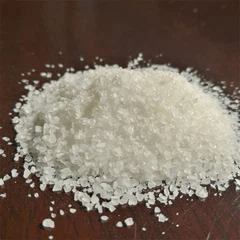
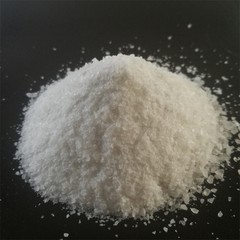
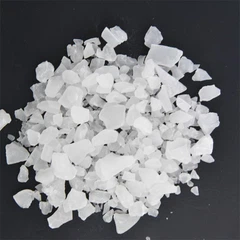
Aluminium sulphate non ferric, also known as iron - free aluminium sulphate, is a chemical compound with the formula Al₂(SO₄)₃. It is a white crystalline solid that is highly soluble in water. Our company offers high - quality products such as Iron Free Aluminum Sulphate Flakes and Non Iron Aluminum Sulphate. These products are widely used in various industries, including water treatment, paper manufacturing, and textile dyeing.
The "non ferric" part of the name indicates that this form of aluminium sulphate contains very low levels of iron. Iron is a magnetic element, and the absence of significant iron content in aluminium sulphate non ferric is crucial for many applications where magnetic properties would be undesirable.
Magnetic Properties of Substances
To understand whether aluminium sulphate non ferric is magnetic, we first need to have a basic understanding of what causes magnetism in substances. Magnetism is generally associated with the presence of unpaired electrons in the atoms of a material. When these unpaired electrons align in a particular direction, they create a magnetic field.
There are different types of magnetism, including ferromagnetism, paramagnetism, and diamagnetism. Ferromagnetic materials, such as iron, nickel, and cobalt, have strong magnetic properties and can be permanently magnetized. Paramagnetic materials are weakly attracted to magnetic fields, while diamagnetic materials are weakly repelled by magnetic fields.
Analysis of Aluminium Sulphate Non Ferric's Magnetic Properties
Let's analyze the chemical structure of aluminium sulphate non ferric to determine its magnetic nature. Aluminium (Al) has an atomic number of 13, and its electron configuration is [Ne] 3s² 3p¹. The aluminium ions (Al³⁺) in aluminium sulphate have a noble - gas electron configuration with no unpaired electrons. Sulphur (S) has an atomic number of 16, and in the sulphate ion (SO₄²⁻), the electrons are paired up in stable molecular orbitals.
Since there are no unpaired electrons in the aluminium and sulphate ions that make up aluminium sulphate non ferric, it does not exhibit ferromagnetism or paramagnetism. Instead, it is a diamagnetic substance. Diamagnetic materials have a very weak and negative magnetic susceptibility, which means they are slightly repelled by magnetic fields.
In practical terms, the diamagnetic effect of aluminium sulphate non ferric is so weak that it is hardly noticeable in normal circumstances. For example, if you were to bring a magnet close to a sample of aluminium sulphate non ferric, you would not observe any significant interaction.
Applications and the Significance of Non - Magnetic Property
The non - magnetic property of aluminium sulphate non ferric is highly beneficial in many applications. In water treatment, for instance, the use of magnetic substances could lead to the accumulation of magnetic particles in the treatment equipment, causing blockages and reducing the efficiency of the process. By using non - magnetic aluminium sulphate non ferric, these issues can be avoided.


In the paper manufacturing industry, non - magnetic aluminium sulphate is used as a sizing agent. Magnetic particles in the sizing agent could interfere with the paper - making machinery and affect the quality of the final product. The non - magnetic nature of our Iron Free Aluminum Sulphate Flakes ensures smooth operation and high - quality paper production.
Experimental Evidence
Numerous scientific experiments have been conducted to confirm the non - magnetic nature of aluminium sulphate non ferric. In a typical experiment, a sample of aluminium sulphate non ferric is placed in a magnetic field, and the force exerted on the sample is measured. The results consistently show that the sample experiences only a very weak diamagnetic repulsion, which is in line with the theoretical analysis based on its chemical structure.
Conclusion
In conclusion, aluminium sulphate non ferric is not magnetic in the traditional sense. Due to its low iron content and the absence of unpaired electrons in its chemical structure, it does not exhibit ferromagnetism or paramagnetism. Instead, it is a diamagnetic substance, which means it is weakly repelled by magnetic fields.
This non - magnetic property makes aluminium sulphate non ferric an ideal choice for a wide range of applications where magnetic interference would be a problem. As a supplier, we take pride in providing high - quality non - magnetic aluminium sulphate products that meet the strict requirements of our customers.
If you are interested in purchasing our aluminium sulphate non ferric products, such as Iron Free Aluminum Sulphate Flakes and Non Iron Aluminum Sulphate, please feel free to contact us for more information and to start a procurement discussion. We are committed to providing excellent customer service and high - quality products to meet your specific needs.
References
- Atkins, P. W., & de Paula, J. (2006). Physical Chemistry. Oxford University Press.
- Housecroft, C. E., & Sharpe, A. G. (2008). Inorganic Chemistry. Pearson Education.
- Huheey, J. E., Keiter, E. A., & Keiter, R. L. (1993). Inorganic Chemistry: Principles of Structure and Reactivity. HarperCollins College Publishers.
Send Inquiry