

What are the chemical reactions involving aluminium sulphate 17?
Jun 03, 2025
Leave a message
Hey there! As a supplier of aluminium sulphate 17, I'm super stoked to chat about the chemical reactions this awesome compound gets involved in. Aluminium sulphate 17, also known as Al₂(SO₄)₃·17H₂O, is a hydrate form of aluminium sulphate, and it's got a bunch of cool applications thanks to its chemical properties.
First off, let's talk about the basic formation of aluminium sulphate. It's usually made by reacting aluminium hydroxide, Al(OH)₃, with sulphuric acid, H₂SO₄. The chemical equation for this reaction is:
2Al(OH)₃ + 3H₂SO₄ → Al₂(SO₄)₃ + 6H₂O
When we're dealing with the 17 - hydrate form, water molecules attach to the aluminium sulphate during the crystallization process. So, the overall reaction for getting aluminium sulphate 17 could be thought of as the above reaction followed by the incorporation of 17 water molecules into the crystal structure.
One of the most common applications of aluminium sulphate 17 is in water treatment. In water treatment plants, it acts as a coagulant. When added to water, it undergoes hydrolysis. The aluminium ions, Al³⁺, react with water molecules to form various hydroxo - complexes. The main reaction can be represented as:
Al³⁺ + 3H₂O ⇌ Al(OH)₃ + 3H⁺
This reaction is an equilibrium reaction. The formed aluminium hydroxide, Al(OH)₃, is a gelatinous precipitate. In water, suspended particles and colloids have a negative charge on their surface. The positively charged aluminium hydroxide particles attract these negatively charged particles, causing them to clump together (coagulate). Once the particles are coagulated, they become larger and heavier, and can then settle out of the water more easily, or be filtered out. This helps in removing impurities like dirt, bacteria, and other contaminants from the water, making it cleaner and safer to use.
Another important reaction occurs when aluminium sulphate 17 is used in the paper industry. In papermaking, it's used to control the pH of the paper - making process and to help in sizing. Sizing is a process that makes the paper resistant to water penetration. When aluminium sulphate is added to the paper pulp, it reacts with rosin size. Rosin is a natural resin. The aluminium ions react with the carboxylate groups in the rosin to form insoluble aluminium resinate complexes.
R - COO⁻ + Al³⁺ → (R - COO)₃Al


This insoluble complex forms a thin film on the surface of the paper fibers, reducing the paper's absorbency and making it more suitable for writing, printing, and other applications.
In the textile industry, aluminium sulphate 17 can be used as a mordant. A mordant is a substance that helps the dye bind to the fabric. When used as a mordant, the aluminium ions in aluminium sulphate react with the dye molecules. The exact reaction depends on the type of dye being used. For example, with some acidic dyes, the aluminium ions can form coordination complexes with the dye molecules. These complexes are more firmly attached to the fabric fibers than the dye molecules alone. So, the dye stays on the fabric better, resulting in a more color - fast and long - lasting dyeing effect.
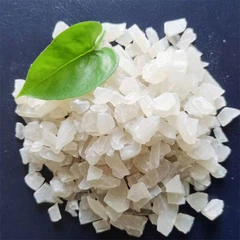
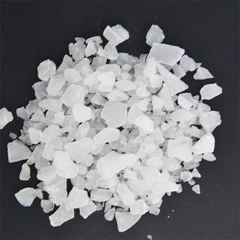
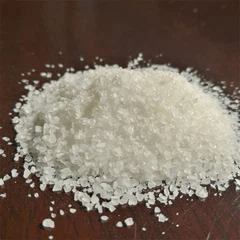
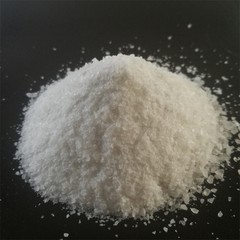
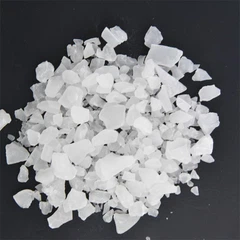
Now, let's talk about the different forms of our product. We offer Iron Free Aluminum Sulphate Powder, Iron Free Aluminum Sulphate Flakes, and Iron Free Aluminum Sulphate Granules. The powder form is very fine and has a large surface area, which means it can dissolve quickly in water, making it great for applications where a fast - acting coagulant or mordant is needed. The flake form is a bit more compact and easier to handle in some industrial settings. It also dissolves relatively well and can be stored for longer periods without much risk of caking. The granule form is even more durable and has better flow properties, which is useful for automated dosing systems in large - scale applications.
In the soil amendment industry, aluminium sulphate 17 can be used to lower the pH of alkaline soils. When added to soil, the aluminium ions react with water in the soil to form aluminium hydroxide and release hydrogen ions, as we saw in the hydrolysis reaction above. The increase in hydrogen ions makes the soil more acidic. This is beneficial for plants that prefer acidic soil conditions, like blueberries and azaleas. By adjusting the soil pH, we can create a more suitable environment for these plants to grow and thrive.
Aluminium sulphate 17 also has some reactions in the production of fire - retardant materials. When used in combination with other chemicals, it can help in forming a protective layer on the surface of materials. The aluminium ions can react with other compounds to form a char - like layer when exposed to fire. This char layer acts as a barrier, preventing oxygen from reaching the underlying material and reducing the spread of fire.
If you're in the market for high - quality aluminium sulphate 17, whether it's for water treatment, paper making, textile dyeing, soil amendment, or any other application, we've got you covered. Our products are of the highest quality, and we ensure that they meet all the necessary industry standards. We're always ready to have a chat about your specific needs and how our aluminium sulphate 17 can fit into your processes. So, don't hesitate to reach out if you're interested in purchasing and want to discuss more details about the product.
References:
- "Water Treatment Chemicals: A Guide to Their Use and Application" - A comprehensive book on water treatment chemicals, including aluminium sulphate.
- "Textile Chemistry" - This resource provides in - depth information on the use of mordants in textile dyeing.
- "Soil Science: Principles and Practices" - A great reference for understanding soil amendment processes and the role of aluminium sulphate in soil pH adjustment.
Send Inquiry