

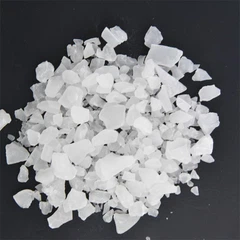
What are the electrochemical properties of battery grade aluminium sulfate?
Jun 10, 2025
Leave a message
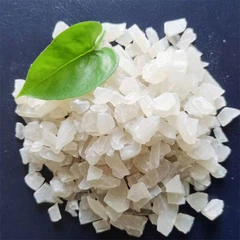
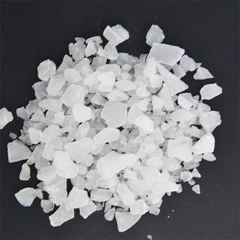
As a leading supplier of battery grade aluminium sulfate, I am often asked about its electrochemical properties. In this blog post, I will delve into the key electrochemical characteristics of battery grade aluminium sulfate and explain why it is a crucial component in modern battery technologies.
Solubility and Ionization
Battery grade aluminium sulfate, with the chemical formula Al₂(SO₄)₃, is highly soluble in water. When dissolved, it dissociates into aluminium ions (Al³⁺) and sulfate ions (SO₄²⁻). The solubility of aluminium sulfate is temperature - dependent. At room temperature, approximately 31.2 grams of aluminium sulfate can dissolve in 100 grams of water. This high solubility is essential as it allows for the easy preparation of electrolyte solutions in batteries.
The ionization process can be represented by the following equation:
Al₂(SO₄)₃(s) → 2Al³⁺(aq) + 3SO₄²⁻(aq)
The presence of these ions in the solution is fundamental for the electrochemical reactions that occur within the battery. Aluminium ions, in particular, can participate in redox reactions, which are the basis of energy storage and release in batteries.
Redox Reactions
In battery systems, redox reactions are the core processes that enable the conversion of chemical energy into electrical energy and vice versa. Aluminium ions in battery grade aluminium sulfate can undergo oxidation - reduction reactions.
The standard reduction potential of the Al³⁺/Al half - reaction is - 1.66 V (vs. Standard Hydrogen Electrode). This relatively low reduction potential indicates that aluminium has a strong tendency to lose electrons and be oxidized. In some battery designs, aluminium can act as an anode material. When aluminium is oxidized, it releases electrons according to the reaction:
Al(s) → Al³⁺(aq) + 3e⁻
On the other hand, at the cathode, various reduction reactions can occur depending on the battery's chemistry. For example, in some aluminium - air batteries, oxygen from the air is reduced at the cathode:
O₂(g) + 2H₂O(l) + 4e⁻ → 4OH⁻(aq)
The combination of these redox reactions at the anode and cathode generates an electric current, which can be used to power electrical devices.
Conductivity
The presence of mobile ions in the electrolyte solution made from battery grade aluminium sulfate contributes to its electrical conductivity. The conductivity of an electrolyte solution is a measure of its ability to conduct an electric current. In battery applications, high conductivity is desirable as it reduces the internal resistance of the battery, thereby improving its efficiency and power output.
The conductivity of an aluminium sulfate solution depends on several factors, including the concentration of the solution, temperature, and the presence of other ions. Generally, as the concentration of aluminium sulfate increases, the conductivity of the solution also increases up to a certain point. Beyond this optimal concentration, the conductivity may start to decrease due to ion - ion interactions and the formation of ion pairs.
Temperature also has a significant impact on conductivity. As the temperature rises, the mobility of ions in the solution increases, leading to higher conductivity. This is because the thermal energy allows the ions to move more freely through the solution.
pH and Stability
The pH of an aluminium sulfate solution can affect its electrochemical properties. Aluminium sulfate hydrolyzes in water, producing hydrogen ions (H⁺) and aluminium hydroxide complexes. The hydrolysis reaction can be written as:
Al³⁺(aq) + 3H₂O(l) ⇌ Al(OH)₃(s) + 3H⁺(aq)
This hydrolysis reaction makes the solution acidic. The pH of a typical aluminium sulfate solution can range from 2 - 3, depending on the concentration. The acidic environment can have both positive and negative effects on battery performance. On one hand, it can enhance the solubility of some electrode materials and promote certain redox reactions. On the other hand, it can also cause corrosion of battery components if not properly controlled.

In terms of stability, battery grade aluminium sulfate is relatively stable under normal storage conditions. However, it can react with certain substances, such as strong bases, to form insoluble aluminium hydroxide or other compounds. Therefore, proper storage and handling are necessary to maintain its quality and electrochemical properties.
Applications in Batteries
Battery grade aluminium sulfate finds a wide range of applications in different types of batteries.
Aluminium - Air Batteries
As mentioned earlier, aluminium - air batteries use aluminium as the anode and oxygen from the air as the cathode reactant. Battery grade aluminium sulfate can be used as an electrolyte component. The high solubility of aluminium sulfate allows for the easy formation of an electrolyte solution that can support the redox reactions at the anode and cathode. The acidic nature of the aluminium sulfate solution can also help to prevent the formation of passivation layers on the aluminium anode, which would otherwise reduce the battery's performance.
Aluminium - Ion Batteries
In aluminium - ion batteries, aluminium ions are the charge carriers. Battery grade aluminium sulfate can provide a source of aluminium ions in the electrolyte. These ions can shuttle between the anode and cathode during the charging and discharging processes. The high conductivity of the aluminium sulfate solution ensures efficient ion transport, which is crucial for the battery's performance.
Advantages of Our Battery Grade Aluminium Sulfate
As a supplier of battery grade aluminium sulfate, we take pride in offering high - quality products with excellent electrochemical properties.
- Purity: Our battery grade aluminium sulfate is produced with strict quality control measures to ensure high purity. Impurities can have a detrimental effect on the electrochemical performance of batteries, such as reducing conductivity and causing unwanted side reactions. Our high - purity product minimizes these issues, providing reliable and consistent performance.
- Consistency: We maintain a high level of consistency in the production process. This means that each batch of our battery grade aluminium sulfate has similar electrochemical properties, allowing battery manufacturers to achieve reproducible results in their battery production.
- Customization: We understand that different battery applications may have specific requirements. Therefore, we offer customization services to meet the unique needs of our customers. Whether it is adjusting the concentration, particle size, or other properties, we can work with our customers to develop the most suitable battery grade aluminium sulfate for their applications.
Contact Us for Procurement
If you are interested in our battery grade aluminium sulfate or want to learn more about its electrochemical properties and applications, please visit our website Battery Grade Aluminium Sulfate. We are more than willing to discuss your specific requirements and provide you with detailed product information. Our team of experts is ready to assist you in finding the best solution for your battery production needs. Let's work together to drive the development of advanced battery technologies.
References
- Bard, A. J., & Faulkner, L. R. (2001). Electrochemical Methods: Fundamentals and Applications. Wiley.
- Linden, D., & Reddy, T. B. (2002). Handbook of Batteries. McGraw - Hill.
- Conway, B. E. (1999). Electrochemical Supercapacitors: Scientific Fundamentals and Technological Applications. Kluwer Academic Publishers.
Send Inquiry