

What are the photochemical properties of the substance with CAS 10043-01-3?
Jul 23, 2025
Leave a message
The substance with CAS 10043-01-3 is aluminum sulfate, a well - known and widely used chemical compound. In this blog, we'll delve into its photochemical properties, and as a supplier of this compound, we'll also highlight its various applications and provide links to related products.
I. Basic Introduction to Aluminum Sulfate
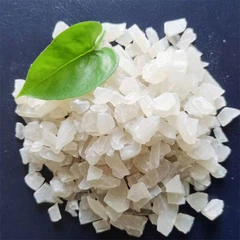
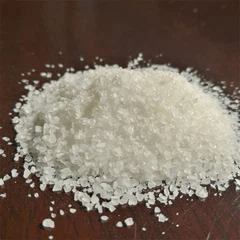
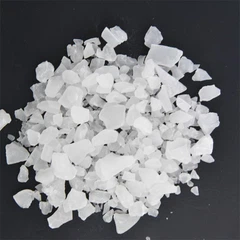
Aluminum sulfate, with the chemical formula Al₂(SO₄)₃, exists in different forms such as hydrates, with the most common being the octadecahydrate Al₂(SO₄)₃·18H₂O. It is a white crystalline solid that is highly soluble in water. Aluminum sulfate has a long history of use in various industries, including water treatment, paper manufacturing, and the textile industry.
II. Photochemical Properties
1. Photostability
Under normal sunlight exposure, aluminum sulfate is generally photostable. The chemical bonds within the compound are relatively strong, and the energy provided by sunlight in the visible and near - ultraviolet regions is not sufficient to break these bonds. This photostability makes it suitable for outdoor applications where it may be exposed to sunlight for extended periods. For example, in water treatment plants located outdoors, aluminum sulfate can be used without significant degradation due to sunlight exposure.


2. Interaction with Light - Induced Reactions in Aqueous Solutions
When aluminum sulfate is dissolved in water, it dissociates into aluminum ions (Al³⁺) and sulfate ions (SO₄²⁻). In the presence of light, especially in the presence of other photosensitive substances in the water, some secondary reactions may occur.
For instance, if there are organic pollutants in the water along with aluminum sulfate, the aluminum ions can act as a coagulant to aggregate the pollutants. Light can potentially influence the rate of this coagulation process. Some studies suggest that in the presence of certain wavelengths of light, the hydration and hydrolysis processes of aluminum ions may be accelerated. The hydrolysis of Al³⁺ in water leads to the formation of various hydroxo - aluminum species such as Al(OH)²⁺, Al(OH)₂⁺, and eventually Al(OH)₃. These species play a crucial role in the coagulation and flocculation of suspended particles in water.
3. Absorption of Light
Aluminum sulfate itself has a very low absorption in the visible light spectrum. It does not have chromophores (groups of atoms that absorb light) that can absorb visible light. However, in the ultraviolet (UV) region, there may be some weak absorption due to the electronic transitions within the sulfate ions or the interaction between the aluminum and sulfate ions. This UV absorption can be relevant in some applications where UV light is used for disinfection or oxidation in water treatment processes. If aluminum sulfate is present in the water during these processes, its weak UV absorption may slightly affect the overall efficiency of the UV - based treatment.
III. Applications Related to Photochemical Properties
1. Water Treatment
As mentioned earlier, the photochemical properties of aluminum sulfate are relevant in water treatment. Its photostability ensures that it can be used in open - air water treatment facilities without losing its coagulation ability due to sunlight exposure. The light - induced acceleration of hydrolysis and coagulation processes can help in more efficient removal of suspended solids, organic matter, and some heavy metals from water.
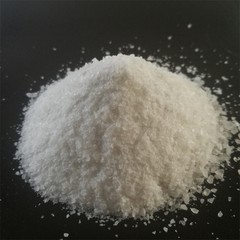
We offer Aluminum Sulphate Powder which is highly suitable for water treatment applications. The powder form dissolves quickly in water, allowing for rapid coagulation and flocculation processes.
2. Paper Manufacturing
In paper manufacturing, aluminum sulfate is used as a sizing agent and a retention aid. Although the direct photochemical effects are not as prominent as in water treatment, the overall process may be affected by light in the factory environment. Aluminum sulfate helps in improving the paper's strength and printability. Our Ferric Aluminium Sulphate is a specialized product that combines the properties of aluminum sulfate and ferric salts, providing enhanced performance in paper manufacturing processes.
3. Textile Industry
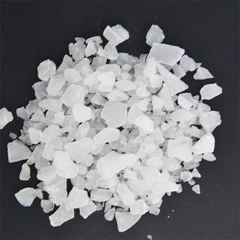
In the textile industry, aluminum sulfate is used for dyeing and printing processes. The stability of aluminum sulfate under light is important to ensure consistent coloration of the textiles. It can also act as a mordant, helping the dyes to bind more effectively to the fabric. Our Aluminum Sulphate Lump is a convenient form for some textile dyeing operations, as it can be added gradually to the dyeing bath.
IV. Quality Assurance as a Supplier
As a supplier of aluminum sulfate with CAS 10043 - 01 - 3, we understand the importance of the photochemical properties of the product in different applications. We ensure that our products are of high purity, which is crucial for maintaining their photostability and reactivity in various processes.
Our manufacturing process is carefully controlled to produce aluminum sulfate with consistent chemical composition. We conduct rigorous quality checks at every stage of production, from raw material sourcing to the final packaging. This ensures that our customers receive a product that meets their specific requirements in terms of photochemical properties and overall performance.
V. Conclusion and Call to Action
In conclusion, the photochemical properties of aluminum sulfate (CAS 10043 - 01 - 3) play an important role in its various applications. Its photostability, interaction with light - induced reactions in aqueous solutions, and light absorption characteristics make it a versatile compound in industries such as water treatment, paper manufacturing, and the textile industry.
If you are in need of high - quality aluminum sulfate products for your specific applications, we invite you to contact us for more information and to discuss your procurement needs. We are committed to providing you with the best products and services to meet your business requirements.
References
- "Water Treatment Chemicals: Chemistry and Technology" by Klaus H. Schwuger, et al.
- "Handbook of Paper and Paperboard Testing and Production" by James C. Batcheller.
- "Textile Dyeing and Finishing Technology" by Shishir Kumar Paul.
Send Inquiry