

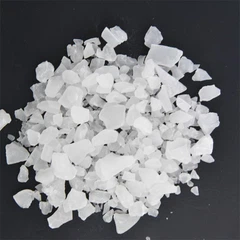
What are the production technologies of high - purity industrial aluminum sulphate?
Nov 11, 2025
Leave a message
As a seasoned supplier of industrial aluminum sulphate, I've witnessed firsthand the critical role this chemical compound plays across various industries. High - purity industrial aluminum sulphate is in high demand, especially in water treatment, paper manufacturing, and the production of other chemicals. In this blog, I'll delve into the production technologies of high - purity industrial aluminum sulphate.
1. Raw Material Selection
The journey to producing high - purity industrial aluminum sulphate begins with the careful selection of raw materials. The two primary sources of aluminum for the production of aluminum sulphate are bauxite and aluminum hydroxide.
Bauxite is a naturally occurring ore that contains aluminum oxide. However, bauxite often contains impurities such as iron, silicon, and titanium. To obtain high - purity aluminum sulphate, the bauxite must be carefully refined. Suppliers like us typically choose high - grade bauxite with low impurity levels. This reduces the need for extensive purification steps later in the production process.
Aluminum hydroxide, on the other hand, is a more refined source of aluminum. It is often obtained through the Bayer process, which involves dissolving bauxite in sodium hydroxide to extract aluminum hydroxide. Aluminum hydroxide is preferred for high - purity applications because it has fewer impurities compared to bauxite. By using high - quality aluminum hydroxide, we can produce aluminum sulphate with a purity level that meets the strict requirements of various industries.
2. Acid Digestion
Once the raw materials are selected, the next step is acid digestion. In this process, the aluminum - containing raw material is reacted with sulfuric acid. The reaction between aluminum hydroxide or bauxite and sulfuric acid can be represented by the following chemical equations:
For aluminum hydroxide:
[2Al(OH)_3 + 3H_2SO_4=Al_2(SO_4)_3 + 6H_2O]
For bauxite (simplified, assuming the main aluminum - containing component is (Al_2O_3)):
[Al_2O_3+3H_2SO_4 = Al_2(SO_4)_3+3H_2O]
The acid digestion process is carried out in a reactor under controlled conditions. The temperature, pressure, and the ratio of the raw material to sulfuric acid are carefully monitored to ensure a complete reaction. The reaction is exothermic, which means it releases heat. Therefore, proper cooling systems are required to maintain the optimal reaction temperature.
3. Purification
After the acid digestion, the resulting solution contains aluminum sulphate along with various impurities. To obtain high - purity industrial aluminum sulphate, purification steps are necessary.
One common purification method is filtration. The solution is passed through a filter to remove any solid impurities such as undissolved particles or insoluble compounds. Filtration can be carried out using different types of filters, such as plate - and - frame filters or membrane filters.
Another important purification technique is precipitation. Chemical agents are added to the solution to precipitate out specific impurities. For example, to remove iron impurities, a reducing agent can be added to convert ferric iron ((Fe^{3+})) to ferrous iron ((Fe^{2+})), which can then be precipitated as iron hydroxide by adjusting the pH of the solution.
Ion exchange is also a widely used purification method. In this process, the solution is passed through an ion - exchange resin. The resin selectively binds to certain ions, removing them from the solution. This method is particularly effective for removing trace impurities such as heavy metals.
4. Concentration and Crystallization
Once the solution is purified, it is concentrated to increase the aluminum sulphate content. Concentration is typically achieved through evaporation. The solution is heated in an evaporator, and the water is removed as steam. This increases the concentration of aluminum sulphate in the solution.
After concentration, the solution is cooled to induce crystallization. As the solution cools, aluminum sulphate crystals form. The crystallization process is carefully controlled to obtain the desired crystal size and shape. The crystals are then separated from the mother liquor through filtration or centrifugation.


5. Drying and Milling
The separated aluminum sulphate crystals are still wet and need to be dried. Drying is carried out in a dryer, where the crystals are exposed to hot air or other drying agents. The drying process removes the remaining moisture from the crystals, ensuring a high - quality product.
After drying, the aluminum sulphate crystals may be milled to obtain the desired particle size. Milling can be carried out using various types of mills, such as ball mills or jet mills. The particle size of the final product is an important factor, as it can affect the solubility and reactivity of aluminum sulphate in different applications.
Applications of High - Purity Industrial Aluminum Sulphate
High - purity industrial aluminum sulphate has a wide range of applications. In the water treatment industry, it is used as a coagulant to remove suspended solids, colloids, and organic matter from water. Our Aluminium Sulfate Water Treatment product is specifically designed for this purpose. It helps to clarify water, making it suitable for drinking, industrial use, and wastewater treatment.
In the paper manufacturing industry, high - purity aluminum sulphate is used as a sizing agent. It helps to improve the paper's strength, printability, and water resistance. Our Aluminum Sulfate Iron Free Grade Fine Powder Type 0 - 1mm is ideal for paper manufacturing due to its high purity and fine particle size.
In the sewage treatment industry, Iron - Free Aluminum Sulfate Powder For Sewage Treatment is used to remove phosphorus and other contaminants from sewage. It reacts with the contaminants, forming insoluble precipitates that can be easily removed from the water.
Conclusion
The production of high - purity industrial aluminum sulphate is a complex process that involves careful raw material selection, acid digestion, purification, concentration, crystallization, drying, and milling. Each step in the process is crucial for obtaining a high - quality product that meets the strict requirements of various industries.
As a reliable supplier of industrial aluminum sulphate, we are committed to using the latest production technologies to ensure the highest level of purity and quality in our products. Whether you are in the water treatment, paper manufacturing, or sewage treatment industry, we have the right aluminum sulphate product for you.
If you are interested in purchasing high - purity industrial aluminum sulphate or have any questions about our products, please feel free to contact us for procurement discussions. We look forward to serving you and meeting your specific needs.
References
- Kirk - Othmer Encyclopedia of Chemical Technology.
- Ullmann's Encyclopedia of Industrial Chemistry.
- Textbooks on inorganic chemical engineering.
Send Inquiry