

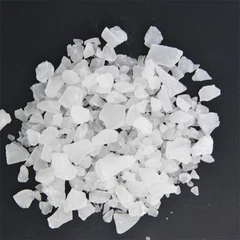
What chemicals can react with aluminium sulphate water?
Jun 12, 2025
Leave a message
As a reliable supplier of aluminium sulphate water, I've witnessed firsthand the diverse applications and reactions of this compound. Aluminium sulphate, with the chemical formula Al₂(SO₄)₃, is a widely used chemical in water treatment processes. It exists in both anhydrous and hydrated forms, with the hydrated form being more common due to its better solubility and reactivity in water.
Basic Properties of Aluminium Sulphate Water
Aluminium sulphate water is essentially a solution of aluminium sulphate in water. In water, aluminium sulphate dissociates into aluminium ions (Al³⁺) and sulphate ions (SO₄²⁻). The aluminium ions are particularly reactive and play a crucial role in many chemical reactions. This dissociation occurs according to the following equation: Al₂(SO₄)₃ → 2Al³⁺ + 3SO₄²⁻.
The solution is usually acidic due to the hydrolysis of aluminium ions. The aluminium ions react with water molecules to form various aluminium hydroxide species and release hydrogen ions (H⁺), which lower the pH of the solution. The general hydrolysis reactions can be represented as follows:
Al³⁺ + H₂O ⇌ Al(OH)²⁺ + H⁺
Al(OH)²⁺ + H₂O ⇌ Al(OH)₂⁺ + H⁺
Al(OH)₂⁺ + H₂O ⇌ Al(OH)₃ + H⁺
Reactions with Bases
One of the most common types of reactions that aluminium sulphate water can undergo is with bases. When a base is added to an aluminium sulphate solution, the hydroxide ions (OH⁻) from the base react with the aluminium ions. For example, if we add sodium hydroxide (NaOH) to an aluminium sulphate solution, the following reactions occur step - by - step.


Initially, a white precipitate of aluminium hydroxide [Al(OH)₃] is formed:
Al₂(SO₄)₃ + 6NaOH → 2Al(OH)₃↓+ 3Na₂SO₄
However, if more sodium hydroxide is added, the aluminium hydroxide precipitate dissolves to form a soluble complex ion, sodium aluminate (NaAlO₂):
Al(OH)₃ + NaOH → NaAlO₂+ 2H₂O
This reaction is often used in water treatment processes to remove aluminium from the solution when necessary. Other common bases such as potassium hydroxide (KOH) react in a similar way with aluminium sulphate water.
Reactions with Carbonates and Bicarbonates
Aluminium sulphate water can also react with carbonates and bicarbonates. When sodium carbonate (Na₂CO₃) is added to an aluminium sulphate solution, a double - displacement reaction occurs. The aluminium ions react with the carbonate ions (CO₃²⁻) to form aluminium carbonate [Al₂(CO₃)₃], which is unstable in water and decomposes to form aluminium hydroxide and carbon dioxide (CO₂):
Al₂(SO₄)₃ + 3Na₂CO₃+ 3H₂O → 2Al(OH)₃↓+ 3Na₂SO₄+ 3CO₂↑
Similarly, when sodium bicarbonate (NaHCO₃) is added, a reaction takes place, and aluminium hydroxide is formed along with the release of carbon dioxide:
Al₂(SO₄)₃ + 6NaHCO₃ → 2Al(OH)₃↓+ 3Na₂SO₄+ 6CO₂↑
These reactions are useful in water treatment as the formation of aluminium hydroxide helps in the coagulation and sedimentation of impurities in the water.
Reactions with Sulfides
When a soluble sulfide such as sodium sulfide (Na₂S) is added to aluminium sulphate water, a reaction occurs between the aluminium ions and the sulfide ions (S²⁻). Aluminium sulfide (Al₂S₃) is initially formed, but it quickly hydrolyzes in water to form aluminium hydroxide and hydrogen sulfide (H₂S) gas:
Al₂(SO₄)₃ + 3Na₂S+ 6H₂O → 2Al(OH)₃↓+ 3Na₂SO₄+ 3H₂S↑
The production of hydrogen sulfide gas can be a concern due to its unpleasant odor and toxicity. However, in some cases, this reaction can be used to remove sulfide ions from the water.
Reactions with Phosphates
In water treatment, the reaction between aluminium sulphate water and phosphates is of great importance. When aluminium sulphate is added to water containing phosphate ions (PO₄³⁻), an insoluble aluminium phosphate (AlPO₄) precipitate is formed:
Al₂(SO₄)₃ + 2Na₃PO₄ → 2AlPO₄↓+ 3Na₂SO₄
This reaction is used to remove phosphates from water, as excessive phosphate levels can lead to eutrophication in water bodies.
Applications in Water Treatment
The reactions of aluminium sulphate water have numerous applications in water treatment. In drinking water treatment, aluminium sulphate is used as a coagulant. The formation of aluminium hydroxide during the hydrolysis and subsequent reactions helps to trap and remove suspended particles, colloids, and some organic matter from the water. For more information on Aluminum Sulfate in Drinking Water, you can visit our detailed page.
In the treatment of swimming pool water, aluminium sulphate can also be used. It helps in clarifying the water by coagulating small particles that cause cloudiness. To learn more about Aluminium Sulphate for Swimming Pools, check out our dedicated page.
Moreover, for large - scale drinking water treatment plants, aluminium sulphate is a cost - effective and efficient option. Our high - quality aluminium sulphate water can ensure better water treatment results. If you are interested in Aluminum Sulphate for Drinking Water Treatment, we can provide you with the best products.
Conclusion
In conclusion, aluminium sulphate water can react with a variety of chemicals, including bases, carbonates, bicarbonates, sulfides, and phosphates. These reactions are not only important from a chemical perspective but also have significant applications in water treatment. As a supplier of aluminium sulphate water, I understand the importance of these reactions and how they contribute to the overall quality of water treatment processes.
If you are involved in water treatment, whether it's for drinking water, swimming pools, or industrial water, and you are looking for a reliable source of high - quality aluminium sulphate water, we are here to help. Contact us to start a procurement discussion and find the best solution for your water treatment needs.
References
- Cotton, F. A.; Wilkinson, G.; Murillo, C. A.; Bochmann, M. (1999). Advanced Inorganic Chemistry (6th ed.). Wiley.
- Snoeyink, V. L.; Jenkins, D. (1980). Water Chemistry. Wiley - Interscience.
- AWWA (American Water Works Association). Water Treatment Plant Design. McGraw - Hill.
Send Inquiry