

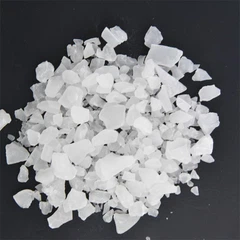
How does aluminium sulphate liquid interact with other chemicals?
Aug 18, 2025
Leave a message
As a supplier of aluminium sulphate liquid, I've witnessed firsthand the remarkable versatility and wide - ranging applications of this chemical. Aluminium sulphate liquid, with the chemical formula Al₂(SO₄)₃, is a commonly used industrial chemical that plays a crucial role in various sectors. In this blog, I'll explore how aluminium sulphate liquid interacts with other chemicals, which can help you better understand its functions and potential applications.
Interaction with Bases
One of the most well - known reactions of aluminium sulphate liquid is with bases. When aluminium sulphate reacts with a base such as sodium hydroxide (NaOH), a series of complex reactions occur. Initially, aluminium hydroxide (Al(OH)₃) is formed as a white precipitate. The chemical equation for this reaction is:
Al₂(SO₄)₃ + 6NaOH → 2Al(OH)₃↓+ 3Na₂SO₄
If more sodium hydroxide is added, the aluminium hydroxide precipitate will dissolve to form a soluble aluminate salt. The reaction is as follows:
Al(OH)₃ + NaOH → NaAlO₂ + 2H₂O
This property is often utilized in water treatment processes. In wastewater treatment plants, the addition of a base to aluminium sulphate can help in the precipitation of impurities and the removal of suspended solids. The formation of aluminium hydroxide flocs can trap and settle out contaminants, making the water cleaner. For more information on the water treatment applications of aluminium sulphate, you can visit Aluminium Sulfate Water Treatment.
Interaction with Carbonates
When aluminium sulphate liquid reacts with carbonates, such as sodium carbonate (Na₂CO₃), a double - displacement reaction takes place. The aluminium ions from aluminium sulphate react with the carbonate ions to form aluminium carbonate (Al₂(CO₃)₃), which is unstable in water and quickly decomposes into aluminium hydroxide and carbon dioxide gas. The overall reaction can be represented as:
Al₂(SO₄)₃ + 3Na₂CO₃ + 3H₂O → 2Al(OH)₃↓+ 3Na₂SO₄+ 3CO₂↑
This reaction is also important in water treatment. The release of carbon dioxide can cause the pH of the water to change, and the formation of aluminium hydroxide flocs helps in the coagulation and sedimentation of pollutants. Additionally, in some industrial processes, this reaction can be used to control the pH and remove certain metal ions from solutions.
Interaction with Metal Salts
Aluminium sulphate liquid can interact with various metal salts. For example, when it reacts with ferrous sulphate (FeSO₄), there can be a competition for ligands in solution. In some cases, mixed flocs can be formed, which may have enhanced coagulation properties compared to using either chemical alone. This is particularly useful in water treatment for the removal of heavy metals and other contaminants.
Another interesting interaction is with copper salts. When aluminium sulphate reacts with copper sulphate (CuSO₄), there is no significant chemical reaction under normal conditions. However, in the presence of a reducing agent or under specific pH and temperature conditions, some complex redox reactions may occur. These interactions are often studied in the context of environmental remediation and the treatment of industrial effluents.


Interaction with Organic Compounds
Aluminium sulphate liquid can also interact with organic compounds. In the pulp and paper industry, it is used as a sizing agent. It reacts with the organic components in the pulp, such as lignin and cellulose derivatives, to form a hydrophobic layer on the paper fibers. This helps in improving the water resistance and printability of the paper.
In the textile industry, aluminium sulphate can be used in dyeing processes. It can react with some dyes and mordants to fix the color on the fabric. The aluminium ions can form coordination complexes with the dye molecules, enhancing the color fastness of the textile.
Interaction with Oxidizing Agents
When aluminium sulphate liquid comes into contact with strong oxidizing agents, such as hydrogen peroxide (H₂O₂), there may be some oxidation - related reactions. Under certain conditions, the aluminium ions may be oxidized to higher oxidation states, although this is not a very common reaction. However, in some advanced oxidation processes for water treatment, the combination of aluminium sulphate and hydrogen peroxide can be used to generate hydroxyl radicals, which are powerful oxidants for the degradation of organic pollutants.
Special Forms of Aluminium Sulphate and Their Reactions
There are different forms of aluminium sulphate, such as Aluminium Sulphate Octadecahydrate and Ferric Aluminium Sulphate. Aluminium sulphate octadecahydrate (Al₂(SO₄)₃·18H₂O) is a hydrated form of aluminium sulphate. The water of crystallization can affect its solubility and reactivity. When it is dissolved in water, the water molecules are released, and the aluminium sulphate behaves in a similar way to the anhydrous form in chemical reactions.
Ferric aluminium sulphate is a mixture of aluminium sulphate and ferric sulphate. The presence of ferric ions can enhance the coagulation ability of the compound. Ferric ions can form different types of flocs compared to aluminium ions, and their combined action can be more effective in removing a wider range of contaminants in water treatment.
Applications Based on Chemical Interactions
The various chemical interactions of aluminium sulphate liquid have led to its widespread use in different industries. In addition to water treatment, it is used in the production of paper, textiles, and leather. In the food industry, it is used as a food additive in some products, such as pickles, to control the acidity and improve the texture.
In the construction industry, aluminium sulphate can be used as a waterproofing agent. It can react with the components in concrete to form a waterproof layer, protecting the structure from water damage.
Conclusion
The interactions of aluminium sulphate liquid with other chemicals are complex and diverse. These interactions are the basis for its wide - ranging applications in multiple industries. Whether it's in water treatment, paper production, or textile dyeing, aluminium sulphate plays a vital role.
If you are interested in purchasing high - quality aluminium sulphate liquid for your specific applications, I invite you to contact us for a detailed discussion. We have a wide range of products and can provide customized solutions based on your requirements. Our team of experts is ready to assist you in understanding the best ways to use aluminium sulphate in your processes.
References
- "Water Treatment Chemicals: Chemistry and Technology" by Andrew J. Parsons
- "Industrial Chemistry" by Peter L. Timms
- "Environmental Chemistry" by Stanley E. Manahan
Send Inquiry