

How does aluminium sulphate non ferric react with oxidizing agents?
Nov 10, 2025
Leave a message
Hey there! As a supplier of Aluminium Sulphate Non Ferric, I've got a lot to share about how this stuff reacts with oxidizing agents. Let's dive right in!
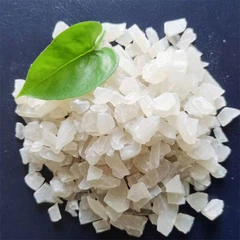
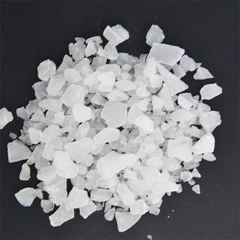
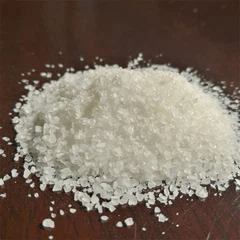
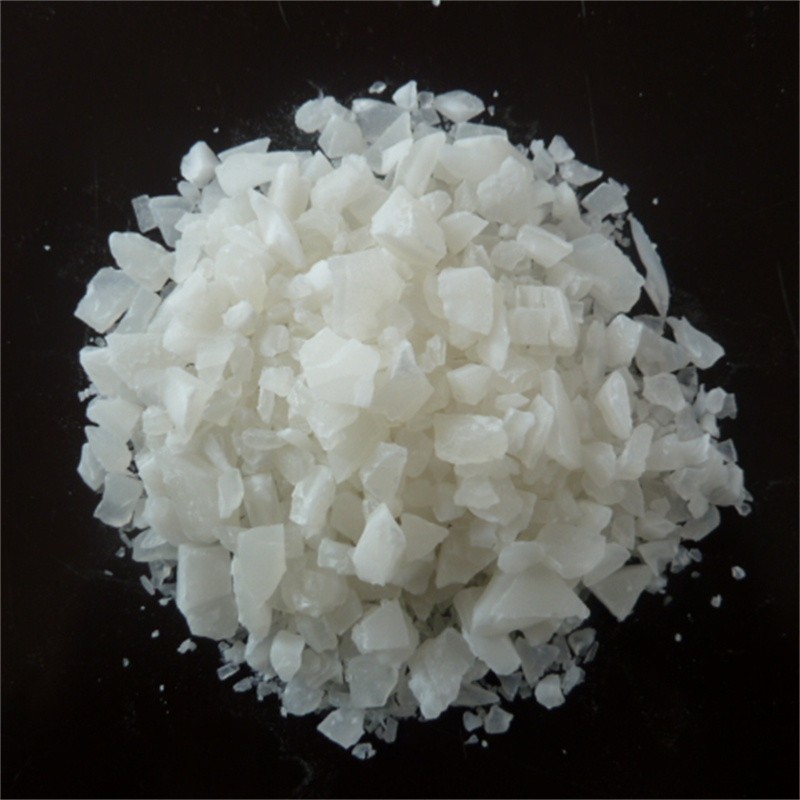
First off, what exactly is Aluminium Sulphate Non Ferric? Well, it's a chemical compound that's super useful in a bunch of industries. You can check out more about it here: Aluminium Sulphate Non Ferric. It's often used in water treatment, paper manufacturing, and even in some food processing applications. One of the great things about it is that it's iron-free, which makes it ideal for situations where you don't want any iron contamination.
Now, let's talk about oxidizing agents. Oxidizing agents are substances that can accept electrons from other substances, causing oxidation. Some common oxidizing agents include hydrogen peroxide, chlorine, and potassium permanganate. When Aluminium Sulphate Non Ferric comes into contact with these oxidizing agents, some interesting chemical reactions can take place.
Reaction Mechanisms
When Aluminium Sulphate Non Ferric reacts with an oxidizing agent, the main thing that happens is that the aluminium ions in the compound can get involved in redox reactions. For example, if we take hydrogen peroxide as an oxidizing agent, the reaction can be a bit complex.
Hydrogen peroxide (H₂O₂) is a powerful oxidizer. In an aqueous solution, it can break down into water (H₂O) and oxygen (O₂). When Aluminium Sulphate Non Ferric is present, the aluminium ions (Al³⁺) can interact with the peroxide ions. The aluminium ions can act as catalysts in some cases, speeding up the decomposition of hydrogen peroxide.
The overall reaction can be represented in a simplified way. The aluminium sulphate provides the aluminium ions, and the hydrogen peroxide decomposes:
2H₂O₂ → 2H₂O + O₂
The aluminium ions can influence the rate of this reaction by providing a surface for the reaction to occur on or by participating in intermediate steps. However, the exact mechanism depends on a bunch of factors like the concentration of the reactants, the temperature, and the pH of the solution.
Impact of Reaction Conditions
The reaction between Aluminium Sulphate Non Ferric and oxidizing agents is highly dependent on the reaction conditions.

Concentration
If the concentration of the oxidizing agent is high, the reaction is likely to be more vigorous. For instance, if you have a high - concentration solution of chlorine, it will react more quickly with Aluminium Sulphate Non Ferric compared to a low - concentration solution. On the other hand, if the concentration of Aluminium Sulphate Non Ferric is low, the reaction might be slower because there are fewer aluminium ions available to react.
Temperature
Temperature plays a crucial role. Generally, increasing the temperature speeds up chemical reactions. When the temperature is raised, the molecules have more kinetic energy, which means they collide more frequently and with greater force. So, when Aluminium Sulphate Non Ferric reacts with an oxidizing agent at a higher temperature, the reaction rate will increase. However, if the temperature is too high, it might cause side reactions or decomposition of the reactants.
pH
The pH of the solution can also have a big impact. Aluminium ions can exist in different forms depending on the pH. In acidic solutions, aluminium ions are more likely to be in the Al³⁺ form. In basic solutions, they can form aluminium hydroxide complexes. The oxidizing agents might react differently with these different forms of aluminium. For example, some oxidizing agents might react more readily with the Al³⁺ ions in an acidic solution.
Applications Based on the Reaction
The reaction between Aluminium Sulphate Non Ferric and oxidizing agents has some practical applications.
Water Treatment
In water treatment, Aluminium Sulphate Non Ferric is often used to coagulate impurities in water. When combined with an oxidizing agent like chlorine, it can enhance the purification process. The oxidizing agent can break down organic matter in the water, and the Aluminium Sulphate Non Ferric can help in the coagulation of the resulting particles, making them easier to remove. You can find more about our products suitable for water treatment here: 16% Aluminum Sulphate.
Pulp and Paper Industry
In the pulp and paper industry, this reaction can be used to bleach the pulp. Oxidizing agents can break down the lignin in the pulp, and Aluminium Sulphate Non Ferric can help in the process by adjusting the pH and acting as a coagulant for any by - products.
Our Product Offerings
We, as a supplier of Aluminium Sulphate Non Ferric, offer high - quality products. Our Iron Free Aluminum Sulphate Granules are easy to handle and have a consistent composition. They are suitable for a wide range of applications where the reaction with oxidizing agents is important.
If you're in an industry that uses Aluminium Sulphate Non Ferric and oxidizing agents in your processes, we'd love to talk to you. Whether you need to optimize your reaction conditions or just want to source high - quality Aluminium Sulphate Non Ferric, we're here to help. Contact us to start a discussion about your specific requirements and how our products can fit into your operations.
References
- Atkins, P., & de Paula, J. (2006). Physical Chemistry. Oxford University Press.
- Housecroft, C. E., & Sharpe, A. G. (2008). Inorganic Chemistry. Pearson Education.
Send Inquiry