

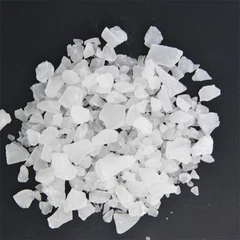
How does aluminium sulphate water function in the paper industry?
Oct 16, 2025
Leave a message
In the paper industry, the role of aluminum sulfate water is multifaceted and of great significance. As a long - standing supplier of aluminum sulfate water, I have witnessed firsthand how this chemical compound impacts various stages of paper production.
1. Size Fixation
One of the primary functions of aluminum sulfate water in the paper industry is for size fixation. Sizing agents are used to control the penetration of liquids into the paper. Rosin size, a common sizing agent, is negatively charged. Aluminum sulfate, when dissolved in water, hydrolyzes to form positively charged aluminum hydroxide complexes. These positively charged complexes react with the negatively charged rosin size particles. The electrostatic attraction between them allows the rosin size to be effectively fixed onto the paper fibers.
This process is crucial because it imparts water - repellent properties to the paper. For example, in the production of printing paper, proper sizing ensures that ink does not spread or bleed on the paper surface. This results in sharp and clear printed images and text. Without effective size fixation using aluminum sulfate water, the paper would absorb ink unevenly, leading to poor print quality.
2. pH Adjustment
The pH of the papermaking system is a critical factor that affects many aspects of the process. Aluminum sulfate water can be used to adjust the pH of the pulp suspension. When aluminum sulfate is added to water, it hydrolyzes and releases hydrogen ions (H⁺), which lower the pH of the solution. In a papermaking process, maintaining an appropriate acidic pH is beneficial for several reasons.
In an acidic environment, the strength of the paper fibers can be enhanced. The acidic conditions help to reduce the swelling of the fibers, which in turn improves the bonding between the fibers during the paper - forming process. Additionally, an acidic pH can also prevent the growth of microorganisms in the pulp. Microorganisms can cause issues such as slime formation, which can clog the papermaking equipment and affect the quality of the final paper product.
However, it's important to note that over - acidification can also be detrimental. Excessively low pH can cause corrosion of the papermaking equipment. Therefore, as a supplier, we always provide guidelines on the proper dosage of aluminum sulfate water to ensure that the pH is maintained within the optimal range for papermaking.
3. Coagulation and Flocculation
Aluminum sulfate water acts as a coagulant and flocculant in the papermaking process. In the pulp suspension, there are various fine particles such as fillers, fines, and impurities. These particles are often negatively charged and tend to remain dispersed in the water. The positively charged aluminum hydroxide complexes formed from the hydrolysis of aluminum sulfate can neutralize the negative charges on these particles.


Once the charges are neutralized, the particles start to aggregate and form larger flocs. These flocs are easier to remove during the papermaking process. For instance, during the filtration stage, the larger flocs can be more effectively retained on the paper machine wire, reducing the amount of fine particles in the white water (the water that drains from the pulp during the paper - forming process).
The use of aluminum sulfate water for coagulation and flocculation also helps to improve the drainage rate of the pulp. Faster drainage means a more efficient papermaking process, as it reduces the time required for the paper to dry. This leads to increased productivity and lower energy costs.
4. Brightening and Color Control
In some cases, aluminum sulfate water can also play a role in brightening the paper. The acidic conditions created by the addition of aluminum sulfate can help to remove certain colored impurities from the pulp. For example, some natural pigments present in the wood pulp can be more easily removed in an acidic environment.
Moreover, aluminum sulfate can also interact with some dyes and optical brightening agents used in the papermaking process. It can enhance the effectiveness of these agents, resulting in a more uniform and brighter paper color. This is particularly important for the production of high - quality white papers, such as those used in magazines and books.
Other Applications of Aluminum Sulfate Water
Apart from the paper industry, aluminum sulfate water has a wide range of applications in water treatment. For sewage treatment, it can be used as a coagulant to remove suspended solids and impurities from wastewater. You can learn more about Sewage Treatment Aluminum Sulphate.
In the treatment of drinking water, aluminum sulfate helps to clarify the water by removing turbidity - causing particles. More information about this application can be found at Aluminum Sulphate for Drinking Water Treatment.
It is also used in swimming pools to clarify the water. Check out Aluminium Sulphate for Swimming Pools for details.
Quality Assurance and Supply
As a supplier of aluminum sulfate water, we are committed to providing high - quality products. Our aluminum sulfate water is produced using advanced manufacturing processes to ensure its purity and consistency. We conduct strict quality control tests at every stage of production, from the raw material sourcing to the final product packaging.
We understand that different papermaking processes may have different requirements. Therefore, we offer customized solutions to meet the specific needs of our customers. Whether it's a large - scale paper mill or a small - scale specialty paper producer, we can provide the appropriate grade and quantity of aluminum sulfate water.
Contact for Purchase and Negotiation
If you are in the paper industry and are looking for a reliable supplier of aluminum sulfate water, we are here to serve you. Our team of experts can provide you with detailed technical support and advice on the optimal use of aluminum sulfate water in your papermaking process. We are eager to discuss your requirements and enter into a long - term partnership with you. Please reach out to us to start the negotiation process.
References
- "Papermaking: The History and Technology of an Ancient Craft" by Mark Kurlansky.
- "Handbook of Pulp and Paper Technology" edited by Christopher J. Biermann.
- "Water Treatment Chemicals: Chemistry and Technology" by David W. Hendricks.
Send Inquiry