

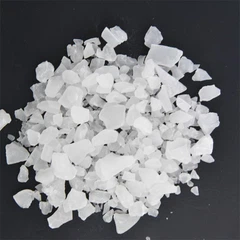
How does the solubility of aluminum sulphate powder change with temperature?
Jun 24, 2025
Leave a message
As a seasoned supplier of aluminum sulphate powder, I've witnessed firsthand the importance of understanding how its solubility behaves under different temperature conditions. This knowledge is not only crucial for various industrial applications but also for ensuring the efficient use of our product. In this blog post, I'll delve into the relationship between the solubility of aluminum sulphate powder and temperature, sharing insights based on scientific research and practical experience.
The Basics of Aluminum Sulphate Solubility
Before we explore the impact of temperature, let's briefly understand what solubility means. Solubility refers to the maximum amount of a substance that can dissolve in a given amount of solvent at a specific temperature and pressure. For aluminum sulphate powder, the solvent is typically water, and the solubility is expressed in grams of aluminum sulphate per 100 grams of water (g/100g H₂O).
Aluminum sulphate exists in different forms, such as Aluminium Sulphate Octadecahydrate, which has a chemical formula of Al₂(SO₄)₃·18H₂O. When dissolved in water, it dissociates into aluminum ions (Al³⁺) and sulfate ions (SO₄²⁻). The solubility of aluminum sulphate is influenced by several factors, including temperature, pH, and the presence of other salts.
The Effect of Temperature on Solubility
In general, the solubility of most solid substances, including aluminum sulphate, increases with temperature. This is because an increase in temperature provides more energy to the solvent molecules, allowing them to move more freely and interact more effectively with the solute particles. As a result, more solute can dissolve in the solvent.
For aluminum sulphate, the solubility - temperature relationship follows this general trend. At lower temperatures, the solubility is relatively low. As the temperature rises, the solubility of aluminum sulphate in water increases significantly. For example, at 0°C, the solubility of aluminum sulphate in water is approximately 31.2 g/100g H₂O. As the temperature increases to 100°C, the solubility can reach up to about 89.0 g/100g H₂O.
The increase in solubility with temperature can be explained by the endothermic nature of the dissolution process. When aluminum sulphate dissolves in water, it absorbs heat from the surroundings. According to Le Chatelier's principle, if a system at equilibrium is subjected to a change in temperature, the system will adjust to counteract the change. In the case of the dissolution of aluminum sulphate, an increase in temperature shifts the equilibrium towards the dissolution side, resulting in more aluminum sulphate dissolving in water.
Practical Implications in Industrial Applications
Understanding the solubility - temperature relationship of aluminum sulphate is of great significance in various industrial applications.
Water Treatment
One of the most common uses of aluminum sulphate is in water treatment. It is used as a coagulant to remove suspended particles, colloids, and organic matter from water. In water treatment plants, the water temperature can vary depending on the season and geographical location. By knowing how the solubility of aluminum sulphate changes with temperature, operators can adjust the dosage of aluminum sulphate to ensure effective coagulation.
During colder months, when the water temperature is low, the solubility of aluminum sulphate is also low. This means that a higher dosage may be required to achieve the desired concentration of dissolved aluminum sulphate for effective coagulation. On the other hand, in warmer months, a lower dosage may be sufficient due to the increased solubility of aluminum sulphate.
Paper Manufacturing
In the paper manufacturing industry, aluminum sulphate is used as a sizing agent to improve the paper's strength, water resistance, and printability. The papermaking process often involves heating the pulp and water mixture. The increase in temperature during this process enhances the solubility of aluminum sulphate, allowing it to disperse more evenly in the pulp and interact with the cellulose fibers more effectively.
Textile Dyeing
In textile dyeing, aluminum sulphate is used as a mordant to fix dyes to the fabric. The dyeing process usually involves heating the dye bath to a certain temperature. The solubility of aluminum sulphate increases with the rising temperature of the dye bath, ensuring that the aluminum ions can react with the dyes and form stable complexes on the fabric surface.
Our Product Range and Temperature - Adapted Solutions
As a supplier of aluminum sulphate powder, we offer a wide range of products to meet different industrial needs. In addition to the traditional powder form, we also provide Aluminium Sulphate Liquid, which offers the advantage of easier handling and faster dissolution. Our Industrial Aluminum Sulphate is produced with high - quality raw materials and strict quality control measures to ensure consistent solubility performance.
We understand that different industries may face different temperature conditions in their processes. That's why we are committed to providing customized solutions. Our technical team can work closely with customers to analyze their specific requirements and recommend the most suitable aluminum sulphate product and dosage based on the temperature and other process parameters.
Conclusion and Call to Action
In conclusion, the solubility of aluminum sulphate powder is strongly influenced by temperature. As the temperature increases, the solubility of aluminum sulphate in water also increases, which has important implications in various industrial applications.
Whether you are in the water treatment, paper manufacturing, textile dyeing, or other industries, having a good understanding of the solubility - temperature relationship of aluminum sulphate can help you optimize your processes, reduce costs, and improve product quality.
If you are interested in our aluminum sulphate products and would like to discuss your specific needs, please feel free to contact us. Our team of experts is ready to provide you with professional advice and support. We look forward to establishing a long - term partnership with you and helping you achieve your business goals.


References
- Atkins, P. W., & de Paula, J. (2014). Physical Chemistry. Oxford University Press.
- Sawyer, C. N., McCarty, P. L., & Parkin, G. F. (2003). Chemistry for Environmental Engineering and Science. McGraw - Hill.
Send Inquiry