

What is the density of non iron aluminum sulphate?
Oct 17, 2025
Leave a message
What is the density of non iron aluminum sulphate?
As a supplier of non iron aluminum sulphate, I often get asked about the density of this important chemical compound. Non iron aluminum sulphate, also known as iron - free aluminum sulphate, is widely used in various industries such as water treatment, paper manufacturing, and textile dyeing. Understanding its density is crucial for proper handling, storage, and application.

Chemical Basics of Non Iron Aluminum Sulphate
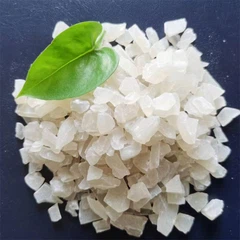
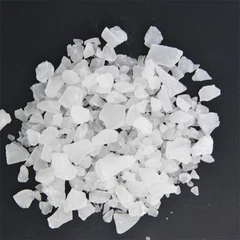
Non iron aluminum sulphate has the chemical formula Al₂(SO₄)₃. It is a white crystalline solid that is highly soluble in water. The absence of iron in this compound makes it suitable for applications where iron contamination is not acceptable, such as in the production of high - quality paper and in some water treatment processes where iron can cause discoloration.
Density: Definition and Importance
Density is defined as the mass per unit volume of a substance. In the case of non iron aluminum sulphate, knowing its density helps in several ways. For example, when transporting the product, the density determines how much space it will occupy in a container. This is important for optimizing shipping costs and ensuring that the containers are not over - or under - filled. In industrial processes, density is used to calculate the correct dosage of the chemical. If the density is not accurately known, it can lead to incorrect dosing, which may affect the quality of the final product or the efficiency of the process.
Factors Affecting the Density of Non Iron Aluminum Sulphate
The density of non iron aluminum sulphate can be affected by several factors:
-
Hydration State: Non iron aluminum sulphate can exist in different hydrated forms. The most common form is the hydrate Al₂(SO₄)₃·18H₂O. The presence of water molecules in the crystal structure affects the mass and volume of the compound, thus influencing its density. Generally, the more hydrated the compound is, the lower its density because the water molecules add volume without a proportionate increase in mass compared to the anhydrous form.
-
Purity: The purity of non iron aluminum sulphate also plays a role in its density. Impurities can either increase or decrease the density depending on their nature. For example, if the impurities are denser than the aluminum sulphate itself, the overall density of the product will increase. On the other hand, if the impurities are less dense, the density will decrease.
-
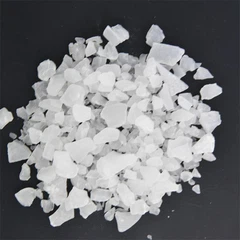
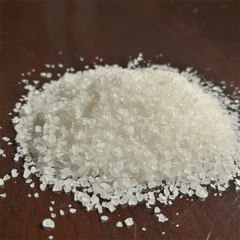
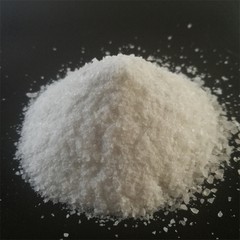
Physical Form: Non iron aluminum sulphate is available in different physical forms such as powder and flakes. The powder form may have a different bulk density compared to the flake form. The way the particles are packed together in these forms affects the volume they occupy for a given mass, and thus the density.
Typical Density Values
The density of anhydrous non iron aluminum sulphate is approximately 2.672 g/cm³. However, in most commercial applications, the hydrated form Al₂(SO₄)₃·18H₂O is more commonly used. The density of this hydrated form is around 1.69 g/cm³.
When it comes to the physical forms, the bulk density of 17% Aluminum Sulphate Powder can vary depending on factors such as particle size and packing. Generally, the bulk density of the powder may range from 0.8 - 1.2 g/cm³. For Iron Free Aluminum Sulphate Flakes and Iron Free Aluminum Sulphate Flakes, the bulk density is usually in the range of 0.9 - 1.3 g/cm³. These values are approximate and can vary based on the specific manufacturing process and the degree of compaction during packaging.
Measuring the Density of Non Iron Aluminum Sulphate
There are several methods to measure the density of non iron aluminum sulphate. One common method is the pycnometer method. A pycnometer is a small, precisely calibrated container. First, the empty pycnometer is weighed. Then, a known mass of the non iron aluminum sulphate sample is placed in the pycnometer, and it is weighed again. The volume of the pycnometer is known, and by dividing the mass of the sample by the volume of the pycnometer, the density can be calculated.
Another method is the displacement method. In this method, a sample of non iron aluminum sulphate is placed in a liquid in which it is insoluble. The increase in the volume of the liquid is measured, and by knowing the mass of the sample, the density can be determined using the formula density = mass/volume.
Applications and Density Considerations
In water treatment, the correct density of non iron aluminum sulphate is crucial for effective coagulation and flocculation. If the density is not considered when dosing the chemical, it can lead to either under - or over - dosing. Under - dosing may result in poor removal of impurities from the water, while over - dosing can lead to the formation of excessive sludge and increased treatment costs.
In paper manufacturing, non iron aluminum sulphate is used as a sizing agent. The density affects how the chemical is mixed with other components in the paper - making process. Incorrect density can lead to uneven sizing, which affects the quality of the paper, such as its strength and absorbency.
Quality Control and Density
As a supplier, we pay close attention to the density of our non iron aluminum sulphate products. We have strict quality control measures in place to ensure that the density of our products meets the industry standards. Before shipping, samples of each batch are tested for density using reliable methods. This helps us to provide our customers with a consistent and high - quality product.
Conclusion
The density of non iron aluminum sulphate is an important property that affects its handling, storage, and application in various industries. It is influenced by factors such as hydration state, purity, and physical form. By understanding the density and its implications, users can ensure the efficient and effective use of this chemical compound.
If you are in need of high - quality non iron aluminum sulphate for your industrial applications, we are here to provide you with the best products. Our team of experts can assist you in choosing the right form and grade of non iron aluminum sulphate based on your specific requirements. We encourage you to contact us for procurement and to discuss how our products can meet your needs.
References
- Handbook of Chemistry and Physics
- Industrial Chemicals: Properties and Applications
Send Inquiry