
What is the surface tension of a non iron aluminum sulphate solution?
Jul 31, 2025
Leave a message
Yo, folks! As a supplier of non iron aluminum sulphate, I often get asked about all sorts of technical details regarding our product. One question that's been popping up more frequently lately is, "What is the surface tension of a non iron aluminum sulphate solution?" Let's dive into this topic and break it down in a way that's easy to understand.
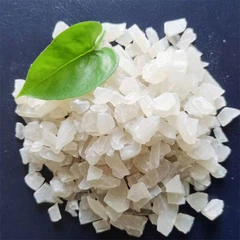
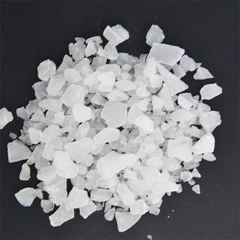
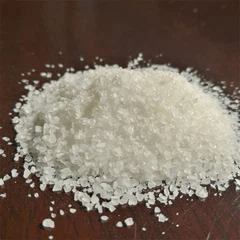
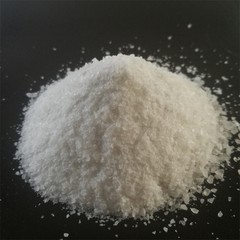
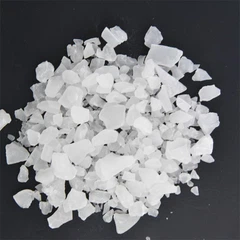
First off, let's talk a bit about non iron aluminum sulphate itself. It's a pretty handy chemical with a wide range of applications. We offer different forms of it, like Iron Free Aluminum Sulphate Granules and Iron Free Aluminum Sulphate Flakes. You can check out more about our Non Iron Aluminum Sulphate on our website.


So, what exactly is surface tension? Well, you can think of it as the "skin" on the surface of a liquid. It's the force that makes water droplets form into spheres and allows small insects to walk on water. In a non iron aluminum sulphate solution, surface tension plays an important role in how the solution behaves.
The surface tension of a non iron aluminum sulphate solution depends on a few factors. One of the main factors is the concentration of the solution. Generally speaking, as the concentration of non iron aluminum sulphate in the solution increases, the surface tension also tends to increase. This is because the aluminum sulphate molecules interact with the water molecules at the surface, making it harder for the surface to stretch.
Another factor that affects surface tension is temperature. As the temperature of the solution goes up, the surface tension usually goes down. This is because the increased thermal energy makes the water molecules move around more, weakening the forces between them at the surface.
Let's take a closer look at how these factors interact. Say you have a low - concentration non iron aluminum sulphate solution at room temperature. The surface tension might be relatively close to that of pure water. But if you start adding more non iron aluminum sulphate to the solution, the surface tension will start to rise. And if you heat up that solution, the surface tension will start to drop back down.
In practical applications, understanding the surface tension of a non iron aluminum sulphate solution is crucial. For example, in water treatment, the surface tension can affect how well the solution can mix with other chemicals and how effectively it can remove impurities from water. If the surface tension is too high, the solution might not spread evenly, which could lead to uneven treatment. On the other hand, if the surface tension is too low, it might not be able to hold onto the impurities as well.
In the paper industry, surface tension also plays a role. Non iron aluminum sulphate is often used in papermaking to control the pH and improve the retention of fillers and dyes. The right surface tension can ensure that the solution spreads evenly on the paper fibers, leading to better quality paper.
Now, measuring the surface tension of a non iron aluminum sulphate solution isn't as simple as just looking at it. There are a few different methods that can be used. One common method is the capillary rise method. In this method, a thin tube is placed in the solution, and the height to which the solution rises in the tube is measured. The surface tension can then be calculated based on the properties of the tube and the solution.
Another method is the drop weight method. In this method, drops of the solution are allowed to form at the end of a tube, and the weight of the drops is measured. The surface tension can be determined from the size and weight of the drops.
As a supplier, we know how important it is to provide our customers with accurate information about our products. That's why we've done a lot of testing to understand the surface tension of our non iron aluminum sulphate solutions under different conditions. We can provide you with data on how the surface tension changes with concentration and temperature, so you can make the best decisions for your applications.
If you're in the market for non iron aluminum sulphate, whether it's for water treatment, paper manufacturing, or any other application, we're here to help. We can work with you to figure out the right concentration and conditions for your specific needs, taking into account the surface tension and other properties of the solution.
Don't hesitate to reach out to us if you have any questions or if you're interested in purchasing our non iron aluminum sulphate. We're always happy to have a chat and discuss how our product can meet your requirements. Whether you need a small sample to test or a large - scale order, we've got you covered.
In conclusion, the surface tension of a non iron aluminum sulphate solution is an important property that can have a big impact on its performance in various applications. By understanding the factors that affect surface tension and how to measure it, you can make more informed decisions when using our product. So, if you're looking for a reliable supplier of non iron aluminum sulphate, look no further. Let's start a conversation and see how we can work together.
References:
- Principles of Colloid and Surface Chemistry, Paul C. Hiemenz, Raj Rajagopalan
- Physical Chemistry for the Chemical Sciences, Raymond Chang, Kenneth A. Goldsby
Send Inquiry