

Can 15.8% aluminum sulphate be used in the rubber industry?
Aug 29, 2025
Leave a message
Can 15.8% Aluminum Sulphate Be Used in the Rubber Industry?
As a supplier of 15.8% aluminum sulphate, I often get asked about the potential applications of our product, especially in industries like rubber manufacturing. In this blog post, I'll delve into the properties of 15.8% aluminum sulphate and explore whether it can be used in the rubber industry.
Understanding 15.8% Aluminum Sulphate
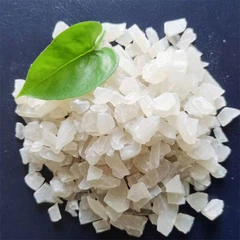
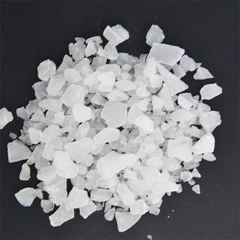
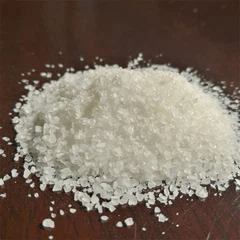
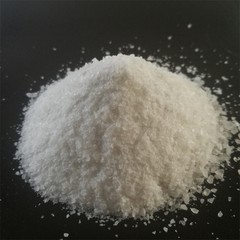
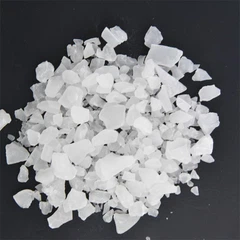
Aluminum sulphate, with the chemical formula Al₂(SO₄)₃, is a white crystalline solid that is highly soluble in water. The 15.8% aluminum sulphate refers to a specific concentration of this compound, which may be in the form of a solution or a solid with a certain level of purity. Our company offers different forms of aluminum sulphate, including Industrial Aluminum Sulphate, Aluminum Sulphate Flake, and Aluminum Sulfate Powder Factory.
The properties of 15.8% aluminum sulphate make it suitable for a variety of applications. It is commonly used in water treatment, paper manufacturing, and as a mordant in the textile industry. But what about the rubber industry?
Requirements in the Rubber Industry
The rubber industry has specific requirements for the materials it uses. Rubber compounds need to have certain physical and chemical properties, such as good elasticity, strength, and resistance to heat, chemicals, and abrasion. Additives are often used to enhance these properties and improve the performance of the rubber products.
Some of the common additives in the rubber industry include accelerators, antioxidants, fillers, and vulcanizing agents. These additives play crucial roles in the vulcanization process, which is essential for converting raw rubber into a useful and durable material.
Potential Uses of 15.8% Aluminum Sulphate in the Rubber Industry
-
Curing Agent or Accelerator
In the vulcanization process, curing agents or accelerators are used to speed up the reaction between the rubber and the vulcanizing agent. Aluminum sulphate has the potential to act as a curing agent or accelerator in some rubber formulations. It can react with certain functional groups in the rubber molecules, promoting cross - linking and improving the mechanical properties of the rubber. For example, in some synthetic rubber systems, the presence of aluminum sulphate may enhance the formation of a more stable cross - linked network, resulting in better tensile strength and hardness. -
Filler or Reinforcing Agent
Fillers are added to rubber to reduce costs and improve certain properties such as stiffness, abrasion resistance, and dimensional stability. 15.8% aluminum sulphate can be used as a filler in rubber compounds. Its fine particles can be dispersed throughout the rubber matrix, providing additional reinforcement. When properly dispersed, it can increase the hardness and modulus of the rubber, making it more resistant to deformation under stress. -
pH Adjuster
The pH of the rubber compound can affect the vulcanization process and the properties of the final rubber product. Aluminum sulphate is an acidic salt, and it can be used to adjust the pH of the rubber compound. Maintaining the appropriate pH is crucial for the proper functioning of the vulcanizing agents and other additives in the rubber formulation. For instance, in some cases, a slightly acidic environment may be required to optimize the vulcanization reaction and achieve the desired properties of the rubber.
Challenges and Considerations
While 15.8% aluminum sulphate has potential uses in the rubber industry, there are also some challenges and considerations that need to be addressed.
-
Compatibility with Rubber Polymers
Not all rubber polymers are compatible with aluminum sulphate. Some polymers may react with aluminum sulphate in an undesirable way, leading to changes in the physical and chemical properties of the rubber. For example, certain types of natural rubber may be more sensitive to the presence of aluminum sulphate compared to synthetic rubbers. It is essential to conduct compatibility tests before using 15.8% aluminum sulphate in a specific rubber formulation. -
Effect on Vulcanization Kinetics
The addition of aluminum sulphate may affect the vulcanization kinetics. If the amount of aluminum sulphate is not carefully controlled, it may either speed up or slow down the vulcanization process too much, resulting in an unevenly cured rubber product. The optimal dosage of aluminum sulphate needs to be determined through experimentation to ensure that the vulcanization process proceeds smoothly and the desired properties of the rubber are achieved. -
Moisture Absorption
Aluminum sulphate is hygroscopic, meaning it can absorb moisture from the environment. In the rubber industry, moisture can have a negative impact on the vulcanization process and the properties of the rubber. Excess moisture in the rubber compound can lead to the formation of voids, reduce the mechanical properties of the rubber, and cause problems during processing. Therefore, proper storage and handling of 15.8% aluminum sulphate are necessary to prevent moisture absorption.
Case Studies and Research
Although there is limited published research specifically on the use of 15.8% aluminum sulphate in the rubber industry, there are some studies on the use of aluminum compounds in rubber formulations. Some research has shown that certain aluminum salts can improve the mechanical properties of rubber, such as tensile strength and tear resistance. However, more research is needed to fully understand the potential of 15.8% aluminum sulphate in the rubber industry and to optimize its use in different rubber formulations.


Conclusion
In conclusion, 15.8% aluminum sulphate has the potential to be used in the rubber industry as a curing agent, filler, pH adjuster, or other functional additive. However, its use requires careful consideration of factors such as compatibility with rubber polymers, effect on vulcanization kinetics, and moisture absorption.
As a supplier of 15.8% aluminum sulphate, we are committed to providing high - quality products and technical support to our customers in the rubber industry. We encourage you to conduct your own research and testing to determine the suitability of our product for your specific rubber applications. If you are interested in exploring the use of 15.8% aluminum sulphate in your rubber manufacturing process, we would be more than happy to discuss your requirements and provide samples for testing. Contact us to start a procurement discussion and find out how our 15.8% aluminum sulphate can meet your needs in the rubber industry.
References
- ASTM International. (Year). Standard test methods for rubber products.
- Rubber Manufacturers Association. (Year). Handbook of rubber technology and applications.
- Journal of Rubber Research. Various issues related to rubber additives and formulations.
Send Inquiry