

Does aluminum sulfate in drinking water affect the water's density?
Aug 27, 2025
Leave a message
Hey there! As a supplier of aluminum sulfate for drinking water, I often get asked some interesting questions. One that pops up quite a bit is, "Does aluminum sulfate in drinking water affect the water's density?" Well, let's dive right into it and find out.
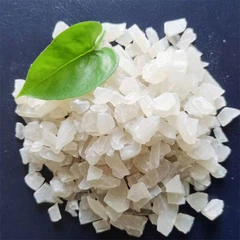
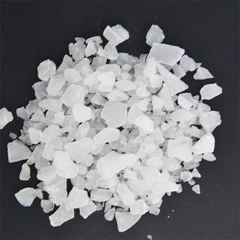
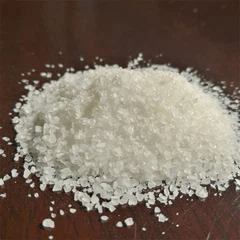
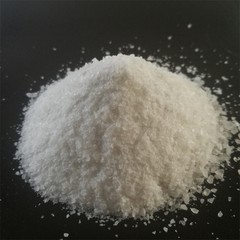
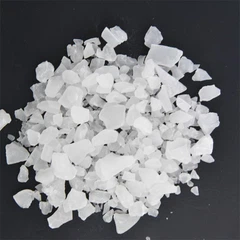
First off, let's understand what aluminum sulfate is. Aluminum sulfate, also known as alum, is a chemical compound that's commonly used in water treatment. It helps in removing impurities and making the water cleaner and safer to drink. We at [our company] supply high - quality aluminum sulfate for various water treatment purposes, including Aluminum Sulphate for Drinking Water Treatment.
Now, onto the main question: density. Density is basically how much mass is packed into a given volume. In simple terms, it tells us how heavy a certain amount of a substance is. For water, at room temperature (around 20°C or 68°F), the density is about 1 gram per cubic centimeter (g/cm³).
When we add aluminum sulfate to water, it dissolves and forms ions. The chemical formula for aluminum sulfate is Al₂(SO₄)₃. When it dissolves in water, it breaks down into aluminum ions (Al³⁺) and sulfate ions (SO₄²⁻). These ions interact with the water molecules.
The addition of aluminum sulfate to water does increase the mass of the solution. Since density is mass divided by volume, if the volume remains relatively constant (which it mostly does under normal conditions when adding a small amount of a solute like aluminum sulfate), an increase in mass will lead to an increase in density.
Let's look at it from a scientific perspective. According to the principles of solution chemistry, when a solute is dissolved in a solvent (in this case, aluminum sulfate in water), the total mass of the solution is the sum of the mass of the solvent and the mass of the solute. As we add more aluminum sulfate, the mass of the solution goes up.
However, the increase in density is usually quite small, especially when the concentration of aluminum sulfate is within the typical ranges used for drinking water treatment. In drinking water treatment, the amount of aluminum sulfate added is carefully regulated. Regulatory bodies around the world have set limits on the amount of aluminum that can be present in drinking water to ensure it's safe for consumption.
For example, in the United States, the Environmental Protection Agency (EPA) has set a secondary maximum contaminant level (SMCL) for aluminum in drinking water at 0.05 to 0.2 milligrams per liter (mg/L). At these low concentrations, the impact on the water's density is negligible.
But what about other applications where higher concentrations of aluminum sulfate might be used? Well, in industries like Drilling Fluids Water Treatment Aluminum Sulfate, higher concentrations are often used. In such cases, the increase in density can be more noticeable.
In drilling fluids, aluminum sulfate is used to control the properties of the fluid, including its density. By adjusting the concentration of aluminum sulfate, drillers can optimize the density of the drilling fluid to suit the specific requirements of the drilling operation.


Another application is in swimming pools. We also supply Aluminium Sulphate for Swimming Pools. In swimming pools, aluminum sulfate is used to clarify the water by coagulating small particles. The addition of aluminum sulfate to the pool water will also increase its density, although again, the change is usually small and not really noticeable to the average swimmer.
Now, let's talk about the factors that can affect how much the density changes when aluminum sulfate is added to water. One important factor is the concentration of aluminum sulfate. As I mentioned earlier, the higher the concentration, the greater the increase in density.
Temperature also plays a role. Water's density changes with temperature. As the temperature increases, the density of water decreases. When we add aluminum sulfate to water at different temperatures, the change in density will be affected by both the addition of the solute and the temperature - dependent density of water.
The presence of other substances in the water can also influence the density change. If there are already other dissolved salts or impurities in the water, they can interact with the aluminum sulfate ions and either enhance or reduce the overall effect on density.
So, in conclusion, yes, aluminum sulfate in drinking water does affect the water's density. It causes a small increase in density due to the addition of mass from the dissolved aluminum sulfate. However, in drinking water treatment, the change is usually so small that it's not a major concern for the average consumer.
If you're in the business of water treatment, whether it's for drinking water, drilling fluids, or swimming pools, and you're looking for a reliable supplier of high - quality aluminum sulfate, we're here for you. We've got the expertise and the products to meet your needs. If you're interested in purchasing our aluminum sulfate products, please reach out to us for more information and to start a procurement discussion.
References
- Atkins, P., & de Paula, J. (2006). Physical Chemistry. Oxford University Press.
- Chang, R. (2010). Chemistry. McGraw - Hill.
- Sawyer, C. N., McCarty, P. L., & Parkin, G. F. (2003). Chemistry for Environmental Engineering and Science. McGraw - Hill.
Send Inquiry