

What is the boiling point of reagent grade aluminum sulphate?
May 28, 2025
Leave a message
What is the boiling point of reagent grade aluminum sulphate?
As a reputable supplier of reagent grade aluminum sulphate, I often encounter various questions from customers, one of the most common being about the boiling point of this essential chemical compound. In this blog post, I will delve into the topic of the boiling point of reagent grade aluminum sulphate, exploring its properties, applications, and the factors that influence its boiling behavior.
Understanding Reagent Grade Aluminum Sulphate
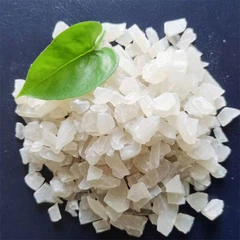
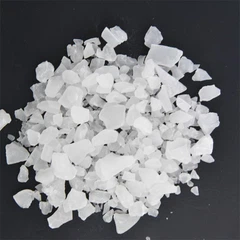
Reagent grade aluminum sulphate, also known as aluminum sulfate, is a chemical compound with the formula Al₂(SO₄)₃. It is a white crystalline solid that is highly soluble in water. This compound is widely used in various industries due to its versatile properties. In the water treatment industry, it serves as a coagulant to remove impurities and suspended particles from water. In the paper industry, it is used to size paper, making it more resistant to ink penetration. Additionally, it finds applications in the textile, leather, and pharmaceutical industries.
The Boiling Point of Reagent Grade Aluminum Sulphate
Determining the exact boiling point of reagent grade aluminum sulphate is not straightforward. Aluminum sulphate does not have a simple, well - defined boiling point like some pure substances. When heated, aluminum sulphate first loses its water of crystallization. Most commonly, aluminum sulphate exists as an octadecahydrate, Al₂(SO₄)₃·18H₂O. As the temperature rises, the water molecules are gradually driven off.
At around 86.5 °C (187.7 °F), the octadecahydrate starts to lose water. As heating continues, the anhydrous form of aluminum sulphate (Al₂(SO₄)₃) is formed. The anhydrous aluminum sulphate decomposes before it reaches a true boiling point. It begins to decompose at approximately 770 °C (1418 °F) into aluminum oxide (Al₂O₃) and sulfur trioxide (SO₃).
The decomposition reaction can be represented by the following chemical equation:
Al₂(SO₄)₃ → Al₂O₃ + 3SO₃
This decomposition behavior means that there is no distinct boiling point for reagent grade aluminum sulphate in the traditional sense. Instead, it undergoes a chemical change before it can reach a state of boiling.
Factors Affecting the Thermal Behavior of Aluminum Sulphate
Several factors can influence the thermal behavior of reagent grade aluminum sulphate. The purity of the compound is a crucial factor. Impurities can lower the decomposition temperature or change the rate at which water is lost from the hydrate form. For instance, if there are traces of other metal salts or organic impurities, they may act as catalysts or react with the aluminum sulphate during heating, altering its thermal stability.
The particle size of the aluminum sulphate also plays a role. Finer particles have a larger surface area, which can lead to more rapid heat transfer and potentially faster decomposition. In addition, the heating rate is important. A slow heating rate allows for more controlled loss of water and may result in a more predictable decomposition process compared to a rapid heating rate.
Applications and the Importance of Thermal Properties
The thermal properties of reagent grade aluminum sulphate are of great importance in its various applications. In the water treatment industry, the solubility and stability of aluminum sulphate are critical. The fact that it can dissolve in water at relatively low temperatures makes it an effective coagulant. During the treatment process, the water is often at ambient or slightly elevated temperatures, and the ability of aluminum sulphate to dissolve and react with impurities is essential for efficient water purification.
In the paper industry, the thermal behavior of aluminum sulphate is relevant during the papermaking process. The sizing process often involves heating the paper pulp, and the stability of aluminum sulphate under these conditions ensures that it can effectively bind to the paper fibers and improve the paper's properties.
Our Product Range
As a supplier of reagent grade aluminum sulphate, we offer a wide range of high - quality products to meet the diverse needs of our customers. Our Aluminium Sulphate Non Ferric is a premium product with extremely low iron content, making it ideal for applications where iron contamination is a concern, such as in the production of high - quality paper and in some pharmaceutical processes.
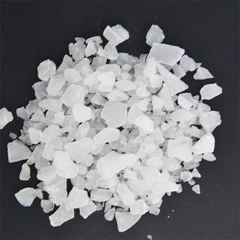
Our Iron Free Aluminum Sulphate Flakes are another popular option. The flake form provides easy handling and dissolution, ensuring efficient use in various industrial processes.


We also supply Aluminium Sulphate 17, which has a specific composition and is suitable for a variety of applications, including water treatment and industrial manufacturing.
Contact Us for Procurement
If you are in the market for high - quality reagent grade aluminum sulphate, we invite you to contact us for procurement and further discussions. Our team of experts is ready to assist you in choosing the right product for your specific needs. Whether you require a small quantity for laboratory testing or a large - scale supply for industrial production, we can provide you with the best solutions.
References
- CRC Handbook of Chemistry and Physics, 99th Edition.
- Kirk - Othmer Encyclopedia of Chemical Technology.
- "Aluminum Sulfate: Properties, Production, and Uses" by various authors in the Journal of Industrial and Engineering Chemistry.
Send Inquiry