

What is the influence of reagent grade aluminum sulphate on the oxidation - reduction potential of solutions?
Jul 11, 2025
Leave a message
Hey there! I'm a supplier of reagent grade aluminum sulphate, and today I wanna chat about what kind of influence this stuff has on the oxidation - reduction potential of solutions.
First off, let's quickly go over what reagent grade aluminum sulphate is. It's a high - quality form of aluminum sulphate that's used in a bunch of scientific and industrial applications. It's super pure, which makes it perfect for experiments and processes where you need accurate and consistent results.
Now, onto the main topic: the oxidation - reduction potential (ORP). This is a measure of how easily a solution can accept or donate electrons. In simple terms, it tells us whether a solution is likely to cause oxidation (take electrons) or reduction (give electrons) in a chemical reaction.
When reagent grade aluminum sulphate is added to a solution, it can have several effects on the ORP. One of the key things to understand is that aluminum sulphate dissociates in water. When it does, it releases aluminum ions (Al³⁺) and sulphate ions (SO₄²⁻).


The aluminum ions can react with other substances in the solution. For example, in some cases, they might react with metal ions that are present. If there are metal ions in a lower oxidation state, the aluminum ions could potentially oxidize them. This would increase the oxidation - reduction potential of the solution because more substances in the solution are now in a higher oxidation state, meaning they're more likely to accept electrons.
Let's say we have a solution with some iron(II) ions (Fe²⁺). When reagent grade aluminum sulphate is added, the aluminum ions could react with the iron(II) ions. The aluminum would be reduced from Al³⁺ to Al (although this is a bit more complex in real - world solutions), and the iron(II) ions would be oxidized to iron(III) ions (Fe³⁺). This change in the oxidation states of the metal ions would lead to an increase in the ORP of the solution.
On the other hand, the sulphate ions from the aluminum sulphate can also play a role. Sulphate ions are relatively stable and usually don't participate directly in oxidation - reduction reactions under normal conditions. However, they can affect the ionic strength of the solution. An increase in ionic strength can change the activity coefficients of the other ions in the solution. This, in turn, can influence the rates of oxidation - reduction reactions and the overall ORP.
In acidic solutions, the situation gets a bit more interesting. Aluminum sulphate can act as an acid in water. When it dissociates, it can increase the concentration of hydrogen ions (H⁺) in the solution. This increase in acidity can have a significant impact on the ORP. Many oxidation - reduction reactions are pH - dependent. For example, some substances are more easily oxidized or reduced at different pH values. So, by increasing the acidity of the solution, reagent grade aluminum sulphate can shift the equilibrium of oxidation - reduction reactions and change the ORP.
In environmental applications, the addition of reagent grade aluminum sulphate to water bodies can also affect the ORP. In water treatment, it's often used to coagulate impurities. When it's added to a natural water source, it can react with dissolved oxygen and other substances in the water. This can lead to changes in the ORP, which can then affect the growth of microorganisms and the overall water quality.
Now, I know this all might seem a bit technical, but it's really important stuff, especially if you're in industries like water treatment, chemical manufacturing, or scientific research. That's where our reagent grade aluminum sulphate comes in. We offer high - quality products that can give you consistent results in your applications.
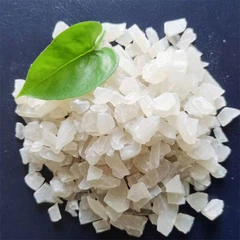
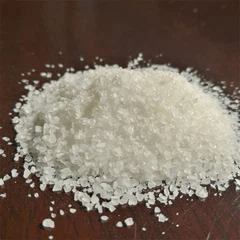
If you're looking for specific forms of our product, we have Iron Free Aluminum Sulphate Granules. These granules are great because they're easy to handle and dissolve quickly in solutions. They're also free of iron, which can be a big plus in applications where iron contamination could affect the results.
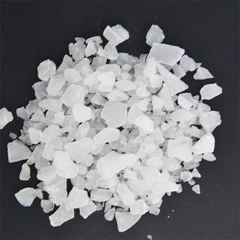
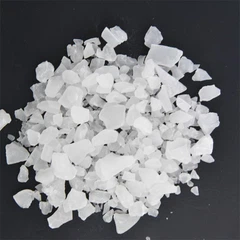
We also have Iron Free Aluminum Sulphate Flakes and Iron Free Aluminum Sulphate Flakes. These flakes are another popular option. They have a large surface area, which means they can dissolve rapidly and interact effectively with other substances in the solution.
Whether you're doing research on the oxidation - reduction potential of solutions or using it in an industrial process, our reagent grade aluminum sulphate can be a great choice. It's reliable, pure, and we're always here to support you with any questions you might have.
If you're interested in learning more about our products or want to start a purchase negotiation, don't hesitate to reach out. We're eager to work with you and help you find the best solution for your needs.
References
- "Chemical Principles: The Quest for Insight" by Peter Atkins and Loretta Jones
- "Water Treatment Chemicals: Chemistry and Technology" by John Crittenden et al.
Send Inquiry